Dutch (ethnic group)
From Wikipedia, the free encyclopedia
| The Dutch (Nederlanders) | |||||||||||||||||||||||||||||||||||||||||||||||||||
|---|---|---|---|---|---|---|---|---|---|---|---|---|---|---|---|---|---|---|---|---|---|---|---|---|---|---|---|---|---|---|---|---|---|---|---|---|---|---|---|---|---|---|---|---|---|---|---|---|---|---|---|
 Floris V • D. Erasmus • Rembrandt van Rijn • B. van Zuylen Floris V • D. Erasmus • Rembrandt van Rijn • B. van ZuylenC. Huygens • H. Schaft • H. Lorentz • M. de Ruyter W. Drees • A. van Leeuwenhoek • H. Grotius • T. Edison |
|||||||||||||||||||||||||||||||||||||||||||||||||||
| Total population | |||||||||||||||||||||||||||||||||||||||||||||||||||
|
25 million - 28 million |
|||||||||||||||||||||||||||||||||||||||||||||||||||
| Regions with significant populations | |||||||||||||||||||||||||||||||||||||||||||||||||||
|
|||||||||||||||||||||||||||||||||||||||||||||||||||
| Languages | |||||||||||||||||||||||||||||||||||||||||||||||||||
| Dutch, Frisian Main languages of Dutch emigrants: English and Afrikaans. |
|||||||||||||||||||||||||||||||||||||||||||||||||||
| Religions | |||||||||||||||||||||||||||||||||||||||||||||||||||
| Roman Catholic (30%), Protestant (21%) (Reformed 6% and Dutch Reformed 12%), other (8%), no member of church society (41%).[23][24] | |||||||||||||||||||||||||||||||||||||||||||||||||||
| Related ethnic groups | |||||||||||||||||||||||||||||||||||||||||||||||||||
| (In alphabetical order) Afrikaners,[25] Flemings,[26] Frisians.[27] |

.svg/22px-Flag_of_Belgium_(civil).svg.png)


The Dutch (self-designation: Nederlanders ) are an Indo-European ethnic group traditionally inhabiting the coastal lowlands east of the North Sea (geopolitically: the Low Countries and northern France) but in contemporary times found in migrant communities world wide.[28] As of 2008, they form the majority (80.9%) of the population of the Netherlands[29] and a considerable part of the population of Canada,[30]Australia,[31] South Africa[32] and the United States.[33]
Their traditional language is Dutch, a West Germanic language spoken natively by 22 million people,[34] their traditional religion is Christianity, though in modern times a large percentage of the Dutch are adherents of humanism. The art and culture of the Dutch encompasses various forms of traditional music, dances, architectural styles and clothing, some of which are virtually globally recognisable.
The Dutch are mainly the descendants (both genetically[35][36]and linguistically[37]) of the ancients Franks, a Germanic tribe emerging during the Classical Age and experiencing a Golden age during Late European Antiquity.
In the course of their history the Dutch grew from a largely rural society to one of the most urbanized in the world, with 50% of the total population already living in cities by 1500 AD.
Though always being relatively autonomous within the system of European Feudalism the Dutch regions did not gain full sovereignty until the late 16th century, when after the Dutch Revolt, the first truly independent Dutch state was formed: the Dutch Republic.
The Republic would soon manifest itself as a major power and the Dutch entered a period of immense wealth and artistic development now known as the Dutch Golden Age. It was this period in Dutch history that also saw the first large scale settlement of territories outside of their traditional homeland. Today, Dutchmen and their descendants can be found all over the world, most notably in Europe, the Americas, Southern Africa and Oceania, ranging from (near) completely assimilated to isolated communities.
Contents |
[edit] Linguistics
[edit] Etymology of the Dutch autonym and exonym
- Further information: Dietsch
The origins of the word Dutch go back to Proto-Germanic, the ancestor of all Germanic languages, *theudo (meaning "national/popular"); akin to Old Dutch dietsc, Old High German diutsch, Old English þeodisc and Gothic þiuda all meaning "(of) the common (Germanic) people". As the tribes among the Germanic peoples began to differentiate its meaning began to change. The Anglo-Saxons of England for example gradually stopped referring to themselves as þeodisc and instead started to use Englisc, after their tribe. On the continent the situation was different, and *theudo evolved into two main forms: Diets (Dutch meaning "Dutch (people)", alongside Nederlanders) and Deutsch (German, meaning "German (people)"). At first the English language used (the contemporary form of) Dutch to refer to any or all of the Germanic speakers on the European mainland. Gradually its meaning shifted to the closest Germanic people near them: the Dutch.[38]
In the Dutch language itself however, Nederlanders is the endonym the Dutch use to refer to themselves. Until the Second World War it was used alongside Diets, when the latter was dropped due to extensive use of the word by the German Nazi occupiers and Dutch fascists, who used it because of its ancient Germanic origins. Nederlanders derives from the Dutch word "Neder", a cognate of English "Nether" both meaning "low", and "land" (same meaning in both English and Dutch) and thus literally means "Lowlanders", a reference to the geographical texture of the Dutch homeland; the western portion of the Northern European plain.[39][40][41] Although not as old as Diets, the term Nederlands has been in continuous use since 1250.[42]


[edit] Dutch language
Dutch is a West Germanic language spoken by around 22 million people, mainly in the Netherlands, Belgium and Surinam. The language was first attested around 470 AD,[43] and is an official language of the Netherlands, Belgium, Suriname, Aruba, and the Netherlands Antilles. Today the Dutch, Flemish and Surinamese governments coordinate their language activities in the Nederlandse Taalunie (Dutch Language Union).
Dutch was an official language in former countries of the Dutch Empire and in South Africa up until 1961, having fallen into disuse since Afrikaans (itself a direct descendant of Dutch) became an official language in 1925.
Linguistically it can be said that Dutch occupies a central position within the West Germanic languages due to the absence of soundshifts such as the Ingvaeonic nasal spirant law, Anglo-Frisian brightening and the Second Germanic consonant shift, which resulted in certain early Germanic languages evolving into English and German.
The Dutch immigrants of the 20th century often quickly began to speak the language of their new country. For example, of the inhabitants of New Zealand, 0.7% say their home language is Dutch,[44] despite the percentage of Dutch heritage being considerably higher.[45]
Algemeen Nederlands ("Common Dutch", abbreviated to AN) is the standard language as taught in schools and used by authorities in the Netherlands, Flanders, Suriname, Aruba and the Netherlands Antilles. The Dutch Language Union defines what AN is and is not, for example, in matters of orthography.
[edit] Dutch names
Dutch surnames (and names of Dutch origin) are generally easily recognisable, mainly because of tussenvoegsels such as van, van der or de. In the United States, partly due to the fame of rich industrials such as Cornelius Vanderbilt, Dutch surnames are often associated with the upperclass of society even though when translated the surnames are often very simplistic. For example, Vanderbilt means "(coming) from De Bilt", De Bilt being a small village in the province of Utrecht.[46] Unlike what is sometimes thought, and unlike the German von, the Dutch van does not denote any aristocratic status.[47]
[edit] Statistics
The Dutch make up about 0.4% of the world population,[48] and 1.9% of the European population.[49] (2.8% of the European Union is ethnically Dutch).[50]
In the narrowest sense the total number of ethnic Dutch is about 14 to 15 million people. In this sense only people with full Dutch ancestry are counted. The number of people outside the Netherlands, mostly post 1950 emigrants and their children, with full Dutch ancestry is roughly 1,600,000 to 2,000,000.[51]
In a broader sense the number of Dutch people is much higher. This is when for example people with partial Dutch ancestry are included. This way the number of Dutch totals at around 25 million people.
Countries with more than 1,000,000 ethnic Dutchmen:
|
Countries with 500,000 to 1,000,000 ethnic Dutchmen: | Countries with 50,000 to 500,000 ethnic Dutchmen: | Countries with less than 50,000 ethnic Dutchmen: |

[edit] History
[edit] Ethnogenesis
- See also: Germanic peoples
The Dutch are the eventual result of a cultural exchange between the Franks and the Roman Empire and the aforementioneds subsequent (and permanent) settlement of the Low Countries. [71]
– D.P Blok, Dutch historian.
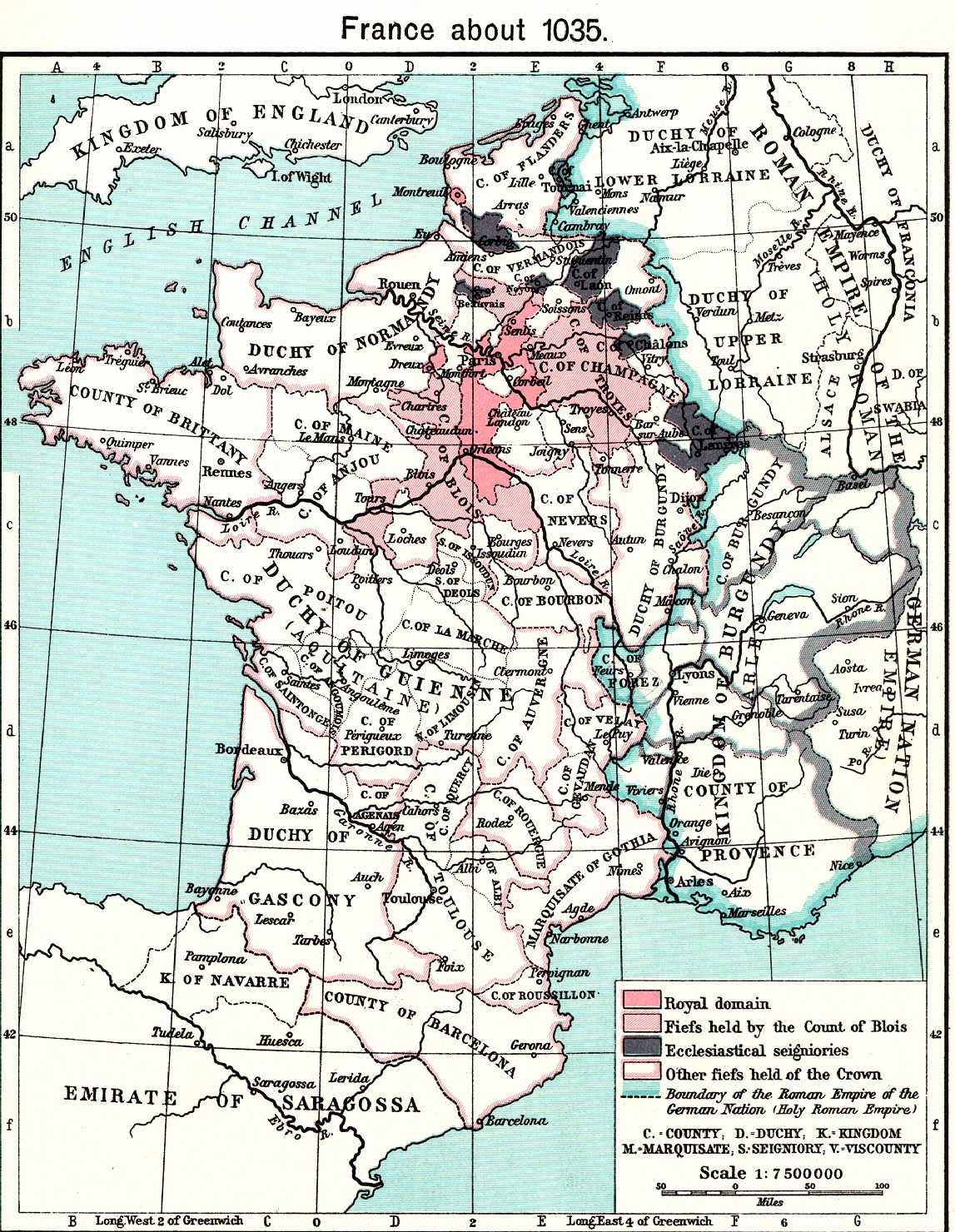
The Franks are first recorded in 260 AD, and were an aliance of a group of neighbouring Germanic tribes (the Salii, Sicambri, Chamavi, Bructeri, Chatti, and Chattuarii) in which the Sallii (Sallian Franks) were most dominant.[72] Prior to extensive Roman contact, the Franks were a rural tribal community. At the start of the migration period, the Franks moved into the Roman Empire and were accepted as Foederati by Julian the apostate in 358. By the end of the fifth century, the Salian Franks extended their footprint on Roman soil to a territory including the Netherlands south of the Rhine, Belgium and Northern France.[73]
It was during this time that the Franks adopted Christianity (first as Arianism, then as Catholicism) as their religion instead of their version of polytheistic Germanic paganism, learned new building techniques as well as the advantages of civic and urban life. This, together with loss of traditional Germanic tribalism, in which almost every village had its personal chieftain or even king, and the evolution of the Dutch language[74] (which diverged itself greatly from other Germanic dialects in this period) made it possible for a new people to emerge.
The following unity and strength allowed the Franks to conquer Gaul, however this also meant the assimilation of other peoples within the newly formed Frankish Empire. In time the term "Frank" was no longer a purely ethnic term and was used for and by all inhabitants of the Frankish Empire, most of which had little to no relation to either the Frankish people or their culture, leading to a loss of identification among the original Franks. The Treaty of Verdun of 843 marked the end of the Frankish Realm by dividing it into three separate realms, thus also ending the feeling of Frankish supremacy.
Because of centuries of central rule, the old Germanic tribal society was now a thing of the past, and this lead to a subsequent "re-invention" of the ethnic group. By the late 10th/early 11th century, a group emerges which not only is culturally Dutch, but also identifies itself as such. [75]
[edit] Epic ancestry

The popular view of Dutch ancestry is that the Batavians, a Germanic tribe living in the centre of the modern Low Countries, are the epic ancestors of the Dutch people. The Batavians were allied to the Roman Empire and romanized, but who rebelled against Rome between 69 and 70 AD. The Batavians, led by Gaius Julius Civilis, managed to destroy four legions and inflict humiliating defeats on the Roman army. During the Dutch revolt in the 16th century Dutch intellectuals and scolars saw a parallel between the Dutch revolt against Spain and the Batavian revolt against the Roman Empire and incorporated the Batavians, even though they were eventually defeated by a massive Roman army led by Quintus Petillius Cerialis, in what was essentially early modern propaganda, to strengthen the resolve of the men and women rebellion by giving them a linkage to a fierce and heroic tribe.
As a result a number of things related to the Dutch are and were named after this tribe. Examples include:
- Lingua Batava, a Latin term for the Dutch language.
- Batavia, the colonial capital of the Dutch East Indies, established in the 16th century, now Jakarta, Indonesia.
- The Netherlands were briefly (1795–1806) known as the Batavian Republic, a republic modeled after the French Republic.
Modern historians view the Batavians as a minor contributor and historical sources indicate the Batavians were greatly reduced both in numbers as well as influence after their reconquest. They were assimilated by the Sallic Franks, the true Dutch ancestors, at the beginning of the migration period.
[edit] Genetics
The Dutch descend from groups of people who settled in Europe during the Paleolithic and Neolithic eras. These people originated in what is now the Middle East and brought with them a distinct set of Y chromosomal and mitochondrial haplotypes as well as Indo-European languages, agriculture and pottery. Hence, the Dutch share a lot of their genetics with other European people; nevertheless, there are some mutations that arose among the Dutch.[76] The percentages of hair colour for the Dutch population are 43% brown, 40% blond and 17% other (note that this includes non-western ethnic minorities, so the actual percentages of blond or brown hair for the Dutch ethnic group are likely to be higher)[77] Generally the Dutch are described as being very tall, and they are indeed among the tallest people on earth, but this is a relatively recent development.[78]
[edit] Related ethno-linguistic groups
[edit] Flemings
The relation between the Dutch and Flemings is a complicated one. The existence of Flemings as an ethnic group is itself debated, and the idea of a Flemish nation or ethnic group is itself fairly recent.[79]
[edit] Relation between the Dutch and Flemish
The Flemish identity is the result of Belgium. It's a reaction by the Belgian Dutch against the politics in favour of frenchification of the unitary state and contempory fear of the Calvinism believed to reign the Northern Dutch. [80]
– E. Roosens, Belgian anthropologist.

The people who are today called Flemish, that is to say the Dutch-speakers of Belgium, are not the same group as the historical Flemish, who were a regional Dutch group positioned in the North-West France, West of modern Belgium, and the Dutch region of Zeelandic Flanders. This area was politically dominant and the most culturaly advanced during the Dutch Middle Ages. This latter group was undeniably a part of the Dutch ethnicity, though linguistically and religiously part of the Southern Dutch (below the Rhine river) subgrouping.
The people incorporated into the modern concept of Flemings, only partly descend from this group. Instead they are essentially descendants of the Southern Dutch. Though it should be noted that through the Belgian Revolution the Southern Dutch-grouping was effectively split, and as a result 3.5 million Dutchmen living in the Netherlands also have this Southern background, with effect forming an inter-cultural bridge between Dutch and the Flemings.
The Flemish people are generally not regarded as identical nowadays, and most Dutch people see them as a separate group. At the same time however, the Dutch and Flemish see themselves as the most similar people,[81] and some institutions see "Fleming" as an alternative term for "Dutch".
The situation in Belgium itself was/is very vague. Until 1980, for example, the Flemish community was called the Nederlandse Cultuurgemeenschap (Dutch for "Dutch cultural community") and there are people who deny the existence of the Flemish as an ethnic group, and refer to them as Dutch-speaking Belgians instead.
[edit] Walloons and Northern French
Walloons, the French-speaking Belgians, generally do not speak Dutch today, but in many cases (some) heritage can be linked to the (historical) Dutch. Many Walloon surnames for example are of Dutch origin[82] and some of the most well-known Walloons, such as Jacques Brel, Goswin de Stassart and Paul Émile de Puydt were (often partly) of Dutch(-speaking) heritage. In Northern France Dutch has been the traditional language for over 1,400 years. As a result of this, as well as migration of other Dutch towards the south, over 1,250,000 French people (out of a population of roughly 60 million) have Dutch surnames.[83] The position of these people is somewhat vague as they, although relatively close to the Dutch-culture area, are often frenchified if not entirely French. For example, in the now French city of Calais one can still find people singing traditional Dutch songs, even though the people who sing them have no idea what they mean.[84]
[edit] Afrikaners
- Main articles: Afrikaners and Afrikaans.
The Afrikaners are a relatively young ethnic group native to South Africa and Namibia. They are largely the dencendants of Dutch emigrants augmented by smaller numbers of Rhinelandic Germans and French Huguenots.
In term of ancestry they differ little from Dutch Americans, Dutch Australians or Dutch Canadians. The major difference between Afrikaners and the aforementioned is that the Afrikaners did not adopt English as their new native tongue, but continued to speak (a creolized version of) Dutch. This form of Dutch eventually evolved into Afrikaans; the native language of about 6,5 million people.
Until the early 20th century, the times of the First and Second Boer Wars, there was a strong sense of unity between the European Dutch and the Dutch living in South Africa, this has gradually faded. Most Afrikaners acknowledge that they descend from the Dutch and are a closely related people, but they generally do not consider themselves to be ethnic Dutch. This is largely due to Afrikaner nationalism following the oppression of the Cape Dutch and Boers by the British Empire, which somewhat estranged the South African Dutch from their European counterparts.
[edit] Frisians
Frisian may refer to an ethnic group, a regional or cultural identity, to inhabitants of the Province of Friesland, or to speakers of the West Frisian language.
Originally the Frisians (or Frisii) were a clearly separate people, but following migration period lost much of their initial power and came to be dominated by surrounding tribes. This eventually lead to an effective tripartite of the original Frisians; namely the North Frisians, East Frisians and West Frisians. Though already under their cultural influence, the West Frisians did not become politically dominated by the Dutch until the 1400s.[85]
Though culturally, and genetically, very similar the Frisians have their own customs (to a certain extent) as well as their own language: West Frisian, which is a language closely related to Dutch, but even more so to English.
Because of the centuries of cohabitation and active participation in Dutch society, the Frisians are not treated as a separate group in Dutch official statistics and Dutch Frisians in the general do not feel or see themselves as part of a larger group of Frisians, namely the East and North Frisians of Germany and Denmark, but, according to a 1970 inquiry, identify themselves more with the Dutch than with other Frisians.[86]
[edit] Dutch diaspora
Emigrants from the Netherlands since the Second World War went mainly to the United States, Canada, Australia, New Zealand, (until the 1970s) to South Africa, and Dutch immigrants can be found in most developed countries. In several former Dutch colonies and trading settlements, there are isolated ethnic groups of full or partial Dutch ancestry.
[edit] The Dutch in Asia

The Dutch have had a profound effect on the history of South East Asia, Taiwan and Japan; the Dutch settlement on Deshima provided for centuries the only means of cultural exchange between Japan and European civilization, and indeed most of the outside world. In many cases the Dutch were the first Europeans the natives would encounter. As a result there has been some considerable ethnic stereotyping. The Japanese described the Dutch as red-haired barbarians[87] and in Malay, the language of the former Dutch East Indies, the name for the Long-nosed Monkey literally translates as "Dutchman", as in Eastern Asian eyes the noses of Europeans were exceedingly large.
[edit] Descendants
After the Indonesian Revolution, most Dutch were either evacuated or evicted from Indonesia. Ever since the earliest days of the VOC several waves of mainly Dutch males decided to stay in the islands now known as Indonesia. Through the centuries there developed a relatively large Dutch-speaking population of mixed Dutch and Indonesian descent, known as Indos or Dutch-Indonesians. Nowadays the majority of this group lives in the Netherlands.
[edit] The Dutch in Australia and New Zealand
I really accuse my fellow Dutch people of being too quiet and too polite here. We should have made waves, because other groups did and got something for it![88]
– A Dutch New Zealander.
Perhaps the most successful integration of Dutch people took place in Australia and New Zealand. After the second World War thousands of Dutch people emigrated to Australia, peaking in the late 1950s and early 1960s. There are 24 Dutch language programmes around Australia and weekly and monthly Dutch news papers plus many social, community and religious clubs. Despite these figures, in both Australia and New Zealand Dutch people are highly integrated. Apart from the typical Dutch surnames many descendants bear, they are largely indistinguishable from the largest ethnic groups, the Anglo-Celtic Australians (85%[89] ) in Australia and other New Zealand Europeans in New Zealand. One major exception exists though. and this concerns senior citizens of Dutch decent, many of whom (because of old age or dementia) have lost the ability to speak English and fall back on their mother tongue; Dutch. A major social problem as they largely lack a way to communicate. Their children generally do not speak Dutch natively or sufficiently.
[edit] The Dutch in the Western Hemisphere
[edit] United States

The Dutch had settled in America long before the establishment of the United States of America.[90] For a long time the Dutch lived in Dutch colonies, owned and regulated by the Dutch Republic, which later became part of the Thirteen Colonies. Nevertheless, many Dutch communities remained virtually isolated towards the rest of America up until the American Civil War, in which the Dutch fought for the North[17] and adopted many American ways.[91]
Most future waves of Dutch immigrants were quickly assimilated. There have been three American presidents of Dutch descent: Martin van Buren (8th, first president who was not of British descent, first language was Dutch), Franklin D. Roosevelt (32nd, elected to four terms in office, he served from 1933 to 1945, the only U.S. president to have served more than two terms) and Theodore Roosevelt (26th).
[edit] Canada
It's hard to get close to Canadians because they are reserved. They are always helpful in emergencies, but then they go back in their shell and want to be private. We Dutch are very open and always ready with comments, criticism and advice. We're not afraid to come out straight and ask, "How much money do you make?" The Canadians think we are rude for this.[92]
– A Dutch Canadian.

According to the 2001 Canadian census 923,310 Canadians claim full or partial Dutch ancestry.
The first Dutch people to come to Canada were Dutch Americans among the United Empire Loyalists. The largest wave was in the late 19th and early 20th century, when large numbers of Dutch helped settle the Canadian west. During this period significant numbers also settled in major cities like Toronto. While interrupted by the First World War this migration returned in the 1920s, but again halted during the Great Depression and Second World War. After the war a large number of Dutch immigrants moved to Canada, including a number of war brides of the Canadian soldiers who liberated the Netherlands.
Dutch Canadians, like Dutch Australians, have a reputation of being highly, if not perfectly, integrated ethnic groups. Nevertheless many Canadians of Dutch descent and recent Dutch expatriates still judge Canadian society by their own, Dutch, standards and morals. Generally they view other Canadians to be slow, laid back and passive, traits that the Dutch find to be irritating.[93]
[edit] Other notable "Hyphenated Dutchmen"
Some examples of people of Dutch descent among other nations/peoples:
- Dutch English (wo)men: Jane Seymour, Audrey Hepburn, George III. See also Dutch community in the United Kingdom
- Dutch French(wo)men: André Citroën, Baron de Cloots, Laure Manaudou.
- Dutch Mexicans: Linda Christian, Roberto Vander.
- Dutch Indonesians
- Dutch Brazilians: Chico Buarque, Djavan, Gilberto Freyre, Bebel Gilberto, Eustáquio van Lieshout, Lobão, Carla Maffioletti, David Neeleman, Ismael Nery, Nelson Angelo Piquet, Herman Claudius van Riemsdijk, Marc van Roosmalen, José Wilker.
- Dutch Israelis: See List of Dutch Israelis.
- Dutch Japanese: Dido Havenaar, Mike Havenaar, Ludo Stornebrink.
- Dutch Spaniards: Mercedes Coghen, Aschwin Wildeboer, Olaf Wildeboer, Rafael van der Vaart.
- Dutch Swedes: Cornelis Vreeswijk, Louis De Geer, Marcus Schenkenberg, Jonas Bronk.
[edit] History

Legend: Dutch. (West) Frisian. (High) German. French. Low Saxon.
The history of the Dutch, as of most European peoples, is complex and intertwined through migrations and shifting empires. In this section, a short overview of these issues in relation to the approximate area of the current Netherlands is sketched.
In the Roman Empire, the imperial boundary ran east-west through the present Netherlands, along the Rhine. Within the empire, tribal groups included the Belgae (whose name was adopted in 1830 for the new Kingdom of Belgium), and the Batavi (whose name was adopted for the Dutch Batavian Republic). After the Fall of the Roman Empire, by the end of the Migration Period, the Low Countries were inhabited by Frisians, Saxons and the Franks. Of these three groups, the Franks were most dominant,[94] and would in fact conquer large areas of Europe in the subsequent centuries. In 843, the Treaty of Verdun divided the (Frankish) Carolingian Empire into three kingdoms for the three sons of Louis the Pious. The Low Countries became part of Middle Francia under Emperor Lothair I.
In 962, the Holy Roman Empire was established with the coronation of Otto the Great, extending from the Low Countries to Italy. The Holy Roman empire was a largely decentralised state and its authority within the low countries was never very strong. Later, semi-independent fiefdoms formed in the Low Countries; the most powerful being Brabant, Flanders, Guelders, Holland and Luxembourg. The first steps towards political unification of the Low Countries took place under the dukes of Burgundy (until 1473). The Pragmatic Sanction of 1549, issued by Charles V, established the Low Countries as an independent entity, the Seventeen Provinces, with boundaries approximating to the present Benelux, as an entity separate from the Holy Roman Empire and France.
Although the Seventeen Provinces had become a political unity, there were still great regional differences. The eastern (e.g., Guelders and Liege) and southern provinces (Artois) were less densely populated and agrarian. These provinces were also partially oriented towards their (German or French) neighbours. A division between North and South was not foreseeable at the time. The primary contrast was between the rich urbanised coastal provinces (Flanders, Zealand and Holland), and the less developed peripheral domains.[95]
As the Reformation gained influence in Europe, Calvinism became very influential in the Seventeen Provinces, including Artesia and Flanders, the base of the Spanish governors. When Catholic Habsburg Spain turned to repressive policies, this added to general dissatisfaction in the Seventeen Provinces. In 1566, a wave of iconoclastic attacks on Catholic churches began what is now known as the Dutch Revolt. During the succeeding rebellion, the Spanish forces managed to re-establish their power in the southern provinces. In the north, the Dutch Republic emerged, defining for the first time an independent Dutch nation. The economic golden age, and spread of Calvinism, redefined the Dutchman across Europe as a Hollander rather than a Fleming, as had previously been the case.[96]

As the Spanish forces reconquered the Southern cities (in present-day Belgium), of which the fall of Antwerp in 1585 was most notable, many Calvinists, including much of the local economic and cultural elites, fled north. The Southern Netherlands remained under Spanish rule, and remained almost entirely Catholic. In 1648, the Peace of Westphalia recognised the de facto geopolitical division of the former Seventeen provinces. The Dutch Republic prospered and created the trade-based Dutch Empire overseas, while the Southern Netherlands had lost their leading economic role in Europe. In the 18th century, the power of the Dutch republic started to diminish.
After a short lived existence as the Batavian Republic supported by French revolutionaries, and as the vassal state Kingdom of Holland, the Low Countries were for a short time (1810–1813), annexed by the French Empire. At this time, the English occupied the Dutch colonial possessions. Except for the Cape Colony (South Africa) and Ceylon (Sri Lanka), the colonial possessions were returned after Napoleon had been defeated. The lasting division between the Dutch and the Boers (who were Dutch settlers in South Africa) started here. When France was defeated in 1814 and again after the Hundred Days Campaign in 1815, the winning coalition, created the United Kingdom of the Netherlands comprising of the Northern and the Southern Netherlands at the Congress of Vienna. The new state, intended to act as a semi-buffer state between France and Prussia, proved to be unworkable; not only did it include different ethnic and linguistic groups (Walloons, Germans and Dutch), the state was also divided by cultural, religious, and internal economic differences. In 1830, the southern provinces declared their independence in the Belgian revolution. In 1839, the independence of Belgium was recognised by the northern Kingdom of the Netherlands. With the resolution of the status of Luxembourg in 1890, the three states acquired most of their present boundaries. The Netherlands are a constitutional monarchy.
[edit] Influence on the world
- See also: Dutch Empire

Although comparatively small in numbers, the Dutch have definitely made their mark on the world, as we know it today. The Dutch Republic was an economic and military power during much of the 17th century, and involved in many conflicts of the time, such as the Anglo-Dutch Wars.The economy was carried by private enterprises, for the first time on that scale and the Dutch East India Company issued the first freely tradable stock, one of the cornerstones of modern economy.
Dutch colonialism still influences the lives of many today. Beginning in the 16th century, Europeans such as the Dutch began to establish trading posts and forts along the coasts of western and southern Africa. Eventually, a large number of Dutch, augmented by French Huguenots and Germans, settled in the Cape Colony. Their descendants in South Africa, the Afrikaners and the Coloureds, are the largest European-descended groups in Africa today, see Demographics of Africa. The Dutch also controlled what is now known as Indonesia, and waged various wars against its native inhabitants in a series conflicts raging from the early 16th to the late 20th century. The area surrounding New York was a Dutch colony and in fact many street names and geographical locations still bear Dutch (though Anglicised) names, see Legacy of the Dutch in New York for more information.
[edit] Notable Dutch people
- Further information: List of Dutch people
A significant number of painters and philosophers are Dutch, despite its small population. Remarkable persons include painters like Van Gogh, Rembrandt and Vermeer, and philosophers like Spinoza (though not of Dutch heritage),[97] Erasmus of Rotterdam and Hugo Grotius as well as various poets and writers such as Pieter Corneliszoon Hooft, Joost van den Vondel and Anne Frank[97] and scientists like Christiaan Huygens also made their mark on how we today view the world. The Netherlands were arguably the first nation state of the world and the first republic in modern Europe. During the early 17th century, the economic reforms, empire and ideas made the Netherlands one of the world's richest countries and the first thoroughly capitalist country.[98]
[edit] Culture and society
[edit] Dutch culture

Dutch culture is diverse, reflecting regional differences as well as foreign influences owing to the merchant and exploring spirit of the Dutch.[99] The Netherlands and Dutch people have played an important role for centuries as a cultural center, with the Dutch Golden Age regarded as the zenith. During the 20th century Dutch architects played a leading role in the development of modern architecture, and Dutch painters like Rembrandt and Van Gogh are world renowned.[100]
The Dutch people and their culture were historically influenced by the culture of neighbouring regions. France played a substantial role in the history of the Netherlands in the 17th, 18th and early 19th centuries, and there are resulting cultural influences. Cultural contacts with Scandinavia were, and are, much less influential. English-speaking cultural influences have been predominant since the Second World War. The Dutch were also influenced by their colonies, most notably Indonesia.
[edit] Traditional Dutch music

Dutch traditional music, of Dutch Folk, is characterized by simple straightforward bass motives heavily supplemented with fast, often happy, melody. (Click here for an example.) Uncommon among other European folk, in Dutch music the bass line, not the melody, is the musical line that is danced to. This means that though the music itself may sound fast, the dances are usually quite moderate to slow in tempo. The dances themselves are mainly group dances rather than individual or dual dances.[101] Clogs are often worn during dances; however, Dutch clog dancing is very different from its more modern counterpart. It is virtually impossible to perform highly active dances with Dutch clogs (which are entirely made from wood, not just the sole) and hence the clogs function as additional percussion, by stamping rhythmically. Instruments commonly found in Dutch folk are the accordion, flute, fiddle, hurdy gurdy, small (mobile) organs, and the rommelpot.[102]
[edit] Religion

Green: Catholicism
Red: Protestantism.
- See also: History of religion in the Netherlands
The Dutch population can be separated into two main religious groups: Roman Catholics and Protestants. During and after the Dutch revolt against Spain, Protestantism became the dominant religion in most of the country. The provinces of North Brabant and Limburg and the region of Twente, however, remained predominantly Catholic.
At 30 percent of the population, Catholics form the largest religious group today. Meanwhile, the Dutch belong to many separate Protestant churches, the largest of which are the Dutch Reformed Church (Nederlands Hervormd) and the Reformed Churches in the Netherlands (Gereformeerd), although in 2004 these merged to form the Protestant Church in the Netherlands.
During the late 19th and early 20th centuries the different religious groups were living completely separately from each other, and from the newly emerging socialist labour movement. These sub-societies were a form of horizontal stratification: people lived and married within their own communities, and the pillars had their own schools and universities, media (newspapers, magazines and radio broadcasting associations), sport clubs, shops, hospitals, unions and political parties. This intense social fragmentation was called verzuiling and led to significant tension within Dutch political life. Pillarisation is described in detail in Arend Lijphart's seminal work on consociationalism, The Politics of Accommodation.
After peaking in influence in the 1950s, the social system of pillarisation started to crumble in the early 1960s during the Dutch postmaterialist revolution, due to secularisation, individualism, consumerism, counter-culture, rising living standards, the emergence of mass media (especially television), increased social and geographical mobility, and agitation by movements such as Provo, D66 and Nieuw Links.
A 2004 study conducted by Statistics Netherlands shows that 50% of the population claim to belong to a Christian denomination, 9% to other denominations and 42% to none. In the same study 19% of the people claim go to church at least once a month, another 9% less than once a month, 72% hardly ever or never.[103][104] There is a small Jewish community of some 40,000 people, mostly in the larger cities.
People of Dutch ancestry in the United States are generally more religious than their European counterparts [18]; the numerous Dutch communities of western Michigan remain strongholds of the Reformed Church in America, and the Christian Reformed Church, both descendants of the Dutch Reformed Church.
[edit] Sports
There are a number of sports which the Dutch possibly invented or Dutch claim to have invented, which then spread worldwide, examples include ice hockey[105] and golf.[106] Apart from these worldwide sports there are also a number of local Dutch sports such as polsstokverspringen, kaatsen, klootschieten, kolven and korfbal.
The most popular sports, both for active participation and audience, are football (soccer), cycling, speed skating, field (not ice) hockey and tennis.
[edit] Dutch image
He builds your confidence, makes you feel special and gives the clear impression you are getting a fair deal, all while creating the atmosphere of comfort and caring. In truth, he couldn't care less. The only YES he really understands is the ¥€$ you'll bring to him and his company.[107]
– The Undutchables, Work vs. Welfare; Commercial cunning.
Like many other peoples, the Dutch have an 'international image'. This image however, is often subjected to stereotyping, whether positive or negative, and rarely is entirely accurate. The sections below will try to explore the image of the Dutch.
[edit] Dutch image worldwide
Many nations regard the Dutch as being organized and efficient, but harmless at the same time due to the stereotypical mental picture of "a nation of rosy-cheeked farmers who live in windmills, wear clogs, have a garden full of tulips and sit on piles of yellow cheese".[108] Apart from the more or less touristy image described above, the Dutch also have a reputation for being opinionated, stubborn and incurably mean. Belgians even consider them to be downright devious in business affairs. Dutch frankness completely overwhelms more reticent peoples such as the Japanese, who consider the Dutch to be the most arrogant of all the Europeans they do business with,[109] but at the same time are impressed by their reputation as formidable merchants. A Japanese saying goes, "Where a Dutchman has passed, not even the grass grows anymore."
Not just the Japanese may experience the Dutch as being (what they consider) blunt or insulting.[110] The author of "Dealing with the Dutch" illustrates this with a story he got from an American businessman whose Dutch colleague had stayed over for the night and for the first time got American pancakes for breakfast. After the Dutchman ate the pancakes the businessman's wife asked him if he'd enjoyed them. The Dutchman allegedly responded: "Sharon, after tasting these, I understand why your husband is so fat." The author explains that he was just making a compliment and meant nothing by it, however in many other cultures, this would be a grave insult towards the host and could very well be the end of a cordial relationship.[111]
The Dutch negotiator is the commercial equivalent of the Venus flytrap. His true nature is camouflaged -- then he strikes and consumes his prey before the victim realizes he is financial fodder.[112]
– The Undutchables, Work vs. Welfare; Commercial cunning.
English people survey the Dutch with guarded approval. It wasn't always like this, at the time of the Anglo-Dutch Wars in the 17th century these two nations were at each other's throats. An English pamphlet raged: "A Dutchman is a Lusty, Fat, Two-legged Cheese worm. A Creature that is so addicted to eating butter, drinking fat, and sliding (skating) that all the world knows him for a slippery fellow". At this time the English language gained a whole array of new insults such as "Dutch courage" (booze-induced bravery), "Dutch comfort" ("Things could be worse") and "Dutch gold" (alloy resembling gold).[109] Others include:
|
|
These terms also gained prominence in 17th century New England during their rivalry with New Holland, which was captured (and later recaptured by the Dutch) during the Second Anglo-Dutch War. See also Dutch#Colloquial usage.
[edit] Symbols
Stereotypical Dutch symbols such as wooden shoes, Dutch bonnets and braided hairstyles typically accented with ribbons (for the girls), blonde hair, tulips, cheese and windmills, are not considered symbols of the Dutch by the Dutch themselves, but actually reflect a foreign popular image of the Netherlands and the Dutch. The Dutch national symbols mainly include the Dutch flag and the "national colour" orange (used for the national team in sports). The red, white and blue flag is the oldest tricolour in continuous use. Orange is also the symbolic colour of the Dutch royal family, the House of Orange-Nassau, through the principality of Orange. Another symbol of the Dutch is Het Wilhelmus, the Dutch national anthem, which is considered the world's oldest anthem in use.[113] The form of the song is that of an apologetic statement by William I of Orange-Nassau, leader of the Dutch revolt against Spain.
[edit] The Dutch in popular culture

Popular culture depicts Dutch people in two completely distinct ways.[114] The traditional Dutch image displays people in national dress, wearing clogs, having blond hair and blue eyes, standing in front of wide, flat landscapes covered with tulips and windmills in the background. The more recent image (usually intended to be seen as negative) is one of non-religious drug addicts, who legalized prostitution, marijuana, abortion, euthanasia and gay marriage.
Neither of these stereotypical images is correct. Only a small minority of the Dutch people wears traditional costumes on occasion in certain parts of the country or to entertain tourists.[115] Clogs, or wooden shoes, are not usually worn in public life. However, they are quite practical for gardening and farming. The drug and value related stereotypes of the Dutch are relatively recent, from around 1985. The Dutch laws no longer establish drug use and small scale sales of some drugs as a criminal act, which created the widespread stereotype that the Netherlands are a drug-based society, especially in the Western Hemisphere.[116]
[edit] Dutch people in fiction
- See also: Fictional Dutch people.
The Dutch, and people of Dutch decent, regularly appear in fiction. Their roles greatly vary, ranging from (primary) antagonists Goldmember (from the Austin Powers series) and Jason Voorhees (Friday the 13th) to ghosts (Hendrik van der Decken, better known as the Flying Dutchman) and heroes like Hansje Brinker and Abraham Van Helsing.
[edit] Self-image
The Dutch self-image differs considerably from the images other people have of them (see section below). The Dutch often profess that they greatly value hygiene, are thrifty, have an excellent feel for business, are good at foreign languages[117] and have an ability to coexist with others. The Dutch take pride in their tolerance and flexibility, and are generally modest people. According to the Xenophobe's Guide, perceived negative characteristics are a secret mistrust of foreigners and a distaste of alien cuisine.[109][118] Traditionally, the Dutch are also said to be preachers, and it is common to (deprecatingly) speak of "the preacher's wagging finger" (Dutch "het opgeheven vingertje van de dominee") as a typically Dutch trait,[119][120] especially when referring to the moralising tone that is seen by many as characteristic of Dutch foreign politics.[121]

[edit] Dutch views on others
As in other cultures, there exist among the Dutch certain stereotypes about foreign peoples. This section explores some of these stereotypes. It should be kept in mind that the views mentioned below are popular images rather than serious opinions.
The Dutch tend to judge foreign cultures using the standards and values they hold dear. Traditionally, the socio-political climate in the Netherlands has been one of collaboration and working towards compromises. Accordingly, cultures with different standards are often considered unsympathetic.[122]
When compared to other cultures, the Dutch are rather reserved, in public, and do not often touch each other or display anger or extreme exuberance. This is why people and cultures who display these "vices", for example those living around the Mediterranean Sea, are regarded by the Dutch as being too emotional. In Dutch society, extravagantly flaunting ones emotions (whether positive or negative) is easily seen as an 'act'.[123] It's neatly illustrated by the Dutch proverb "Doe maar gewoon, dan doe je al gek genoeg" (Act normal, than you'll be crazy enough).
[edit] Views on surrounding peoples/nations
After centuries of close commercial, military, cultural and religious relations between the Netherlands and Great Britain, the Dutch have a generally positive opinion of the British. Anglophone television programmes and English literature are popular and held in high regard, and English is widely spoken. Americans are typically also thought to be principally "good" people, though somewhat uneducated, unsophisticated and badly guided by their politicians.
The Dutch have an entirely different stereotype of the Belgians. They feature prominently in Dutch jokes in which they were typically defamed as not sensible or well-educated. This is however commonly accepted to be a fictional image, originating at the time of the Belgian Revolution, in which the Southern provinces seceded from the United Kingdom of the Netherlands. Most, if not all, Dutch people consider the Belgians to be the most similar to themselves. It should be noted that when the Dutch speak of any Belgian kinship, they nearly always mean the Flemish (the Dutch-speaking inhabitants of Belgium) rather than the Walloons.[124][125]
[edit] Germans
For centuries,[126][127][128] and most recently since World War II, a (strong) feeling of animosity exists towards Germans. They are said to be rude, arrogant, noisy and intolerant.The Xenophobe's Guide to the Dutch warns people that, " ... telling a Dutch person that their language seems very similar to German is unlikely to benefit your relationship."
The Dutch possess a deep aversion to all things German, especially the people. Such hostilities, undoubtedly, are attributable to the German invasion and subsequent occupation of the Netherlands during the Second World War. The evils that World War II brought to the Dutch homeland are not forgotton to this day, and the perpetrators are not forgiven.[129]
– M. Resch, author of Only the Dutch.
Germans are generally aware of this atmosphere and attitude towards them and often tread carefully when in the Netherlands.
Even though many Dutchmen are able to converse in German. Germans will adress the Dutch in English because many Dutch won't even acknowledge German speakers. [...] A German who asks a question in German without asking if the Dutch person speaks any German, should not expect any help.[130]
– M. Resch, author of Only the Dutch.
Next to the Second World War, another source of animosity is the 1974 FIFA World Cup final, in which Germany beat the Netherlands.
The Dutch aversion towards the Germans is usually most internationally visible during the events surrounding the European and World Cup. Dutch-German football matches stir up excitement and patriotism in the Dutch perhaps more than anything else. When the Dutch beat the Germans 2-1 in a 1988 semi-final match in Hanover, Germany, the country exploded into festivities. Fireworks were shot off and the Dutch partied for several days celebrating the victory. Well-known separate incidents between the Dutch and German team include:
- Ronald Koeman, who used a German shirt he received (a sign of respect) as toilet paper.
- Frank Rijkaard, who spat at Rudi Völler.
- In 1990, Dutch supporters carried with them a banner portraying Lothar Matthäus as Adolf Hitler.
I didn't give a damn about the score. 1-0 was enough, as long as we could humiliate them. They murdered 80% of my family. My father, my sister, two of my brothers. I hate them.
– Willem van Hanegem, on the first football match between Germany and the Netherlands since WWII in 1974.
Dutch authorities are cognizant of such anti-German sentiment and have been trying to moderate such feelings over the past few years, and according to recent studies the attitude towards German people has become less antagonistic.[131]
[edit] Gallery of famous and influential Dutch people through the ages
 Count Floris V of Holland and Zeeland (1254-1296) |
 Desiderius Erasmus of Rotterdam, humanist and theologian (1466/9-1536) |
 Pope Adrian VI, reigned 1522-1523 |
 William the Silent, stadholder and first leader of the Dutch revolt (1533-1584) |
 St. Petrus Canisius, Catholic apologetic (1521-1597) |
 Hugo Grotius, jurist, philosopher, playwright, and poet. (1583-1645) |
 Rembrandt Harmenszoon van Rijn, Dutch painter and etcher (1606-1669) |
 Johan de Witt, Grand Pensionary of the Dutch Republic (1625-1672) |
 Michiel Adriaenszoon de Ruyter, admiral (1607-1676) |
 Jan van Riebeeck, founder of the Cape Colony (1619-1677) |
 Christiaan Huygens, mathematician, astronomer and physicist (1629-1695) |
 Antonie Philips van Leeuwenhoek tradesman, scientist and father of microbiology (1632-1723) |
 Isabelle de Charrière, Writer of letters, novels, pamphlets and plays (1714-1805) |
 Johan Rudolf Thorbecke, politician (1798-1872) |
 Multatuli: Eduard Douwes Dekker, novellist (1820-1887) |
 Thomas Alva Edison, inventor and businessman (1847-1931) |
 Hendrik Antoon Lorentz, physicist and Nobel Prize winner (1853-1928) |
 Pieter Cornelis (Piet) Mondriaan, painter and publicist (1872-1944) |
 Frederik ("Frits") Jacques Philips, industrialist (1905-2005) |
 Hella Serafia Haasse, writer (1918-) |
 Hannie Schaft, resistance fighter during World War II (1920-1945) |
 Willem Frederik Duisenberg politician and banker (1935 - 2005) |
 Adrianus ("Ard") Schenk, olympic, european and world champion speed skating (1944-) |
 Hermannus Jantinus "Herman" van Veen, stage performer, actor, musician and singer/songwriter and author (1945-) |
[edit] See also
- Demographics of the Netherlands
- List of Dutch people
- Dutch customs and etiquette
- Dutch diaspora
- Netherlands (terminology)
- Pretty Little Dutch Girl, a nursery rhyme attributing to the Dutch people
[edit] Notes and references
- ^ According to a 1990 study by Statistics Netherlands there were 472,600 Dutch Indonesians residing in the Netherlands. They are the descendants of both Dutchmen and native peoples of Indonesia.
- ^ Autochtone population at 1 January 2006, Central Statistics Bureau, Integratiekaart 2006, (external link)
- ^ Belgian migrational statistics.
- ^ Dutch-born 2001, Figure 3 in DEMOS, 21, 4. Nederlanders over de grens, Han Nicholaas, Arno Sprangers. [1]
- ^ According to Factfinder.census.gov
- ^ Dutch-born, 2001, Figure 3 in DEMOS, 21, 4. Nederlanders over de grens, Han Nicholaas, Arno Sprangers. [2]
- ^ Based on figures given by Professor JA Heese in his book Die Herkoms van die Afrikaner (The Origins of Afrikaners), who claims the modern Afrikaners (who total around 4.5 million) have 35% Dutch heritage. How 'Pure' was the Average Afrikaner?
- ^ 210,000 emigrants since the Second World War, after return migration there were 120,000 Netherlands-born residents in Canada in 2001. DEMOS, 21, 4. Nederlanders over de grens, Han Nicholaas, Arno Sprangers. [3]
- ^ Based on Statistics Canada, Canada 2001 Census.Link to Canadian statistics.
- ^ Dutch-born, 2001, Figure 3 in DEMOS, 21, 4. Nederlanders over de grens, Han Nicholaas, Arno Sprangers. [4]
- ^ 2001 Australian statistics
- ^ Joshuaproject.net gives 164,000 Dutch people living in Germany..
- ^ [5].
- ^ Dutch-born, 2001, Figure 3 in DEMOS, 21, 4. Nederlanders over de grens, Han Nicholaas, Arno Sprangers. [6]
- ^ Joshuaproject.net gives 83,000 Dutch people living in France.
- ^ Dutch-born, 2001, Figure 3 in DEMOS, 21, 4. Nederlanders over de grens, Han Nicholaas, Arno Sprangers. [7]
- ^ See Demographics of Sri Lanka or this link on the Burgher people.
- ^ (Dutch) Dutch-born, 2001, Figure 3 in DEMOS, 21, 4. Nederlanders over de grens, Han Nicholaas, Arno Sprangers. [8]
- ^ gives 26,000 Dutch people living in Denmark..
- ^ gives 20,000 Dutch people living in Spain..
- ^ Schweizerische Eidgenossenschaft, Bundesamt für Migration. Ständige ausländische Wohnbevölkerung nach Staatsangehörigkeit, 12/2006. [9]
- ^ 2006 Irish Census [10]
- ^ (Dutch) http://statline.cbs.nl/StatWeb/publication/?VW=T&DM=SLNL&PA=37944&D1=a&HD=080528-1938&HDR=T&STB=G1 CBS statline Church membership
- ^ (Dutch)Religion in the Netherlands.
- ^ Mainly the descendants of Dutch colonists in South Africa, speak Afrikaans a Dutch semi-creol.
- ^ Share language and origin with the Dutch, live adjacent to the Dutch.
- ^ (Inhabitants of Friesland) Are bilingually Dutch, have a largely intertwined history and also possessing Germanic heritage.
- ^ See the Dutch diaspora section.
- ^ (Dutch) 13,186,600, autochtone population at 1 January 2006, Central Statistics Bureau, Integratiekaart 2006, (external link)
- ^ Based on Statistics Canada, Canada 2001 Census.Link to Canadian statistics.
- ^ 2001 Australian statistics
- ^ Based on figures given by Professor JA Heese in his book Die Herkoms van die Afrikaner (The Origins of Afrikaners), who claims the modern Afrikaners (who total around 4.5 million) have 35% Dutch heritage. How 'Pure' was the Average Afrikaner?
- ^ According to Factfinder.census.gov
- ^ English has 400 million and German 100 million native speakers, respectively. Dutch comes in 3rd with 22 million speakers. When Afrikaans is included, the Dutch language totals 36 million speakers.
- ^ (Dutch) The first Dutch people (in Dutch language)
- ^ http://roepstem.net/francois_boom.html Germanic heritage of the Dutch.](Dutch)
- ^ Dutch, being a Low Franconian language.
- ^ www.etymonline.com and (Dutch) Etymologisch Woordenboek van het Nederlands entries "Dutch" and "Diets".
- ^ (Dutch) See J. Verdam, Middelnederlandsch handwoordenboek (The Hague 1932 (reprinted 1994)): "Nederlant, znw. o. I) Laag of aan zee gelegen land. 2) het land aan den Nederrijn; Nedersaksen, -duitschland."
- ^ (Dutch) Source on the Low Countries. (De Nederlanden)
- ^ (Dutch) neder- corresponds with the English nether-, which means "low" or "down". See Online etymological dictionary. Entry: Nether.
- ^ (Dutch) Etymologisch Woordenboek van het Nederlands entry "Diets".
- ^ "Maltho thi afrio lito" is the oldest attested (Old) Dutch sentence, found in the Salic Law, a legal text written around 450 AD.
- ^ See article on New Zealand
- ^ As many as 100,000 New Zealanders are estimated to have Dutch blood in their veins (some 2.1% of the current population of New Zealand).
- ^ See the history section of the Vanderbilt family article, or visit this link.
- ^ "It is a common mistake of Americans, or anglophones in general, to think that the 'van' in front of a Dutch name signifies nobility." (Source.); "Von may be observed in German names denoting nobility while the van, van der, van de and van den (wether written separately or joined) stamp the bearer as Dutch and merely mean 'at', 'at the', 'of', 'from' and 'from the' (Source: Genealogy.com), (Institute for Dutch surnames, in Dutch)
- ^ Percentage of ethnic Dutch, including those of Dutch ancestry, (≈25 million) when compared to the total world population (6.7 billion) = 0,37%
- ^ Percentage of ethnic Dutch, only those living in Europe, (13,5 million) when compared to the total European population (728 million) = 1,85%
- ^ Percentage of ethnic Dutch, only those living in the European Union, (≈13,5 million) when compared to the total population of the European Union (493 million) = 2,73%
- ^ In the 1950s (the peak of traditional emigration) about 350,000 people left the Netherlands, mainly to Australia, New Zealand, Canada, the United States and South Africa. About one-fifth returned. The maximum Dutch-born emigrant stock for the 1950s is about 300,000 (some have died since). The maximum emigrant stock (Dutch-born) for the period after 1960 is 1.6 million. Discounting pre-1950 emigrants (who would be about 85 or older), at most around 2 million people born in the Netherlands are now living outside the country. Combined with the 13,1 million ethnically Dutch inhabitants there are about 15 million people who are Dutch, in a minimally accepted sense. Autochtone population at 1 January 2006, Central Statistics Bureau, Integratiekaart 2006', ((Dutch) external link)
- ^ Autochtone population at 1 January 2006, Central Statistics Bureau, Integratiekaart 2006, (external link)
- ^ Dutch-born 2001, Figure 3 in DEMOS, 21, 4. Nederlanders over de grens, Han Nicholaas, Arno Sprangers. [11]
- ^ According to Factfinder.census.gov
- ^ Based on figures given by Professor JA Heese in his book Die Herkoms van die Afrikaner (The Origins of Afrikaners), who claims the modern Afrikaners (who total around 4.5 million) have 35% Dutch heritage. How 'Pure' was the Average Afrikaner?
- ^ 210,000 emigrants since the Second World War, after return migration there were 120,000 Netherlands-born residents in Canada in 2001. DEMOS, 21, 4. Nederlanders over de grens, Han Nicholaas, Arno Sprangers. [12]
- ^ Based on Statistics Canada, Canada 2001 Census.Link to Canadian statistics.
- ^ http://www.histedbr.fae.unicamp.br/navegando/glossario/verb_c_imigr_holandesa.htm Dutch immigration to Brazil].
- ^ Belgian migrational statistics.
- ^ 2001 Australian statistics
- ^ Joshuaproject.net gives 164,000 Dutch people living in Germany..
- ^ [13].
- ^ Te Ara, the encyclopedia of New Zealand, claims that: "[...] as many as 100,000 New Zealanders are estimated to have Dutch blood in their veins".
- ^ Joshuaproject.net gives 83,000 Dutch people living in France.
- ^ See Demographics of Sri Lanka or this link on the Burgher people.
- ^ (Dutch) Dutch-born, 2001, Figure 3 in DEMOS, 21, 4. Nederlanders over de grens, Han Nicholaas, Arno Sprangers. [14]
- ^ gives 26,000 Dutch people living in Denmark..
- ^ gives 20,000 Dutch people living in Spain..
- ^ Schweizerische Eidgenossenschaft, Bundesamt für Migration. Ständige ausländische Wohnbevölkerung nach Staatsangehörigkeit, 12/2006. [15]
- ^ 2006 Irish Census [16]
- ^ Quote taken from De Franken in Nederland - Dr.D.P.Blok, 1979, Bussum, Holland. ISBN90 228 3739 4, page 32.
- ^ De Franken in Nederland - Dr.D.P.Blok, 1979, Bussum, Holland. ISBN90 228 3739 4, page 17
- ^ (Dutch) The first Dutch people (in Dutch language)
- ^ (Dutch) The linguistic magazine Onze taal on the oldest and earliest Dutch.
- ^ De Franken in Nederland - Dr.D.P.Blok, 1979, Bussum, Holland. ISBN90 228 3739 4, page 54.
- ^ Scientific study of the Dutch genes.
- ^ (Dutch)Source. It says the Dutch have 43% brown, and 40% blonde hair and thus 17% other).
- ^ Dutch, World's Tallest People, Just Keep Growing, last line.
- ^ (Dutch) 'Ons volk bestaat niet' (Our people doesn't exist).
- ^ Nederlandse en Vlaamse identiteit, Betekenis, onderlinge relatie en perspectief. Civis Mundi, 2006.
- ^ (Dutch) Perceptie van similariteit, page 21.
- ^ Surnames in Belgium
- ^ According to 'Nederlands. Het verhaal van een taal.' (Dutch. The story of a language) by O. Vandeputte
- ^ Voor wie Nederland en Vlaanderen wil leren kennen. By J. Wilmots
- ^ Frisian history. (English)
- ^ Frisia. 'Facts and fiction' (1970), by D. Tamminga.
- ^ Prints were sold as souvenirs to Japanese who visited Nagasaki and hoped to catch a glimpse of these strange "red-haired barbarians".Red-haired barbarians, the Dutch in Japan (link).
- ^ Quote taken from The Undutchables by C. White and L. Boucke (5th edition, 2006, 1-888580-32-1), page 271.
- ^ Australian Bureau of Statistics, 2003, "Population characteristics: Ancestry of Australia's population" (from Australian Social Trends, 2003). Retrieved 1 September 2006.
- ^ The U.S. declared its independence in 1776; the first Dutch settlement was built in 1614: Fort Nassau, where presently Albany, New York is positioned.
- ^ How the Dutch became Americans, American Civil War (1861-1865).
- ^ Quote taken from The Undutchables by C. White and L. Boucke (5th edition, 2006, 1-888580-32-1), page 276.
- ^ The Undutchables by C. White and L. Boucke (5th edition, 2006, 1-888580-32-1), page 276.
- ^ Map of Frankish kingdoms, (image)
- ^ (Dutch) J. H. C. Blom et al. Geschiedenis van de Nederlanden (First edition), p. 107).
- ^ (Dutch) In J. H. C. Blom et al. Geschiedenis van de Nederlanden. (First edition. p 118).
- ^ a b Both Spinoza and Anne Frank are of non-Dutch heritage. While Anne Frank was born a German national and was later stripped of this (she died stateless in a concentrationcamp), she did have some Dutch blood from her mothers lineage, Spinoza has none since he and his family were originally Iberian Jews. Nevertheless, they are considered Dutch in the sense that they were raised with Dutch language and culture (alongside their own Jewish heritage) who considered themselves to be Dutch, as well. (Geschiedenis van de Joden in Nederland by R. Fuksmansfeld) This respect goes both ways as is illustrated by Anne Frank's inclusion in a recent game show aiming to identify the Greatest Dutchman of all times (as can be seen here), and the depiction of Spinoza on largest denomination of the national heroes series of Dutch guilder banknotes designed in the 1970s
- ^ Many economic historians regard the Netherlands as the first thoroughly capitalist country in the world. In early modern Europe it featured the wealthiest trading city (Amsterdam) and the first full-time stock exchange. The inventiveness of the traders led to insurance and retirement funds as well as such less benign phenomena as the boom–bust cycle, the world's first asset-inflation bubble, the tulip mania of 1636–37, and according to Murray Sayle, the world's first bear raider - Isaac le Maire, who forced prices down by dumping stock and then buying it back at a discount ("Japan Goes Dutch", London Review of Books [[[April 5]], 2001]: 3-7).
- ^ For example the introduction of Indonesian spices and herbs to the Dutch cuisine in the 16th century.
- ^ Artcyclopedia, list of most popular artists, Van Gogh ranks 2nd, Rembrandt 7th.
- ^ Nederlandse jaarfeesten en hun liederen door de eeuwen heen, by M. Kruijswijk. ISBN 90 6550 799
- ^ Nederlandse jaarfeesten en hun liederen door de eeuwen heen, by M. Kruijswijk. ISBN 90 6550 799
- ^ Statistical Yearbook of the Netherlands 2006, page 43
- ^ (Dutch) Religion in the Netherlands, by Statistics Netherlands.
- ^ See the Ice Hockey article.
- ^ Golf was mentioned on February 26, 1297 for the first time in the Netherlands in a city called Loenen aan de Vecht. Here the Dutch played a game with a stick and leather ball: the one who hit the ball in a target several hundreds of meters away the least number of times won.
- ^ Quote taken from The Undutchables by C. White and L. Boucke (5th edition, 2006, 1-888580-32-1), page 177.
- ^ The Xenophobe's Guide to the Dutch, page 4; "How others see them".
- ^ a b c The Xenophobe's Guide to the Dutch; "How they see themselves"
- ^ Saxion, on Dutch culture: [...] they can be very straightforward and frank, some people would say blunt.
- ^ As mentioned, source: "Dealing with the Dutch". J. Vossestein.
- ^ Quote taken from The Undutchables by C. White and L. Boucke (5th edition, 2006, 1-888580-32-1), page 177.
- ^ The Dutch anthem was written between 1568 and 1572 during the Eighty Years' War. The Japanese anthem has older lyrics, but the melody wasn't added until the early 20th century.
- ^ Profile of the Netherlands by NRC Handelsblad. (English)
- ^ For example in the village of Volendam.
- ^ According to a teacher of foreign students at Tilburg university, "Many students are surprised when they hear how Dutch drug policy really works and that the percentage of Dutch people who use drugs is actually below that of other European countries and the United States". (Link) See also comments on BBC News: Talking point.
- ^ According to a 2006 report by the Radboud University Nijmegen, however, the Dutch tend to seriously overestimate their competence in other languages as compared to other Europeans. Short summary in English here.
- ^ Whether or not this is part of the Dutch self-image, the continuous popularity of Indonesian food in the Netherlands, at any rate, has to be noted. Furthermore, Dutch taste has shifted markedly during the past thirty years. According to euromonitor.com, "Thirty years ago the Dutch just had meat, vegetables and potatoes for supper. Nowadays, Italian, Mexican and all kinds of other ethnic foods are common in Dutch food retail". At present, rice products, pizza and sushi are as common and popular as anywhere.
- ^ The Merchant as Exponent of Dutch Identity.:Alongside the preacher's wagging finger and the farmer's surly gaze, the merchant's purse has for centuries represented Dutch identity, both at home and abroad.
- ^ (Dutch) Interview with M. Rem, on the role of the Dutch in worldwide politics.
- ^ (Dutch) The Netherlands: An example to the world?
- ^ The Xenophobe's Guide to the Dutch, page 4 and 5; "How they see others" and "Special relations".
- ^ The Undutchables, by White & Boucke, ISBN 1-888580-32-1.
- ^ (Dutch) Clingendael, "What do you think about with the word "Belgians", "Flemish" or "Walloons"? (page 39)
- ^ The Xenophobe's Guide to the Dutch, page 4 and 5; "How they see others" and "Special relations".
- ^ Intermediair & same article here. It speaks of anti-German sentiment as early as the 16th century.
- ^ Anno, a publicly funded Dutch history site, on 'targets' of Dutch humor troughout the ages.
- ^ Lachen in de Gouden Eeuw, by R. Dekker (ISBN 9028417850)
- ^ Quote taken from Only in Holland, Only the Dutch (page 153). By Marc Resch. Rozenberg Publishers 2004.
- ^ Quote taken from Only in Holland, Only the Dutch (page 153). By Marc Resch. Rozenberg Publishers 2004.
- ^ (Dutch) German-Dutch relations. Dutch views on Germans.
[edit] Further reading
- Voor wie Nederland en Vlaanderen will leren kennen. By J. Wilmots and J. De Rooij, 1978, Hasselt/Diepenbeek. (Dutch for "For those who want to know about the Netherlands and Flanders")
- Geschiedenis van de Nederlanden. By J.C.H. Blom et al. (Dutch for "History of the Low Countries")
- The Xenophobe's Guide to the Dutch. By Rodney Bolt. Oval Projects Ltd 1999, ISBN 190282525X
- The Dutch in America, 1609 – 1974. By Gerald Francis De Jong. Twayne Publishers 1975, ISBN 0805732144
- Handgeschreven wereld. Nederlandse literatuur en cultuur in de middeleeuwen. By D. Hogenelst and Frits van Oostrom, 1995, Amsterdam. (Dutch for "A handwritten world. Dutch literature and culture in the Middle Ages.")
- Dutch South Africa: early settlers at the Cape, 1652 – 1708. By John Hunt, Heather-Ann Campbell. Troubador Publishing Ltd 2005, ISBN 1904744958.
- The Dutch in Brazil, 1624-1654. By Charles R. Boxer. The Clarendon press, Oxford, 1957, ISBN 0208013385
- The Undutchables, by White & Boucke, ISBN 1-888580-32-1.
- The Persistence of Ethnicity: Dutch Calvinist pioneers. By Rob Kroes. University of Illinois Press 1992, ISBN 0252019318
- Die Niederlande. Geschichte und Sprache der Nördlichen und Südlichen Niederlande. J. A Kossmann-Putto and E.H. Kossmann, 1993. (German for "The Netherlands. History and language of the Northern and Southern Netherlands")