North Uist
From Wikipedia, the free encyclopedia
| North Uist | |
|---|---|
| Location | |
  North Uist
|
|
| North Uist shown within Scotland. | |
| OS grid reference: | NF835697 |
| Names | |
| Gaelic name: | Uibhist a Tuath |
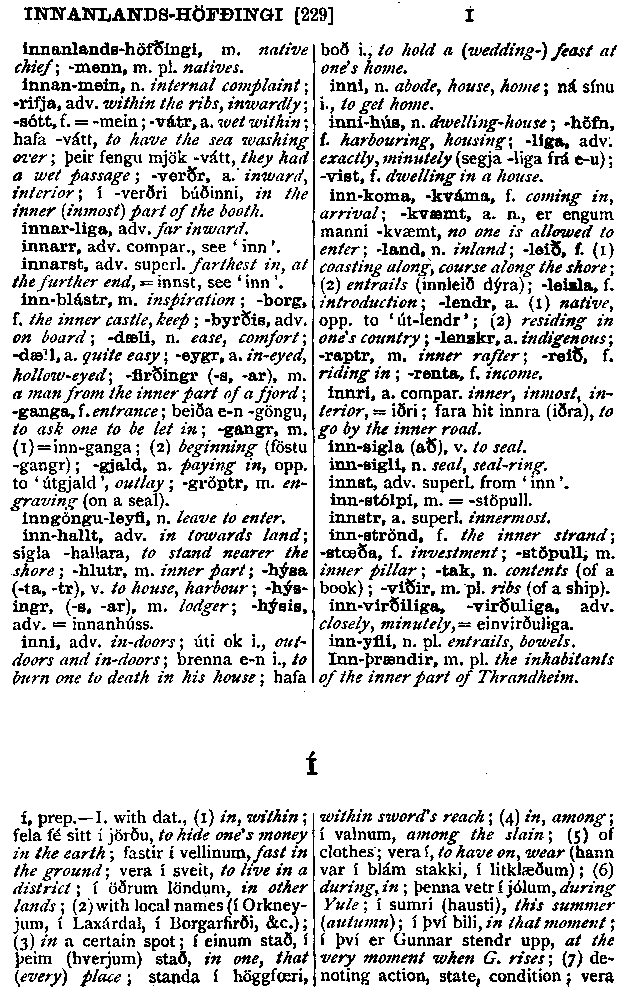
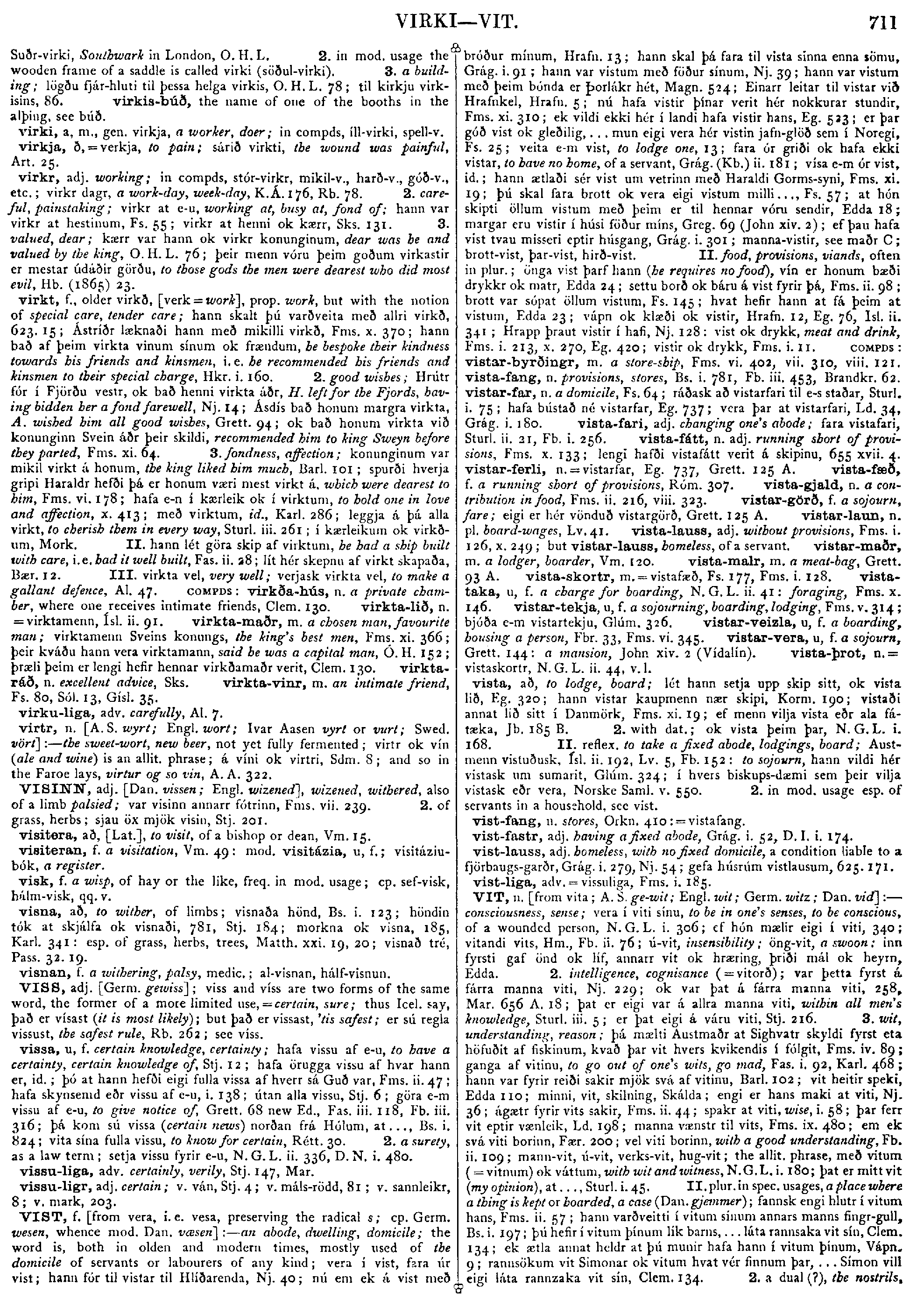
| Meaning of name: | From "inni-vist", Old Norse for "dwelling" |
| Area and Summit | |
| Area: | 30,305 ha |
| Area rank (Scottish islands): | 10 |
| Highest elevation: | Eaval 347 m |
| Population | |
| Population (2001): | 1,271 |
| Population rank (inhabited Scottish islands): | 11 out of 97 |
| Main settlement: | Lochmaddy |
| Groupings | |
| Island Group: | Uists and Barra |
| Local Authority: | Na h-Eileanan Siar |
  |
|
| References: | [1][2][3][4][5] |
North Uist (Scottish Gaelic: Uibhist a Tuath) is an island in the Outer Hebrides of Scotland.
Contents |
[edit] Description
North Uist is the ninth largest Scottish island and the thirteenth largest island surrounding Great Britain.[citation needed] It has an area of 117 square miles (303.05 sq km),[2] slightly smaller than South Uist. North Uist is connected by causeways to Benbecula via Grimsay, to Berneray, and to Baleshare. With the exception of the south east, the island is very flat, and covered with a patchwork of peat bogs, low hills and lochans, with more than half the land being covered by water. Some of the lochs contain a mixture of fresh and tidal salt water, giving rise to some complex and unusual habitats.
According to the 2001 census North Uist had a population of 1,271, (1,320 including Baleshare).[6]
[edit] Settlements
The main settlement on the island is Lochmaddy, a fishing port and home to a museum, an arts centre and a camera obscura. Caledonian MacBrayne ferries sail from the village to Uig on Skye, as well as from the island of Berneray (which is connected to North Uist by road causeway), to Leverburgh in Harris. Lochmaddy also has Taigh Chearsabhagh - a museum and arts centre with a cafe, small shop and post office service. Nearby is the Uist Outdoor Centre.
The island's main villages are Sollas, Hosta, Tigharry, Hougharry, Paible, Grimsay and Cladach Kirkibost. Other settlements include Carinish, Port nan Long and Scolpaig, home to the nineteenth century Scolpaig Tower folly.
[edit] Things of interest
North Uist has many prehistoric structures, including the Barpa Langass chambered cairn, the Pobull Fhinn stone circle, the Fir Bhreige standing stones, the islet of Eilean Dòmhnuill (which may be the earliest crannog site in Scotland),[7] and the Baile Sear roundhouses, which were exposed by storms in January, 2005.[8]
The island is also known for its birdlife, including corncrakes, arctic terns, gannets, corn buntings and Manx shearwaters. The RSPB has a nature reserve at Balranald.[9]
The island is also famed for its extremely successful athletics club (North Uist Amateur Athletics Club). This club has performed exceptionally at local, regional and national athletics competitions - taking into consideration the island's lack of facilities and small population.[citation needed]
[edit] Etymology
In Sir Donald Munro's A Description of the Western Isles of Scotland Called Hybrides of 1549, North Uist, Benbecula and South Uist are described as one island of Ywst (Uist). Starting in the south of this 'island', he described the division between South Uist and Benbecula where "the end heirof the sea enters, and cuts the countrey be ebbing and flowing through it".[10] Further north of Benbecula he described North Uist as "this countrey is called Kenehnache of Ywst, that is in Englishe, the north head of Ywst".[10]
Some have given the etymology of Uist from Old Norse meaning "west",[2] much like Westray in the Orkney Islands.[11] Another speculated derivation from Old Norse is Ivist,[4] derived from vist meaning "an abode, dwelling, domicle".[12] "Ívist" was the name used for Uist in the Old Norse sagas.[citation needed] A Gaelic etymology is also possible, with I-fheirste meaning "Crossings-island" or "Fords-island", derived from I meaning "island" and fearsad meaning "estuary, sand-bank, passage across at ebb-tide".[11][13] Other place-names derived from fearsad include Fersit, and Belfast.[13]
[edit] Population
In the eighteenth century the total population of the combined Uists rose dramatically, before the population crash of the Highland Clearances. In 1755, there was an estimated combined population on the Uists, of 4,118; by 1794 it rose to 6,668; and in 1821 to 11,009.[2]
North Uist
The pre-clearance population of North Uist was about 5,000 and it has dwindled to about 1,300 people in 2001.
|
|
|
|
|
|
|
|
|
|
|
|
|
|
|
|
|
|
|
|
|
|
From Haswell-Smith (2004)[2] except as stated.
[edit] History
After the Norse occupation of the Western Isles the MacRuairidhs controlled the island.[2] North Uist was granted to Macdonald of Sleat in 1495,[15] and remained in possession of the Macdonald's of Sleat until 1855, when it was sold to Sir John Powlett Ord.[14] Today the island is owned by the Granville family through the North Uist Trust.[14]
The force-fire was last made in North Uist in about 1829.[citation needed]
[edit] North Uist and the Clearances
- See also: Highland Clearances
North Uist was hit hard during the Highland Clearances, and there was large scale emigration from the island to Cape Breton, Nova Scotia, Canada.[16] The pre-clearance population of North Uist had been almost 5,000,[14] though by 1841 it had fallen to 3,870,[15] and has further dwindled to about 1,300 people today. The clearances occurred later on North Uist, which was predominately Presbyterian, than on South Uist which was mostly Roman Catholic.[16]
The main reason for the massive scale of emigration was the failure of the island's kelp industry. Since the French Revolutionary Wars the kelp industry had been North Uist's main source of income.[16] Though with the collapse of their main source of income the crofters of North Uist could not afford the high rents.[16] Even as the landlords reduced the rents, such as in 1827 when the rents were reduced by 20%, many crofters were forced to emigrate.[16]
The first real clearances on North Uist occurred in the 1820s.[16] In 1826 the villages of Kyles Berneray, Baile Mhic Phail and Baile mhic Conon, located on the north-east corner of North Uist, were cleared of their inhabitants. Although some moved further east to Loch Portain, most of those affected moved to Cape Breton, Nova Scotia.[16] The effect of this is shown in the rental roll of 1827, which states that over fifty families had "Gone to America", meaning Cape Breton.[16] As the economic conditions worsened and with reports of islanders succeeding overseas, the numbers of families emigrating from Scotland to North America greatly increased.[16] In 1838 1,300 people from North Uist were recorded as being cleared.[17] It is misconception that most families involved in the clearances were "cleared" from their holdings, though in 1849 there was rioting as 603 inhabitants from Sollas were forcefully cleared by Lord Macdonald.[18][17] As a detachment of Glasgow police officers advanced on the protesters, the Sollas men were said to have stood aside, but the women of Sollas stood up to the authorities, and pelted the police with rocks. The police then descended upon the Sollas folk and attacked them with their truncheons.[19] In fact a Hebredian settlement in Cape Breton County, Nova Scotia was originally called Sollas (now Woodbine).[20][21] North Uist surnames affected during the clearances were the MacAulays, MacCodrums, MacCuishs, and MacDonalds.[16]
[edit] Gallery
 Landsat image of North Uist |

[edit] Bibliography
- Islands in the Sound: Wildlife in the Hebrides: by Alison Johnson. (Contains black and white drawings by John Busby). [22]
[edit] Notes
- ^ 2001 UK Census per List of islands of Scotland
- ^ a b c d e f Haswell-Smith, Hamish (2004). The Scottish Islands. Edinburgh: Canongate. ISBN 1841954543.
- ^ Ordnance Survey. Get-a-map [map].
- ^ a b edited by Munch & Goss (1874). The Chronicles of Mann vol 22.. Manx Society. Retrieved on 2007-10-31.
- ^ Geir T. Zoëga (1910). A Concise Dictionary of Old Icelandic. Germanic Lexicon Project. Retrieved on 2007-07-04.
- ^ a b Number of residents and households in all inhabited islands (PDF). General Register Office for Scotland. Retrieved on 2007-10-17.
- ^ Ian Armit, Ian (1998) Scotland's Hidden History. Tempus. ISBN 0-7486-6067-4
- ^ Ross, John. "Race to study Iron Age roundhouses before they are lost to sea storms", The Scotsman, 11 July 2007. Retrieved on 2007-12-04.
- ^ Wildlife and habitats of Uist. Scottish Natural Heritage. Retrieved on 2008-01-06.
- ^ a b A Description of the Western Isles of Scotland Called Hybrides. Undiscovered Scotland. Retrieved on 2007-10-31.
- ^ a b Thomas, F. W. L.. "Did the Northmen extirpate the Celtic Inhabitants of the Hebrides in the Ninth Century?". Proc. Soc. of Antiq. Scot 11: 475-476.
- ^ Cleasby, Richard and Vigfusson, Gudbrand (1874). An Icelandic-English dictionary. Germanic Lexicon Project. Retrieved on 2008-01-06.
- ^ a b fearsaideag An Etymological Dictionary of the Gaelic Language. Retrieved on 2007-10-31.
- ^ a b c d Hebridean Princess Scotland Retrieved on 2007-10-17
- ^ a b North Uist (Uibhist a Tuath) Retrieved on 2007-10-14
- ^ a b c d e f g h i j Lawson, Bill. "From The Outer Hebrides to Cape Breton - Part II". The Global Gazette. 1999-09-10. Retrieved on 2007-10-14
- ^ a b Blamires, Steve. "The Highland Clearances - An Introduction". Clannada na Gadelica. Retrieved on 2007-10-16
- ^ History of Scotland The Highland Clearances Retrieved on 2007-10-16
- ^ MacQuarrie, Brian. "In search of Scottish roots". Boston Globe Retrieved on 2007-10-17
- ^ Turas Rannsachaidh dha 'n Albainn: Research Trip to Gaelic Scotland Retrieved on 2007-10-16
- ^ Places in Cape Breton County, Nova Scotia Retrieved on 2007-10-16
- ^ Detail taken from Islands in the Sound.........." Published by Victor Gollance (London) with a date of 1989 and with an ISBN 0 575 04640 6
[edit] External links
- Balranald Nature Reserve
- Taigh Chearsabhagh
- Explore North Uist
- Uist Outdoor Centre
- Am Paipear Community Newspaper
|
||||||||||