Talk:Mongolian spot
From Wikipedia, the free encyclopedia


My third child was born healthy, normal, and on time. The doctor's discovered that he had a Mongolian Spot on his upper right buttocks. I was told this was very rare for a caucasion infant, but that it would probably fade within the first few years of his life. He's turning 9 soon, and it is still very visible, although it may have faded slightly since birth. As far as we can dig, all our ancestors were of English, Irish, Dutch and French decent. Just thought this information may interest some researchers on this subject.
Cheryl-Anne Vancouver Island, BC CANADA
Contents |
[edit] East Asian countries
Deleted this section "Indonesian, Uzbeks, Turkmens, etc" - these are not East Asian countries. Intranetusa 01:15, 8 May 2007 (UTC)
But they are Mongoloid, nonetheless. Don't restrict your understanding of race and ethnicity to US consensus definitions! Le Anh-Huy (talk) 13:22, 13 February 2008 (UTC)
[edit] is it genetic or due to a condition?
The article says it is due to a condition at the time of pregnancy.. but it also says it could be if one of the parent is east asian.. that is confusing. Which one is true? Chirag 20:39, 13 July 2006 (UTC)
"Approximately 100% of all Mongolian and Black infants are born with one or more Mongolian Spot." huh? i can understand hispanics having the spot, since they are partialy descendents of native-americans who came from asia. but africans? when was the last time you mistook a black person to be asian? =) obviously, i'm gonna edit that sentence.
The second one of the two references says: "Mongolian spots are common among Asian, East Indian, and African races, but rare among Caucasian and other races."
comment copied from inside the article: "what about the causes? genetics?"
-
- Actually, the blue spot comes from the accumulation of melanin, and is not a racial characteristic. Because of that, it is equally common amongst those of African descent. MightyAtom 01:06, 31 October 2006 (UTC)
I think that the use of the term "East Asian" is rather inaccurate for that would only be limited to Japanese, Chinese, Taiwanese, Mongolian and Korean. I believe that it is common among other Pacific Asians as well, such as Indonesians (whom are referred to in this entry), Malaysians, Filipinos, Thais, Viets, etc. Schlumpff 06:13, 27 December 2006 (UTC)
[edit] Semitic spot?
There is articles in the internet saying new born infants of portuguese or spanish descent that are born with these blue/grayish spots are of Sephardic origin. E.Carvalho 21:53, 1 January 2007 (UTC)
[edit] = Hungarians =
The Mongolian "patch" is well known by persons in Hungary. Dating back to when the Huns came to the area and interbred with the local natives. Apparently a large percentage of children born in Hungary today bear these marks. —The preceding unsigned comment was added by 207.104.226.209 (talk) 23:42, 10 May 2007 (UTC).
- Do you mean the Magyars, rather than the Huns? Whatever genetic legacy the Huns left in Europe is hard to trace and certainly not associated with Hungary specifically. The Magyars, on the other hand, arrived much later from Asia and founded Hungary. --Saforrest 13:52, 10 October 2007 (UTC)
[edit] "Additionally, Greeks and Armenians have shown to have incidence of the spot..."
Text in question: "Additionally, Greeks and Armenians have shown to have incidence of the spot, presumably due to the racial admixture resulting from intermarriage and other interactions between Turks and the conquered minority populations of the Ottoman Empire.[6]"
What is this?? is this a joke? YOUR SOURCE IS A BLOG??? HOW SCHOLARLY. PROBABLY SOME GUY WATCHING WRESTLING, DRINKING A BEER, AND BLOGGING AT THE SAME TIME. THE RETARD WHO ADDED THIS DID NOT DO IT IN GOOD FAITH.
1) First of all, the source is a link to a study on HUNGARIAN MAGYAR mitochondrial DNA analysis, NOT Greeks or Armenians..and even that source doesnt address mongolian spots specifically.
2) "shown to have some incidence of the spot because of racial admixture..." -- If anything you should put "Greeks/Armenians of Turkish ancestry." If you do this you might as well put Germans up there too since they have large turkish communities over there. Studies show that All europeans are genetically very similar and populations have been largely unchanged since the paleolithic (culture, religion, language, geography have prevented this from happening on a large scale according to Cavalli Sforza). Heres a study of europeans populations (includes Armenians) >> http://www.ajhg.org/AJHG/fulltext/S0002-9297(07)60950-1?large_figure=true . Also, contrary to popular belief, the people of modern day Turkey are mostly descendent from Anatolians from the Hittites, Mongol contribution to the gene pool is approx. 6-22% (i think probably a ruling elite situation where they imposed their culture and language on the native population --like the Saxons did with the British/English >> http://dienekes.blogspot.com/2005/02/how-turkish-are-anatolians.html), making it possibly a rarity in turkey.
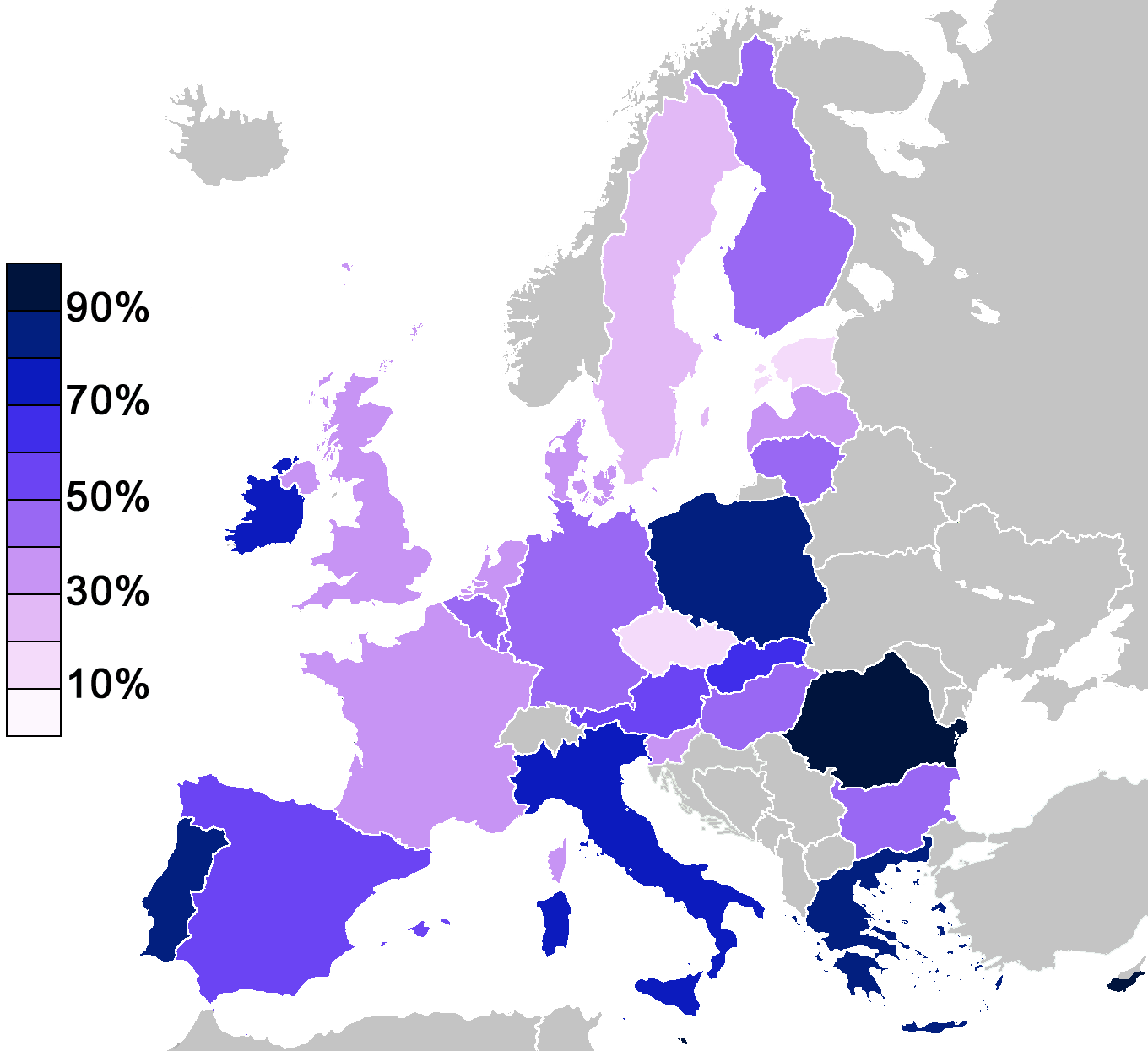
3) "...intermarriage and other interactions between Turks and the conquered minority populations of the Ottoman Empire" As a history enthusiast that is especially interested in the classics and the greeks and romans, I have never heard of this before. The brutal Ottoman occupation, language, cultural, and other barriers prevented this from happening on a large scale. Maybe you or the mysterious source you got this info from is thinking of the Janissaries, Europeans that were converted to islam and made into fanatics at a young age to fight for the ottomans, im sure some powerful ottomans took up greek wives-but this wasnt the norm. Until the recent past (esp eastern europe) most marriages were arranged marriages where the two families meet and agree to the arrangements --I find it hard to believe that the devout christian byzantines who were proud of their heritage would marry off their daughters to a muslim ottoman anatolian; I think such a union would make the couple an outcast and they would probably be exiled form the church..after all Greeks and Turks are both very religious > http://upload.wikimedia.org/wikipedia/commons/b/bd/EU_belief_in_god.png . Note: That image was modified, it used to contain Turkey-which was 90+% belief in god). Although I've never researched Armenia, I highly doubt they would intermarry with the ottomans either since they have were oppressed by them also and were the first nation to embrace Christianity.
In sum the presence of mongolian spots (if you forgot that was the subject after all this) in Greeks and Armenians given the background seems highly unlikely to me. Without a source this cant be verified, I did a google search to see if there was anything out there that coupled mongolian spot and greek or armenian--nothing. If this information is actually true, provide the source (Otherwise its just your unqialified opinion). Things like this is what makes professors think Wikipedia is a joke-please cite you sources people. I am deleting this before it corrupts more minds. How ridiculous 134.121.247.116 (talk) 07:24, 3 February 2008 (UTC)