Talk:King Arthur (film)
From Wikipedia, the free encyclopedia


[edit] Anti-Christian
the film is horrifically anti-Christian. It's almost a protest film. I've added specific movie critics who have addressed precisely that issue. Matt Sanchez (talk) 02:49, 22 December 2007 (UTC)
The last quote is not accurate and somewhat taken out of context. The final sentence is the problem. The author says, "While it would be tempting to dismiss this as leftist, anti-Christian sterotype, there is almost always a kernel of truth to the most effective propaganda. Such is the case with King Arthur's rebuke of organized religion. The sad truth is that the medieval Roman Catholic Church was corrupted, even though there were many sincere and honorable adherents in its rank." For a film that claims to be "historically accurate", this "anti-Catholic" feature might be accurate and not reflect a "hollywood leftist conspiracy". If nothing else, the quote isn't accurate as presented. Bgreen96 (talk) 18:54, 28 December 2007 (UTC)
[edit] Subjective
Does anyone else think this article is a wee bit too subjective? ScottyBoy900Q 20:11, 8 July 2004 UTC
I agree. There is a tiny piece about positive reception compared to the huge piece of negative reception. can this be evened out abit? --Anonymous 21:49 19-09-2006
[edit] Well,
I hope the original contributor isn't too peeved about my revision. Just saw the film today. Don't see what all the indignation is about, really. It was an interesting film, albeit not Oscar material.
[edit] True story?
A couple of things I picked up whilst watching the film (bear in mind that I am no expert in early British history):
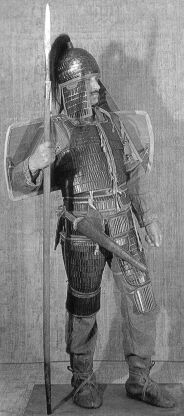
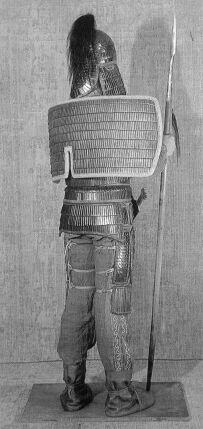
- Arthur's supposedly "Samartian knights" fight like cataphracti, heavy cavalry completely covered with armour. Samartian horsemen, however, were known to fight in the Central Asian way of horse archery: firing arrows, retreating, wheeling around and firing more arrows. Although we see Tristan and others use a composite bow, as Samartians would have used, by and large Arthur's men fight by charging the enemy and breaking up their ranks.
- I noticed that Arthur's men and most of the other Roman auxiliaries had stirrups. But stirrups only came to Europe in the 8th century. If we take the Saxon invasions in the movie to have occurred in the 5th century, then stirrups would not be available for another three centuries. Answer: Some inventions are invented and lost and invented again throughout history, The Babylonians invented a simple acid battery for electroplating gold onto coins that was lost, the Greeks invented steam power and clockwork gears that were lost, the Chinese invented clocks, that was also lost. Stirrups are a simple enough invention that any horseman could create a simple set for his own use. What should have been more wondrous was the saddles used in the movie. "Safety first" in this case.
- The Saxons have crossbows. Crossbows only came to Europe in the 10th and 11th centuries, and even then it was only available to the advanced cities of Italy. To suppose that the Saxon tribes could somehow master the intricate technology of the crossbow in the Dark Ages is ridiculous.
- The Saxons would have made their annual invasions of Britain in spring, not in the dead of winter when conditions were most difficult.
- All the main characters have their standard Arthurian names from 12th century medieval romance (i.e. "Guinevere" instead of "Gwynhwyfer") instead of their Roman or Celtic equivalents.
- It seems unlikely that there would be an important Roman family living significantly north of Hadrian's Wall since the wall represented the limited of Roman influence in Britain.
- The last Roman legions left Britain around the beginning of the 5th century whilst the Battle of Mount Badonis (the last big one in the movie) has been dated around a century later, between 495 and 520.
- The prologue text at the start of the movie asserts that historians agree that Arthur was a real commander. Whilst many historians speculate that Arthur may be based on real personages in Roman or post-Roman Britain, it is not accurate to then say that Arthur actually existed.
- The entire "tough warriors against Roman imperialism" theme was overdone to the extend of distorting a number of historical personages. The movie hints that Pelagius was killed because he advocated individual freedoms. In fact, his main ideas were about the essential goodness of human nature and the freedom of the human will to choose between good and evil. He wasn't a civil libertarian as the movie implied. After being condemned by church authorities, he went east to the Holy Land. Nothing is known about him after 418.
- Another character, Germanus of Auxerre (the bishop), is represented as somewhat of a villain. He announces the Roman decision to withdraw from Britain at the beginning to Arthur. It is true that Germanus was anti-Pelagius (his visits to Britain were to suppress Pelagian heresy). But he is also known to have assisted the Britons against a joint attack by the Saxons and the Picts in 429 - which sort of spoils his characterisation in King Arthur as an uncaring, cunning Roman religious authority type guy.
- Another thing i noticed was the Saxons used double-headed axes. there were no doubleheaded axes used for fighting in the middle or dark ages. They were always decorative
I understand that the directors, writers, producers of the movie have artistic license, but they shouldn't hold it up to be historically accurate. For Antonine Fuqua to say: "I wanted to make a film that was based, as much as possible, on historical fact which is tough because a sword-and-sorcery film would probably make more money!" is laughable to say the least.
The plot of King Arthur has none of the elements which make the original Arthurian legends great, like the prophecy, the Holy Grail, the betrayal and the whole tragedy of it all. Instead you've just got this collection of action scenes without any particular motivation. For example, after the Roman family had escaped, why did the Saxons continue to go after Arthur when they knew that he was a formidable opponent? Why does Arthur claim that the British people are united at the end of the movie? Seems like only that particular tribe was willing to follow him. And then there's that love scene inserted in the middle, which was as pointless as Mel Gibson's affair with Sophie Marceau in Braveheart.
That's what all the indignation is about: some cheap Hollywood imposter claiming to be "the true story". Listening to Arthur's tirades about freedom is like listening to George W. Bush talk about Iraq.
--Jie 14:46, 20 Jul 2004 (UTC)
- Thanks for the summary, Jie. Another detail which annoyed me was the claim that Pelagius was burned after his doctrines were condemned. This is simply not true. --195.95.31.43 18:32, 14 Aug 2004 (UTC)
-
- Could anyone find ANYTHING actually historically accurate about this film? There is quite a lot of talk about the inaccuarcies, but the whole thing is pure fiction, isn't it? --Tokle 10:19, 6 Jun 2005 (UTC)
-
- Is the last battle billed as the siege of Mons Badonis? I though this film was set in the 2nd century. At least the new archological evidence they mention is pertaining to Lucius Artorius Castus, who was a Roman commander at Hadrian's Wall 181 - 185.--Tokle 10:30, 6 Jun 2005 (UTC)
-
- The film seems to suffer from a lot of 'historical' movies, like the Last Samurai, in that it's historically accurate in the sense that the writers took things from history that were not related and slapped them together to make a fictional story from real dates, people etc. The movie is good as entertainment, though, I must admit, and it does inspire an interest for the real history.
-
-
- Considering this it seems pointless to try to list the histroical inaccuracies at all! --Tokle 20:42, 12 July 2005 (UTC)
-
-
- Though it is constantly editted out, the "edittors" often seem to have cataphracts and sarmatians confused. Those in the movies are the absolute epitome of what a Sarmatian auxilia looked like in the Western Roman Empire - cataphracts were heavily armored in chain mail, not in leather or furs. To suggest that Sarmatians were heavily armored in chain is proposterous. Likewise, crossbows were widely used across Europe during the waning years of the Western Roman Empire, even before Constantine the Great, there existed individual units of "Bucellani", who wielded cross bows, just as an example. These weapons found their way across most of Europe, but met their hayday during the 11th century. Both of these "historical inaccuracies" are misinterpretations by the editters. ~~Ezedriel
"Jai" is horrifically wrong on one point. Sarmatians DID fight as heavy (charging) cavalry and are in fact notorious for not knowing any other way. Their favoured weapon was a 2-handed Lance or "Kontos". Jai is thinking of Scythians (an earlier culture from the same geographical area). A more serious objection is that at the time the movie was set the Sarmatians appear to have been ceased to exist as a nation, their land having been occupied by first the Ostrogoths and then by the Huns.
I have to say that many of the "inaccuracies" listed above are actually subject to historical dispute. In particular the use of crossbows as Ezedriel said the romans had crossbows so there is no reason that the Saxons couldn't have aquired them or indeed recreated them. The Saxons were a highly resourceful people whose weapons production was far superior to that of the early medieval era.The use of teh double headed battle axe is also disputed the Amazonians a race from he Steppes of Russia used double headed battle axes in combat so there is a possiblilty of the Saxons doing he same.The Saxons attacked in the winter on occasions where it served them best, in the 800's Guthrum invaded (admittedly a Viking but the same people different name) invaded in the winter to suprise the enemy. Whilst Hadrians wall was the northenmost point that Roman lands officially extended there are records of traders and nobles living north of the border in relative peace, in ana era of religious turmoil a zealous noble may have been inclined to try and convert the Picts. Finally the Sarmation Knights are not depicted as cataphracts as they are not covered head to foot in armour for most of the film and in the scene that they are they are depicted no differntly than Sarmatian nobles. Also considering the size of Salmatia its entirely possible that both Cataphracts and Sarmation Cavalry archers were used and the knights in the film are a combination of the two.
[edit] More criticism of a historical King Arthur
I found a comprehensive 10-point criticism of King Arthur; much more detailed and authoritative than mine: http://arthurrex.blogspot.com/ --Jie 12:02, 21 Jul 2004 (UTC)
They have determined that in that time period, men and women fought side by side, there for making it possible for Guinevere to have been a warrior. Also, we shouldn't put the film down so harshly because not all facts are public knowledge as of yet and we have yet to unlock all that history has to tell. Though some of the facts listed on this page are very compelling facts, they may not be completely true. Some say the knight's fighting styles don't match the period, well, people have there own ways of doing things now, their own styles, why could that have not been true then as well?
Not every aspect of a persons life is documented down to the tiniest detail, things could be different. As stories are told, they become more elaborate with each tell, and soon the real facts are forgotten and replaced by the false elaborations. Am I not correct about that? It's still that way today, in schools, family, friends, co-workers, and so on. I am not a hisory expert, but I am a history buff and my research has led me to believe that some "Historical Inaccuracies" may, in fact, not be so inaccurate. I know many people that agree with me, but I also have many that do not agree me(obviously). Just don't put down the movie until you have facts and you consider that just because it is not documented it does not make it untrue.
Firstly, who are the "they" to which you refer? Secondly, are you saying that in a movie which makes claims to historical accuracy as a major part of it's publicity campaign, that it's good enough ignore all the sources and common sense, on the grounds that they might be right anyway on the basis of coincidence?
[edit] Well,
I can't argue with any of this. The main things which stuck out to me were the inaccuracies in costume and, as you pointed out, stirrups. Other than that, I felt it was interesting, but only as entertainment.
I'm not sure all markets are being subjected to the level of historical hype of the film as others. Certainly, it will get more people interested in learning about the time and lore of post-Roman Britain.
[edit] The gargantuan picture
Why can't the picture of the promotional poster be made smaller? I tried to lessen the amount of pixels in the edit, but no matter what size I chose the picture's size remained the same in the article.
[edit] Lancelot/Galahad
The age difference between Lancelot and Galahad (or lack of) cannot be said to be an historical inaccuracy, since none of them are historical persons in the first place.--Tokle 19:15, 12 July 2005 (UTC)
- The article itself suggests this is the traditional portrayal of possibly historical or fictional characters. The fact that they may or may not be real people is a moot point.--Will2k 19:57, July 12, 2005 (UTC)
[edit] Pelagius
The criticism section states that "Pelagius is believed to have died decades earlier, and was a traditionalist, not a reformist," while the article on Pelagius states that "Pelagius was a monk and reformer who denied the doctrine of Original Sin from Adam and declared a heretic." Perhaps this conflict should be corrected somehow.
[edit] Pope existing?
As far as I am aware, the only historians who debate the idea that the pontifical office as we know it today was fully formed by the fifth century are those with a religiously motivated point to make - i.e. Protestant historians looking to delegitimize the office of Pope or Orthodox ones who believe that the office of Peter held symbolic primacy only prior to the Great Schism of the 11th century. Documents and letters recovered from as early as the last decades of the first century reveal that the Catholic (i.e. universal) Church itself fully believed the Bishop of Rome to be the rightful successor of Peter as the head of the Church. Iceberg3k 16:13, 29 December 2005 (UTC)
[edit] Crossbows and Sarmatian armor
If the use of crossbows in the movie was anachronistic, it surely needs to be documented because it's so prominent (two knights are killed by them). Ezedriel, the "crossbows are anachronistic" has been there since it was added, and only you have edited it out. All around the Internet, the film's crossbows are mentioned as historically inaccurate.
Also, the film had a mish-mash of "Sarmatian" armor, since the knights, like the action figures that they are, don't dress alike as formal soldiers should, even allowing for small variations. How can you say that they are more accurate? If they weren't dressed like cataphracts, how were they dressed like?
Could you please cite your sources? Thanks. 203.131.137.90 06:00, 7 April 2006 (UTC)
Look at this: Sarmatian cataphracts 203.131.137.90 06:19, 7 April 2006 (UTC)
The Romans had crossbows. Assume the ones in the movie were either bought or stolen or scavenged. Same with the armor. The average reader has been spoiled by mass production and may not be aware that ALL Roman soldiers were responsible for their own individual armor and had to get what he could afford, including scavenging off of dead enemies or (yes, even ) dead friends who logically, no longer needed armor. —Preceding unsigned comment added by 72.179.30.13 (talk) 02:33, 22 March 2008 (UTC)
[edit] historically correct
http://steppenreiter.de/images/skythevorne.jpg http://steppenreiter.de/images/skythehinten.jpg image of Scythian/Sarmatian armor. They may be mixed with Greek cataphracts clothing or Roman equites. Their bows would be mostly used to wound the enemy`s horses or light infantry. Then they take them out with javelins and spears. Supposing these troops have Roman training, they could use Numidian style fighting, with javelins in one hand and a lance or axe in the other. But not with two swords. There are no reports about cavalry fighting this way, but a lot that cavalry uses one distance and one closeup weapon in twohanded combat.
Handheld crossbows, the Saxons could possibly use, had roughly the deadliness of an airgun. You really have to hit a small vulnerable spot on a fast moving target. Therefore the Greeks tried them in the phalanx, but decided, this weapons to be ineffective in warfare. It is good for hunting small animals like rabbits and birds. Bigger crossbows handled by 2-3 men were in use by the Roman military and could have been adopted by the Saxons, but it is unlikely that amphibian forces land with heavy siege artillery for a fast raid.
Historically correct would have been if the Saxons landed with some noblemen on horseback, who have a life of military training in leading small partys to steal, sneak up from behind, kill and rape. They can be accompied by their peasants, who row the boat, carry the booty and have shields, long knifes and mostly javelins, spears and lances. Some of them are hunters and skirmishers, have smaller knifes, bows or slings and run around fast. They are the first to gether knowledge from the whereabouts of the enemy.
[edit] use of Chinese weapons
Chinese artcraft was known to the Romans and Chinese steel was highly valued because it had supreme quality. But the export from China was forbidden under the penality of death, so very few pieces reached the Roman empire. It is possible that a high ranking soldier owned one of these expensive products, like a dao. But compared to our world, it is like driving a single edition ferrari.
[edit] A Turkic Tristan?
Before the final battle, Sarmatian Knights gathered at the side of Arthur fully armed. You can see their armors and helmets are miscellaneous. Maybe the filmmaker wants to show us a mixed band of ancient warriors. But a Turkic Tristan really goes too far. --Mato Rei 10:37, 1 February 2007 (UTC)
Assume all the armor was looted —Preceding unsigned comment added by 72.179.30.13 (talk) 02:35, 22 March 2008 (UTC)
[edit] Bors
For instance, Bors, portrayed in the film as a loud-mouthed boor and father of a huge number of children, was something of a Boy Scout in the legends ..... - I don't know what this anachronistic methaphor is supposed to imply. If I did I would change it. Jooler 07:54, 10 April 2006 (UTC)
Stereotypical Boy Scouts are virtuous people who, for example, help little old ladies cross streets. 202.163.242.1 12:27, 17 April 2006 (UTC)
Just one quick thing; I thought he weilds Butterfly Swords (or a slight variation), not Katars.
[edit] knight or soldier?
it says in the article that the film potrays arthur as a roman soldier and not a night. well,it does show him as a saramtian knight serving the romans.
- Arthur himself wasn't a Sarmatian, his "knights" were. Uthanc 07:34, 12 May 2006 (UTC)
[edit] 'Altered' movie poster
I remember finding two pictures, set side-by-side near when the movie was coming out, and in those pictures it showed Keira Knightley posed as she is in the movie poster (drawing a bow); one picture was obviously the final version of the poster, and the other appeared to be a version of the poster without all the little effects added in. Well, it was obvious that among the things added to make the final version was at least a full cup to Keira Knightley's bust. While I don't claimed to be shocked that someone in whichever company made that decision, I was stuck by how obvious it was, since Ms. Knightley bust is... not what she is known for, and that it was rather insulting. Does someone have the pictures I was talking about, or can confirm this? It could be added into the Trivia section. --Gero 14:30, 3 July 2006 (UTC)
- Ah. According to this link, which has comments from her that are apparently from a magazine, they asked her permission. --Gero 22:28, 16 July 2006 (UTC)
- Added piece about it to the Triva section. --Gero 02:47, 18 July 2006 (UTC)
[edit] Saxons
There are even more historical inaccuracies concerning the Saxons. Their leader Cerdic, was born roughly the time the movie was set, and his son, Cynric, therefore would not be alive then. Lemmy Kilmister 08:17, 4 September 2006 (UTC)
[edit] Woads' language
Any info on the language the Woads in this movie speak, or at least are supposed to speak? 66.115.241.35 03:05, 6 December 2006 (UTC)
I watched it last night on tv with closed captioning on and I am pretty sure that it saud 'speaking gaelic' or just 'speaking foreign language'. Tydamann (talk) 09:37, 26 May 2008 (UTC)
[edit] "Rus"
Anybody know where the phrase "Rus," uttered by all of the knights, it seems like, comes from? I haven't been able to find proof of historical usage of the word. Seems like this kind of information would be good for the Trivia section if we could get an explanation. -- JeffHCross
-
- I guess it comes from them. In my view this movie is completely underrated and for one reason only - the knights are presented as pagan Sarmatian warriors (OMG Slavs even!) instead of them being true Christian Brits. Most of the article merely reflects this prejudice. However, despite some factual inaccuracies the general historical context of the movie is plausible and as a result the movie is one of the best ones dealing with transition from the Late Antiquity to Early Middle Ages. It was never meant to be a documentary. 195.210.240.188 (talk) 13:58, 23 November 2007 (UTC)
- There are several works of Arthurian fiction which don't portray the important characters as (true/sincere/devout) Christians (try Mary Stewart or Bernard Cornwell), and they are much more historically accurate. The film sloppily combines two different historical Arthur theories: the "Sarmatian commander" and the "Saxon fighter", which are separated by around 300 years. One can't have it both ways. And while it was not meant to be a documentary, it was promoted as the "true story behind the legend", so it's bound to attract "historically-based" criticism . Uthanc (talk) 14:53, 23 November 2007 (UTC)
- I guess it comes from them. In my view this movie is completely underrated and for one reason only - the knights are presented as pagan Sarmatian warriors (OMG Slavs even!) instead of them being true Christian Brits. Most of the article merely reflects this prejudice. However, despite some factual inaccuracies the general historical context of the movie is plausible and as a result the movie is one of the best ones dealing with transition from the Late Antiquity to Early Middle Ages. It was never meant to be a documentary. 195.210.240.188 (talk) 13:58, 23 November 2007 (UTC)
[edit] Part of the removed text
I'm pretty sure most if not all of this is true... we just need good references for all of them (rephrasing?), and the film being quite inaccurate despite claiming to be the "true story" makes it all the more notable among historical epics and Arthurian movies.
TEXT STARTS HERE
...King Arthur has been heavily criticized for its historical inaccuracies — especially since it claims to be close to or even be the original story, as evidenced by its tagline. Some examples include:
History
- A trailer for the film claims that historians now agree that Arthur was a real person because of recent archaeological findings. However, historians do not; and the Artognou inscription – the recent find possibly being referenced – has nothing to do with the film's version of events.
- The film has the withdrawal of the Roman legions from Britain take place after Arthur rescues the Pope's godson. In reality, it was completed in 410 AD, nearly 60 years before this rescue mission. By 467 AD, there were no legions left in Britain, which was now a patchwork of territories ruled by local warlords.
- Sarmatian cavalrymen did come to Britain in the 2nd century. But despite the film's suggestions, the evidence for them remaining there until the 5th century is slight. There is some but little evidence for the continued importation of Scythian-born immigrants to late Roman Britain.[citation needed]
- In the film, the Picts are called "Woads". This is a reference to one plant the Picts may have used to make blue paint; however, the use of woad by the Picts is contested by scholars, and the historical Picts were never known by this name.[1] In an interview Fuqua stated that they used "Wodes" (sic) instead of "Picts" because they thought the latter sounded "a little weird".[2]
- Archbishop Germanus' second (and last) mission to Britain was twenty years before the year the movie is set. Indeed, Germanus died in 448, well before the setting of the film.
- The Roman family which Arthur rescues lives north of Hadrian's Wall. This would be unlikely because the Wall represented the extent of Roman rule in Britain, except for brief periods of occupation during the second century AD. (It should be noted that Romanized client states such as that of the Votadini did exist north of the wall even into the Sub-Roman era.)
- Pelagius is believed to have died decades earlier, but he died of old age and was not burned at the stake. The Pelagian heresy is misrepresented as well - it denied original sin, and was not about political freedom.
- The movie implies that the Pope was in control of the Western Empire, though it was actually ruled by the Emperor and de facto controlled by the Magistri Militum and other regional governors.
- The Saxon leader Cerdic is believed to have been born c. 467, and the ninth-century Anglo-Saxon Chronicle mentions his and Cynric's arrival in Britain (at Hampshire) in 495. The film is set in 467; therefore Cerdic could not have invaded and Cynric (recorded as either his son or grandson)[3]could not have lived at the time.
- Cerdic and Cynric could not have died at the battle of Mount Badon. The battle is thought to have been fought sometime between 490 to 516, and according to the Anglo-Saxon Chronicle Cynric succeeded Cerdic as king of Wessex in 534 (Cerdic was the founder of the kingdom).
- The Saxons are shown attacking Hadrian's Wall from the north. By 467 the Saxons were already occupying parts of Britain way south of the wall (the Saxon Shore), and never invaded Scotland.
- In the film, Cerdic stops a warrior from raping a woman because it would lead to less-than-pure Saxon blood. This is a reference to the long-held belief that the Anglo-Saxons eradicated the Romano-Celts from the eastern part of the island. This contention, largely based on linguistic evidence, has been challenged by modern genetic analysis, which suggests extensive mixing between Anglo-Saxon and Briton populations (some historians have even suggested that Cerdic himself, who bore a Celtic name, was at least part Briton).
- In the film, the character of Guinevere is drastically altered from Arthurian legend - she is portrayed as a barbarian warrior who joins Arthur and the knights in battle. While there was historical precedent for this portrayal (for example, the warrior queen Boudica), no source, early or late, describes Guinevere in this way. Nor is there any evidence for her depiction as a rustic Celt; in fact, in Geoffrey of Monmouth's Historia Regum Britanniae, which contains one of the oldest accounts of the character, Guinevere has Roman blood while Arthur is an indigenous Celt.
- The Sarmatians have French (i.e. Lancelot) and Celtic-based (i.e. Tristan, original Drustan) names. Though these do appear in medieval romance as the names of Knights of the Round Table, they are not accurate to either history or the stories from which they are taken. For instance, Bors, portrayed in the film as a loud-mouthed boor and father of a huge number of children, was something of a Boy Scout in the legends, whose celibacy allowed him to witness the Holy Grail.
Costumes and weaponry
- The Saxons use crossbows for war in the movie; however, they historically used bows (to a limited extent) and spears instead during that time period. Indeed, Saxon spears are all but absent in the film, all the more telling since they use their famous shield wall tactic on Arthur's knights. Though there is evidence for the use of some form of crossbows among Greeks (actually more like hand-held catapults, which they called gastraphetes), Romans (which they called manuballistae) and, some claim, the Picts — the weapon was still not widely used in England until much later. However, a Woad scout does present a knife called a seax to Merlin - the weapon that the Saxons are named for. They are not featured much, though.
- Similarly, the Woads use a trebuchet-like weapon to hurl flaming missiles at the Saxons, though the trebuchet was not re-introduced to Britain until the siege of Dover in 1216. The Romans reportedly used an early form of it in their sieges, however.
- The Sarmatian costumes and weapons are inaccurate - they should be armored in the manner of cataphracts (full-length coats of scale armor),[4][5] and they should use spears. Instead, the film's armor is a mishmash of pseudo-Roman, Turkish, Mongol, and Hunnic designs, and the knights mainly use swords, though they do carry spears. Also, Tristan uses a Chinese sword called a dao.
- Aside from the knights' weapons, some of their fighting styles are also inaccurate or at least unaccounted for. Lancelot uses two swords, possibly of the gladius variety; though attractive it may be to the viewer, there is no evidence for two-weapon fighting in that area. In contrast, Galahad is depicted as a cavalry archer; many Sarmatian troops were indeed cavalry archers.
- Tristan has a pet hawk. Nonetheless, the hawk flown in the movie is a Harris's Hawk, which ranges from the southwestern US to Argentina. Additionally, the computer-generated hawk shown soaring overhead later in the film, while supposed to be the same individual hawk, appears to be a red-tailed hawk rather than a Harris's Hawk.
- There is no historical precedent for Knightley's leather costume.
TEXT ENDS HERE I hid the Lancelot image using code. Uthanc 21:35, 2 April 2007 (UTC)
[edit] Unreferenced POV
Large sections of this article consist of unreferenced (and often demonstrably innacurate) POV. I have altered and referenced the first point in the "Historical inaccuracies" section but don't have time for the rest atm. It all needs considerable rewording, revision and referencing -- the kind of statements being made here are simply unreferenced arguments against the films critics and read like they are made by a partisan of the film; in my opinion they do not comply with NPOV and they need considerable support from respectable sources if they are to be made... Hrothgar cyning (talk) 18:15, 26 February 2008 (UTC)
- Looking through the article history, most of the partisan comments seem to have been added on 22 Feb 2008 by user Aelfgiva. I would suggest reverting to a version before these edits to remove the POV, and then working through and referencing the piece properly... Any comments? Hrothgar cyning (talk) 18:25, 26 February 2008 (UTC)
-
- Done. I'll try to keep a better eye on this page. Any source that says the Matthews' are "experts" is immediately suspect.--Cúchullain t/c 06:41, 27 February 2008 (UTC)