Water cannon
From Wikipedia, the free encyclopedia
 |
This article needs additional citations for verification. Please help improve this article by adding reliable references. Unsourced material may be challenged and removed. (March 2008) |


A water cannon is a device that shoots a high-pressure stream of water. Typically, water cannons can deliver a large volume of water, often over dozens of metres / hundreds of feet. They are used in firefighting and riot control. Most water cannons fall under the category of a fire monitor.
Contents |
[edit] Firefighting
Water cannons were first devised for use on fireboats. Putting out fires on boats and buildings close to the water was much more difficult and dangerous before fireboats were invented. The first fireboat deployed in Los Angeles was commissioned on August 1, 1919. The first fireboat in New York City was Marine 1, deployed February 1, 1891. There may have been other fireboats elsewhere even earlier.
Fire trucks deliver water with much the same force and volume of force as a water cannon, and have even been used in riot control situations, but are rarely referred to as water cannons outside this context.
[edit] Riot control
 |
This article or section deals primarily with the United States and does not represent a worldwide view of the subject. Please improve this article or discuss the issue on the talk page. |
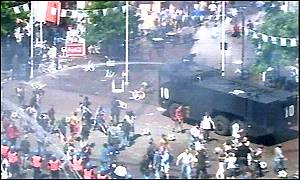
Truck-based water cannon systems were used widely in the United States during the 1960s for riot control. Although they were safer than a combination of firearms, tear gas, and batons, their use as a less-lethal riot control mechanism has fallen out of favor in the United States. (see Media effect and Safety & Criticism below)
Since then, other higher-tech non-lethal weapons have been developed for domestic use. Whether these newer weapons are more effective and safer than water cannons remains controversial. Their competing vendors disagree as to which is more effective and safer.
Water cannons designed for riot control are still made in the United States and the United Kingdom, but most customers are overseas, particularly in Africa and parts of Asia. The most modern versions do not expose the operator to the riot, and are controlled remotely from within the vehicle with a joystick. These high-end vehicles can carry 2000 gallons (8,000 L) of water with a delivery rate of 250 gallons per minute (15 L/s). The water can be delivered as a continuous stream, or in pulses; as a hard jet or as a spray.
The State of New South Wales in Australia purchased a water cannon in 2007, with a view to using it during an APEC meeting in Sydney that year.[3][4] It was not used.[5] It was the first purchase of a water cannon in Australia.
[edit] Safety & Criticism
Early (1960's) water cannons (usually adapted fire trucks) would knock protesters down and on occasion, tear their clothes.
Anecdotal reports indicate that people can walk away from an encounter with a water cannon with serious internal injuries such as a ruptured spleen. If true and if such injuries are ignored, death could occur later. The high pressure that a modern water cannon can achieve (up to 30 bar) can break bones. There have been reports of cobblestone streets being torn open by the jet of water.[citation needed]
A report issued in the United Kingdom said that use of plastic bullets over water cannon was justified because "Water cannons are inflexible and indiscriminate", although several people had been very seriously injured by plastic bullets.
[edit] Media effect
The presence of the media at riots has had a significant impact on water cannon use. There is much pressure on police departments to avoid bad publicity, and water cannon often plays badly in the press. It is considered that this is likely a reason that they are not used more often in countries with a free press.[citation needed]
Pictures of riots being dispersed by water cannons remind some of the American Civil Rights Movement when they were used by authorities to disperse crowds of protesting African Americans; this reminder is one reason why the water cannon has fallen out of favor in the USA.[citation needed]
[edit] Alternative payload
[edit] Dye
In 1997, pink dye was reportedly added to the water used by Indonesian police to disperse a riot.[1] The implication is that they might use this mark to make it easier to arrest rioters later. The United Kingdom, who sold the water cannons to Indonesia, condemned this practice, (although the Royal Ulster Constabulary had used a water cannon with purple dye during The Troubles in Northern Ireland) but later approved the sale of more water cannons to them. Most modern water cannons are also capable of adding tear gas to the stream.
[edit] Soap
Soap cannons have been proposed for crowd control when persons in the crowd may be victims of a suspected bioterror attack. Soap cannons serve the double purpose of crowd control and cleaning people in the crowd. Los Angeles International Airport has a soap cannon which also features pop-out showers so that crowds can be cleansed after being soaped. Also, people who have been soaped up are more likely to stay at the incident site to receive a decontamination treatment (cleansing shower), usually offered after the soaping, so the soap cannon helps to prevent people from fleeing from the scene of a chemical release, i.e. it prevents people from spreading the contamination to others.
[edit] Sewage
There have been incidents of antiriot watercannons being loaded with sewage instead of clean water.[2]
[edit] Electricity
One manufacturer is experimenting with additives (salt and additives to reduce the breakup of the stream into droplets) that would allow electricity to be conducted through water. They have demonstrated delivery from a distance of up to twenty feet (6 m), but have not yet tested the device on people.
Although referred to as an electrified water cannon, this experiment involved a water jet much less powerful than a water cannon.
[edit] Other delivery devices
Water cannons differ from other similar devices in the volume of water delivered in a given time, the nozzle speed, the pressure that it is delivered at, and to a lesser extent the total volume that can be delivered. They are also generally portable. The method of employment is also important in labelling a device a water cannon. Nevertheless, the distinction between a water cannon and other similar devices is fuzzy. For example:-
- Pressure washers generally produce an extremely high pressure stream where the power of the stream drops off significantly over a very short distance.
- Water pistols and other toys deliver much less water at a much lower pressure with a much lower volume of water.
- Ultra high pressure water jet cutters are used to cut a wide variety of materials including granite, concrete (see hydrodemolition),ceramics, fabric and even Kevlar. One such cutter delivers 55,000 psi (380 MPa) through a nozzle 0.003 inch (8 micrometres) in diameter at 1 kilometre per second. This can cut a person in half at close range. There are reports of accidental deaths involving the industrial use of high-pressure water.
[edit] Other meanings
The name "watercannon" has also been used for:-
- Similar land vehicles used for firefighting
- Various large toys, for example images [6] [7] [8]
- Waterjet mining tools, e.g. image
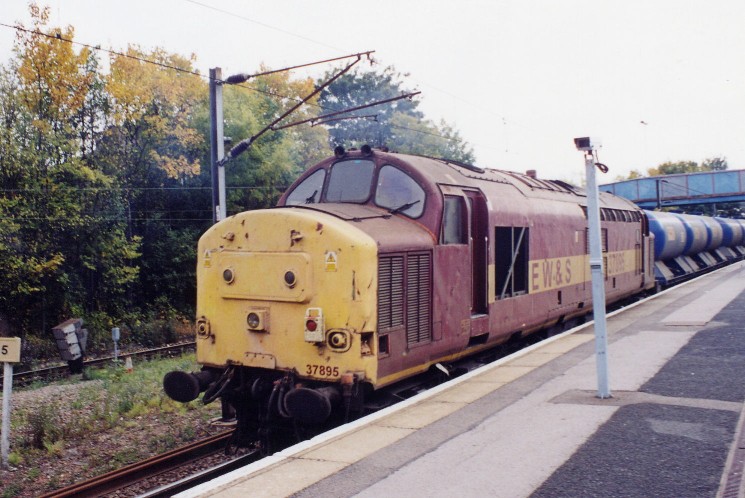
- A type of railway wagon used to hose fallen leaves off the track: e.g. seen at Alexandra Palace on the 25 October 2003
[edit] References
- ^ Indonesia and East Timor: Arms and security transfers undermine human rights. 3 June 1997. Amnesty International [1]
- ^ [2]
[edit] External links


![[7]](http://www.alton-towers.co.uk/waterpark/images/guide_watercannon.jpg)