Tropical Storm Debra (1978)
From Wikipedia, the free encyclopedia
| tropical storm (SSHS) | ||
|---|---|---|
 Tropical Storm Debra near landfall |
||
| Formed | August 26 | |
| Dissipated | August 29 | |
| Highest winds |
|
|
| Lowest pressure | 1000 mbar (hPa; 29.54 inHg) | |
| Fatalities | 2 | |
| Damage | Unknown | |
| Areas affected |
Texas, Mississippi, Louisiana | |
| Part of the 1978 Atlantic hurricane season |
||
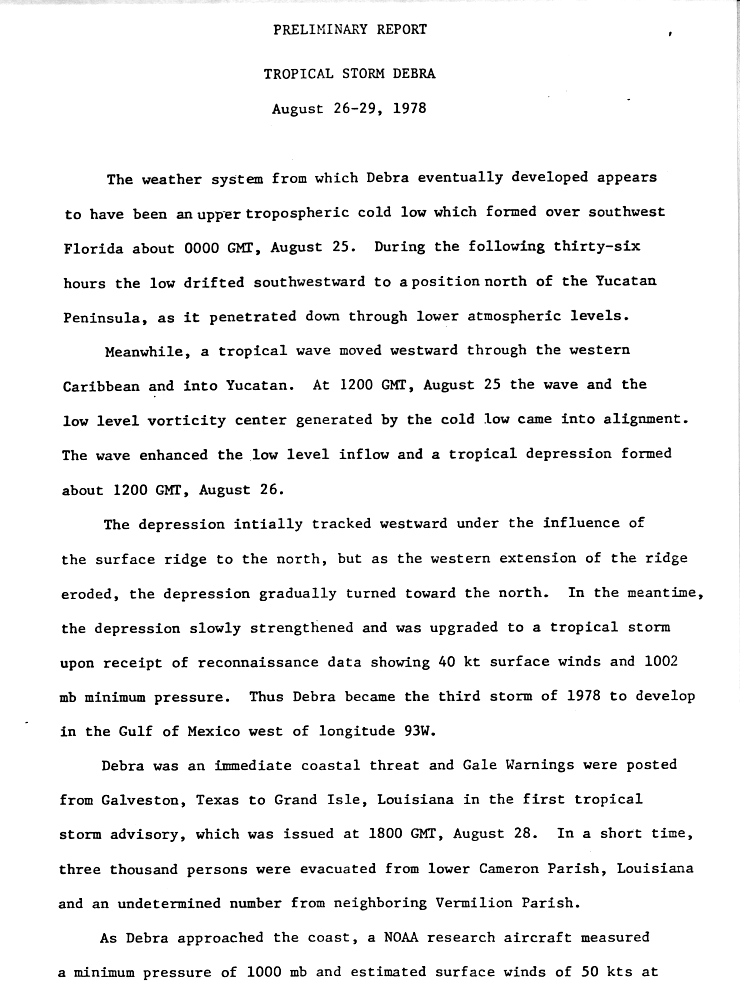
Tropical Storm Debra was the fourth named storm of the 1978 Atlantic hurricane season. It developed from a tropospheric low pressure in the Gulf of Mexico on October 26. It was upgraded to a tropical depression that same day as the system was drifting west. On October 28, it was upgraded to Tropical Storm Debra. It soon reached it's peak intensity of 60 mph (95 km/h). It made landfall on the Louisiana coast, just to the east of the Texas border. The storm killed two people, and left one injured. Several tornadoes occurred during Debra's passage.
Contents |
[edit] Storm history


The origins of Debra were from a tropospheric low pressure system that formed over southeast Florida on August 25.[1] At the same time, convective activity appeared near the Yucatan Peninsula. The low pressure over Florida drifted southwest into the Gulf of Mexico. The convection, which was possibly associated with a tropical wave, interacted with low-level vorticity center generated by the low pressure system, and led to the development of a tropical depression on August 26.[1] The depression moved west at first, soon executing a more northward track along the western extension of a high pressure ridge. Gradual intensification began, and it was upgraded to Tropical Storm Debra August 28.[1] The storm continued moving north, and it reached its peak intensity of 1000 mb on August 29, shortly before landfall.[1] A disorganized storm, most of the convection was located to the east of the center.[1] Later that day, it made landfall later that day, just to the east of the Texas-Louisiana coast.[1] Debra moved inland, weakening rapidly, with heavy rain the major impact. In addition, as usual with landfalling tropical systems, several tornadoes were blamed on Debra.[1][2] The remnants of Debra moved into Illinois and moved east along the Ohio Valley.[3]
[edit] Preparations and impact
As a result of the formation of Debra, gale warnings were issued from Galveston, Texas to Grand Isle, Louisiana, on August 28. In addition, 3,000 people were evacuated from Cameron Parish, Louisiana.[2]
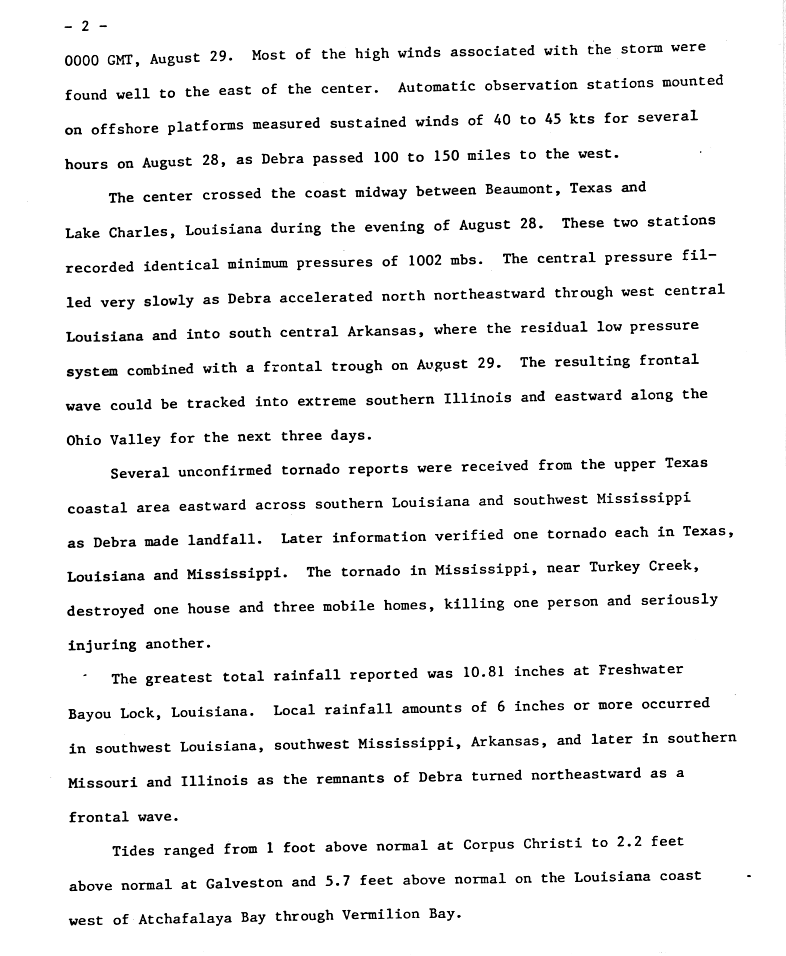
Two people died as a result of Debra; one was attributed to a tornado in Mississippi which also destroyed several mobile homes, and injured one person. The other was reported to have occurred on an oil rig off the Texas coast.[1] Several other tornadoes occurred during Debra's landfall, mostly along the upper Texas coast, to the Mississippi coast, while some tornadoes did occur inland.[3]
The maximum amount of rain associated with Debra occurred at Freshwater Bayou Rock, Louisiana, where 10.81 inches (274 mm) of rain fell.[4] Other rainfall reports of 6 inches (150 mm) or more were common throughout Mississippi, Arkansas, Missouri, and later into Illinois.[3] Also, tides ranges from 1 to 2 feet in most areas, while up to 5.7 foot above normal tides were reported along the western Louisiana coast.[3]
[edit] See also

[edit] References
- ^ a b c d e f g h Miles B. Lawrence (1978). 1978 Monthly weather Review. National Weather Bureau. Retrieved on 2008-01-26.
- ^ a b National Hurricane Center (1978). Tropical Storm Debra preliminary report. Retrieved on 2008-01-26.
- ^ a b c d National Hurricane Center (1978). Tropical Storm Debra preliminary report page 2. Retrieved on 2008-01-26.
- ^ Hydrometeorological Prediction Center. Tropical Stordm Debra. Retrieved on 2007-02-28.