Sonnet 17
From Wikipedia, the free encyclopedia
| < | Sonnet 17 | > |
|
Who will believe my verse in time to come,
|
||
| –William Shakespeare | ||
|
|||||||||||||||||||||||||||||||||||||||||||||||||||||||||||||||||||||||||||||||||||||||||||||||||||||||||||||||||||||||||||||||||||||||||||||||||||||||||||||||
Shakespeare's Sonnet XVII, the last of his procreation sonnets, questions his own descriptions of the young man, believing that in future ages will believe them to be exaggerations if he does not make a copy of himself (a child).
[edit] Synopsis
Shakespeare insists that his comparisons, even though they are quite strong, are not exaggerations. Shakespeare even goes as far as to say that his verse is a "tomb" that hides half of his beauty. Shakespeare argues that the descriptions in fact are not strong enough, and they do not do justice to the man's beauty. ("If I could write the beauty of your eyes,/"). The sonnet ends with a typical notion that should the young man have a child, he shall live both in the child and in the poet's rhyme.
As in Sonnet 130, Shakespeare shows himself again to be quite conscious and hesitant in terms of flamboyant, flowery proclamations of beauty.
[edit] Original text
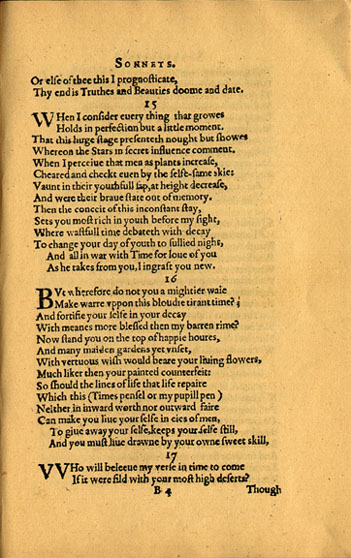
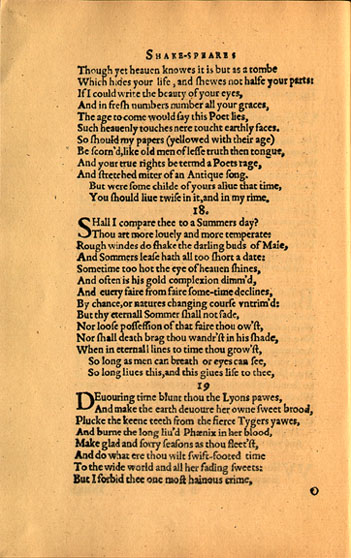
The original text from 1609 Quarto for this sonnet is:
- VVho will beleeue my verſe in time to come
- If it were fild with your moſt high deſerts?
- Though yet heauen knowes it is but as a tombe
- Which hides your life , and ſhewes not halfe your parts:
- If I could write the beauty of your eyes,
- And in freſh numbers number all your graces,
- The age to come would ſay this Poet lies,
- Such heauenly touches nere toucht earthly faces.
- So ſhould my papers (yellowed with their age)
- Be ſcorn'd,like old men of leſſe truth then tongue,
- And your true rights be termd a Poets rage,
- And ſtretched miter of an Antique ſong.
- But were ſome childe of yours aliue that time,
- You ſhould liue twiſe in it,and in my rime.
[edit] External links
- Facsimile of 1609 edition of sonnet 17 part 1
- Facsimile of 1609 edition of sonnet 17 part 2
- Analysis
- CliffsNotes
 |
This article related to a poem from the UK is a stub. You can help Wikipedia by expanding it. |