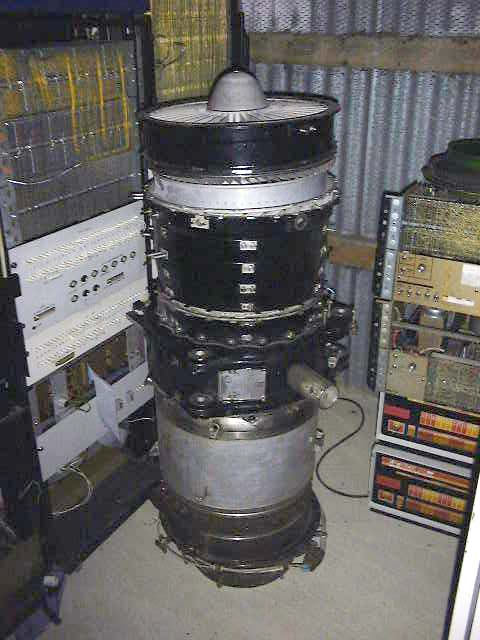
Rolls-Royce RB.108
From Wikipedia, the free encyclopedia


The Rolls-Royce RB.108 was a jet engine designed by Rolls-Royce specifically for use as a VTOL lift engine, i.e., an engine intended primarily for providing lift rather than for horizontal propulsion.
Of squat, compact design for mounting vertically, the RB.108 differed from conventional engines in having its bearings and oil system designed for prolonged operation in the verticle attitude. First bench-tested in 1955 by Alan A. Griffith, who had conceived the idea of a specialised lift jet in 1941, thrust was 2,130 lbf (966.15 kg) from a weight of 269 lb (122 kg), giving a thrust/weight ratio of 8:1.
The RB.108 was used in the Short SC.1, which used four for lift with an additional one mounted at an angle at the rear for propulsion, and the Mirage Balzac, which used eight vertically-mounted RB.108s for lift. The Vereinigte Flugtechnische Werke (VFW) SG 1262 used five RB.108s, three mounted in tandem on the centreline, with one RB.108 either side.
The RB.108 was also the intended powerplant for several other VTOL aircraft designs, including one by Dornier.
[edit] External links
[edit] See also
|
|||||