Mount Washington (Pittsburgh)
From Wikipedia, the free encyclopedia
| Mount Washington | |
 Mount Washington's famous view of downtown Pittsburgh |
|
 Neighborhood in Pittsburgh, Pennsylvania |
|
| Coordinates: | |
|---|---|
| Population (2000): 9878[1] | |
| Area: 1.139 mi² [1] | |
Mount Washington is a neighborhood in Pittsburgh, Pennsylvania's south city area. It has a zip code of 15211 and has representation on Pittsburgh City Council by both the council members for District 3 (Central South Neighborhoods) and District 2 (West Neighborhoods).
It is known for its steep hill overlooking the Pittsburgh skyline, which was rated the second most beautiful vista in America by USA Today [1] (and the best urban vista); its funiculars, the Duquesne and Monongahela Inclines—the oldest continuous inclines in the world; and for the row of upscale restaurants paralleling the crest of Mount Washington, the hill the community sits upon.
Contents |
[edit] History of Mount Washington
In the early history of Pittsburgh, Mount Washington was known as Coal Hill, but Coal Hill was actually on the south bank of the Monongahala River [2]. Easy access to the Pittsburgh coal seam's outcrop near the base of Mt. Washington allowed several mines to operate there. Also, rock was quarried from the hill. Gray sandstone, for example, was quarried at Coal Hill for the second Allegheny County Courthouse.
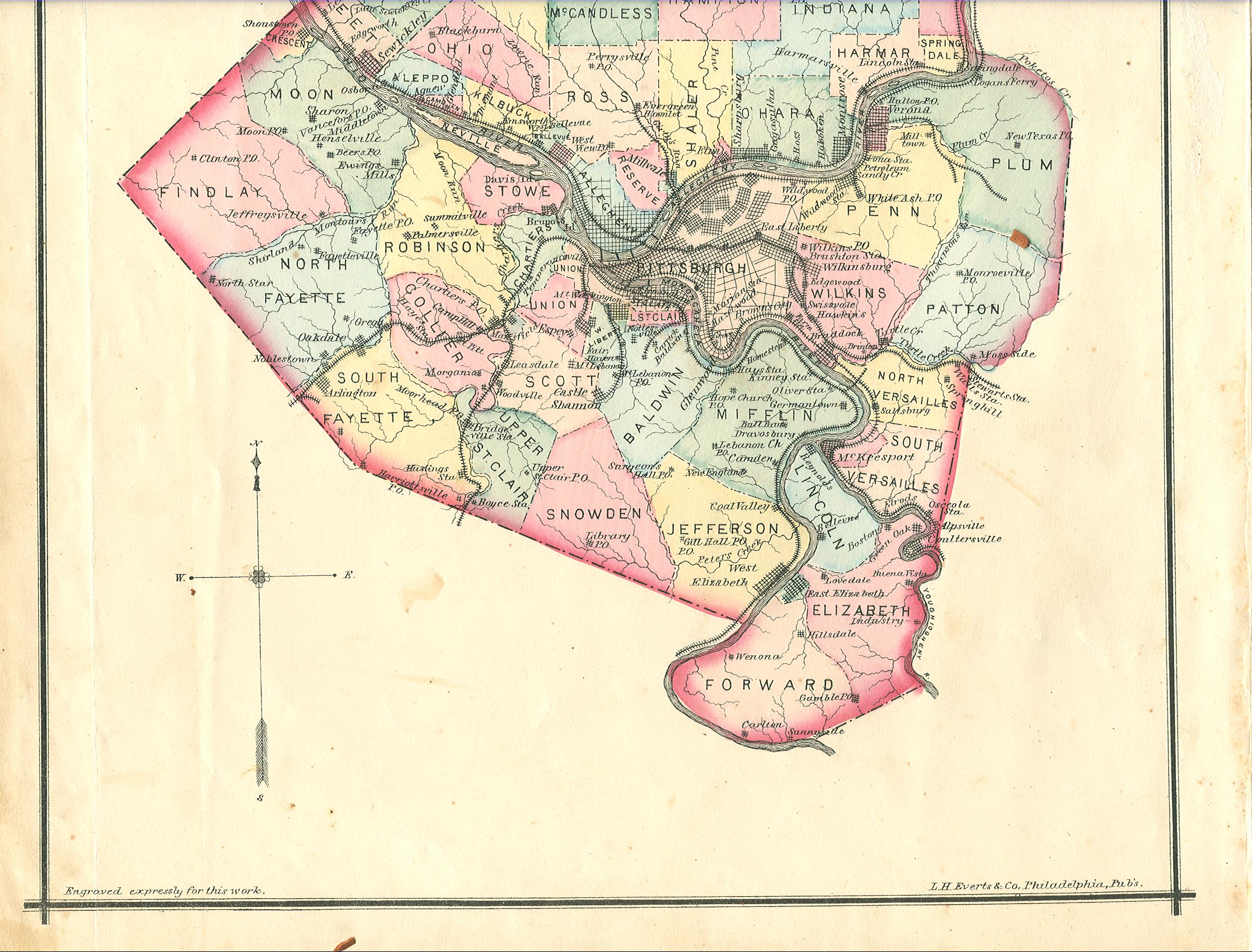
By 1876, the name had been changed to Mount Washington [3], and a year later, the view of the City of Pittsburgh was first drawn from Mt. Washington [4]. Almost all old (and new) views and photos of Pittsburgh are from Mt. Washington, for obvious reasons [5]
The meager roads that wound up the steep slopes of Mt. Washinton were barely passable to a team of horses pulling a loaded wagon. Immigrants, predominantly from Germany, settled Mount Washington and worked in the plants adjacent to the Monongahela River. They became weary of climbing steep footpaths and steps to their homes, from the river valley, after work. They remembered the Steilbahns (inclines) of their former country, and proposals were advanced to construct one or more of them along Coal Hill. The Monongahela Incline was the first of these to be built in 1869-1870. The Duquesne Incline opened to the public in May 1877, and it was one of four inclined planes climbing Mount Washington that carryied passengers and freight to the residential area that had spread along the top of the bluff. As the hilltop communities were virtually inaccessible by any other means, many of Pittsburgh's inclines carried horses and wagons as well as foot passengers. All carried some light freight. The last Pittsburgh-area incline to close was the Castle Shannon Incline, which closed in 1964. This incline also served Mount Washington, with a lower station at the corner of East Carson Street and Arlington Avenue, just east of the present Station Square Light Rail Subway Station. This incline was closed by its owner, the Pittsburgh Railways Company, just prior to all of their streetcar and bus routes being taken-over by the Port Authority of Allegheny County.
The Monongahela and Duquesne Inclines allow access to Mt. Washington's overlook of the downtown area of Pittsburgh. Tourists marvel at the view while riding two of only a few remaining inclines in the country. The inclines remain the best way for thousands of Pittsburghers on Mt. Washington to get to their jobs, entertainment and shopping in downtown Pittsburgh and Station Square.
One of the most famous examples of the early-twentieth century Garden City Movement communities is on Mt. Washington. Chatham Village is a compact neighborhood of townhomes and gardens on the far south end of Mt. Washington.


[edit] Surrounding Pittsburgh neighborhoods
Allentown, Beechview, Beltzhoover, Duquesne Heights, South Shore
[edit] Beneath Mt. Washington
The first tunnels through Mt Washington were the South Hills Trolley Tunnel and the Wabash Tunnel, both in opening in 1904.
The Fort Pitt Tunnel beneath and through Mt. Washington opened September 1, 1960.
[edit] References
- ^ a b (January 2006). "Census: Pittsburgh". . Pittsburgh Department of City Planning Retrieved on 2007-07-19.
- ^ 1787 PLAN OF THE LOTS LAID OUT AT PITTSBURG AND THE COAL HILL http://www.mapsofpa.com/pittsburgh.htm
- ^ OUTLINE PLAN OF ALLEGHENY COUNTY http://www.mapsofpa.com/pitts/1876_0568a.jpg
- ^ 1877 BIRDSEYE VIEW OF PITTSBURGH http://www.mapsofpa.com/pitts/1877_1963.jpg
- ^ 1908 Panoramic photo http://www.mapsofpa.com/pitts/locphoto1908.jpg
[edit] See also
List of Pittsburgh neighborhoods
[edit] External links
- The MWCDC - Mount Washington Community Development Corporation
- Interactive Pittsburgh Neighborhoods Map
- 15211.org - A Community Blog About Mt. Washington
 |
This Pennsylvania state location article is a stub. You can help Wikipedia by expanding it. |
 |
This Pittsburgh-related article is a stub. You can help Wikipedia by expanding it. |