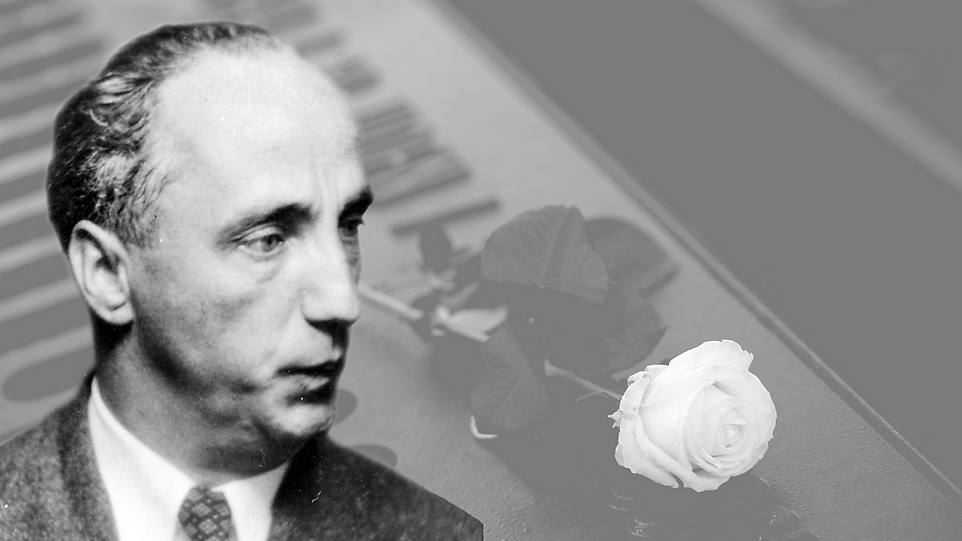
Kurt Huber
From Wikipedia, the free encyclopedia
Kurt Huber (October 24, 1893 – July 13, 1943) was a member of the White Rose group, which carried out resistance against Nazi Germany.
Huber was born in Chur, Switzerland, to German parents. He grew up in Stuttgart and, later (after his father's death), in Munich. He showed an aptitude for such subjects as music, philosophy and psychology, and became a professor in 1920.
Huber was appalled by reports of his country's atrocities in World War II and decided that the Nazis had to be removed from power. He came into contact with the White Rose movement through some students who attended his lectures: Hans Scholl and Alexander Schmorell. Huber actually wrote the White Rose's sixth and last leaflet calling for an end to National Socialism.
Huber was arrested on February 27, 1943, and was brought before the People's Court on April 19, where Roland Freisler, the Chief Justice, humiliated him with a blistering verbal attack as he so often did (see the exchange quoted in the Josef Wirmer article, for instance). On July 13, Huber was executed by guillotine at the prison in Munich-Stadelheim Prison, along with Alexander Schmorell. The university had stripped Huber of his position and his doctorate at the time of his arrest.
Attempts to take up a collection for Huber's widow Clara only brought about more trouble and eventually lead to Hans Leipelt's arrest and execution.
The square opposite from the main building of the Ludwig Maximilians University of Munich was named "Professor Huber Platz" in his remembrance.
Huber is also known for a biography of Leibniz which he completed while in prison.
[edit] External links
 |
This biographical article about a German academic is a stub. You can help by expanding it. |