Talk:Inland Northern American English
From Wikipedia, the free encyclopedia


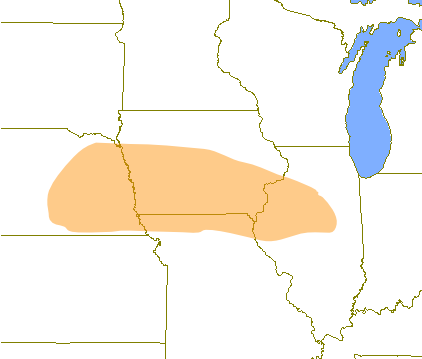
If South Bend is out of the included area, then someone needs to change the map to not include South Bend, Indiana and Michiana. cntrlaltdel33t
[edit] Notable Speakers
I have doubts about Neil Armstrong and John Glenn. They weren't born in the part of Ohio that has the shift. If it can be proven somehow, then fine. 208.104.45.20 02:52, 10 July 2007 (UTC)
[edit] Wrong about Cleveland
I have lived in Cleveland for 20 years and Milwaukee for 4. The accent in Milwaukee fits this description. Cleveland does not. I would put Cleveland together with Pittsburg in terms of accent.
- You would be wrong. Cleveland is one of the flagship cities of the Northern Cities Shift and has little in common with Pittsburgh linguistically. AJD 03:47, 13 July 2007 (UTC)
I mean no offense, but I have to agree with AJD on this one. He is right. Pittsburgh has its own thing going on. Linguists like William Labov have done lots of research about this, and they know what they are talking about. 208.104.45.20 18:58, 13 July 2007 (UTC)
[edit] Removed Comment about Standard American
That comment was not sourced and I have never read that in any literature about American English dialects. So I have removed it until someone provides and academic source. Azalea pomp 03:13, 5 September 2007 (UTC)
[edit] Wiki Contradictions
This article which is also sourced lists another origin: http://en.wikipedia.org/wiki/General_American Azalea pomp 04:49, 5 September 2007 (UTC)
- Hmm: not quite, I think. This article says that "General American" was based on the Inland Northern speech of the mid–20th century. General American says the present-day dialect most similar to General American is that of Iowa and Nebraska—not that that's its historical origin. And it's not surprising that that is the dialect most similar to the Inland North of the mid-20th century: it's basically the area of the historical North that didn't undergo any of the Northern Cities Shift features. AJD 06:44, 5 September 2007 (UTC)
[edit] St. Louis
In the December 2005 issue of National Geographic, an article by Naomi Schwartz includes a regional dialect map of the United States which displays the Inland North dialect map extending through some of central Illinois down to St. Louis. Shouldn't this information be added? Note, St. Louis people don't say pop, they say soda. —Preceding unsigned comment added by 72.161.203.163 (talk) 03:59, 3 October 2007 (UTC)
[edit] Brian Doyle-Murray
I question whether he could have the Northern Cities Vowel Shift in his speech, if that is your definition of being a speaker of this dialect. The trigger of this shift is the diphthongization of /æ/ into /ɪə/ (æ-tensing), a change identified as early as the 1960s. He was born in 1945. That means he would have already been 15 years old in 1960. I'm quite sure that we learn our dialect earlier on in our development. I imagine he speaks the way people in Chicago spoke before the Northern Cities Vowel Shift. I could be wrong though. The shift could have began earlier. That's just not what it says in the NCVS article on Wikipedia. 208.104.45.20 (talk) 04:22, 11 December 2007 (UTC)
- If the NCVS has first identified in the 1960s, that doesn't mean it didn't exist before that—merely that nobody had described it before that. AJD (talk) 15:46, 13 December 2007 (UTC)
Thanks AJD. Diction is precise and important on Wikipedia. I should have known that. 208.104.45.20 (talk) 21:11, 14 December 2007 (UTC)
[edit] maybe it is just me
But I have noticed here in the Detroit area that a lot of two syllable words whose second syllable is begins with a "t" are pronounced like d's - for example "water" is said like "wader" or sometimes "wad-der", same goes for "better". Or is this common through out America? User:starzaz 11:56, 16 December 2007
- That's a phenomenon called "flapping" or "tapping," and it is indeed common throughout America. The "t"s aren't usually quite realized as "d", but as a slightly different consonant sound. The linked article is a little technical, but you might find it interesting nonetheless. --Confiteordeo (talk) 06:01, 17 December 2007 (UTC)
Yes indeed. It is so common in the United States, that it sounds weird when a person here does not use an alveolar flap in words like "water". 208.104.45.20 (talk) 21:50, 18 December 2007 (UTC)
[edit] Inaccurate Map
The blue area of the map in this article does not correspond exactly with the region surrounded by all three lines in the Northern Cities Vowel Shift article. Northwestern Indiana is not surrounded by all three lines in the NCVS article, but it is highlighted blue in this article. I think Confiteordeo should fix this problem, as he is the author of this map. The map in the NCVS article is based on the published data in the Atlas of North American English, so I doubt it is incorrect. 208.104.45.20 (talk) 21:20, 19 December 2007 (UTC)
[edit] Katie Holmes
I realize that she is from Toledo. However, Toledo isn't a part of the "core" of the NCVS, so she doesn't have the first stage of the shift (the raising and diphthongization of /æ/ to [ɪə]). As a person who is not from the Inland North, I see that stage as the most noticeable part of the shift (people from there generally have a difficult time noticing there own accents). Thus, if people come to this article, look at the notable speakers, and see Katie Holmes' name there, they will have a difficult time detecting her accent, and will go away thinking that the Inland North is basically an "accentless" region of the United States. This is completely untrue. That is why when I add speakers to the notable speakers section, I try to pick more advanced speakers from the "core" region of the NCVS (like Mike North and Michael Moore). That way, the average person from another dialect region can easily detect their accents. I could see how most people would have a difficult time noticing the backing of /ʌ/ and /ɛ/ in someone's speech.
- The dialect is not uniform across the entire region in which it is spoken, and it is good to provide examples of local variation. Katie does indeed dipthongize [æ] to [ɪə] (watch her interview with David Letterman,) and she especially fronts [ɑ] to [a] (listen to her pronunciation of words like "on, "job," and "mom.") Also, please quit trying to tell me that I can't recognize an accent just because I speak it. You do not own this article and are not the ultimate authority here. Other Wikipedians are allowed to contribute to this article, too. --Confiteordeo (talk) 05:29, 8 February 2008 (UTC)
- I think that people who live in the area can notice it the best, actually. I can always tell when someone is from this area... immediately. This is because I live in the area, and this is because it sounds natural to me. Trust me, Toledo is known for having this dialect. Native Toledoans speak exactly like Michael Moore. You cannot distinguish a Toledoan's dialect from that of one from anywhere in this area, & that includes Holmes. This is why Toledo is included in this article. нмŵוτнτ 18:06, 8 February 2008 (UTC)
People are the ultimate authority here. I am a person. I will continue to edit whenever and whatever I want to edit. I don't see how Katie Holmes could possibly diphthongize [æ] to [ɪə] when if you look at Toledo on this map, it is not surrounded by the red isogloss. They say Americans suck at reading maps, but I didn't know you guys sucked that much. So either that map is completely wrong, or you guys have terrible ears. I don't really see either one of you as experts on this subject, so nothing you say is going to change what I think. Believe it or not, I actually have reasons for the things I do. I don't just pull stuff out of my ass. If either one of you guys were confident enough on your own, then you wouldn't have to double team me. Thank you. 208.104.45.20 (talk) 02:25, 9 February 2008 (UTC)
- I don't have a clue whether Katie Holmes has the NCVS. But at any rate, in the Atlas of North American English, Toledo is a fringe community of the NCVS: It is inside most of the isoglosses that define the Shift but not all of them. That obviously doesn't imply that any given speaker from Toledo will or won't have the Shift. AJD (talk) 05:45, 9 February 2008 (UTC)
Yes; however, it does imply that any given speaker from Toledo will not have the first part of the shift, i.e., the diphthongization of [æ] to [ɪə]. If this is not the case, then Toledo should be surrounded by the red isogloss on that map. Please do not get off to a bad start with me by taking a tone of superiority. I already dislike you. There is no need to write "obviously". Well I guess there is if you are a haughty person. 208.104.45.20 (talk) 18:35, 9 February 2008 (UTC)
- In ANAE, Toledo is in fact within the isogloss for the first part of the shift, namely the raising of /æ/; this is a fairly expansive isogloss that encompasses Fort Wayne, Cedar Rapids, and Minneapolis as well as serious NCVS cities. What it's not within is the isogloss for having /æ/ raised higher than /ɛ/, which is a more stringent criterion (and also involves the lowering of /ɛ/, which is not part of the first stage of the shift). And the fact that the two ANAE speakers in Toledo don't have /æ/ higher than /ɛ/ does not imply that no one from Toledo will have /æ/ higher than /ɛ/, as you say; it just gives us reason to be moderately surprised if someone does. It's clearly a boundary community. AJD (talk) 19:28, 9 February 2008 (UTC)
-
- (edit conflict) Whether or not Toledo is one of the red parts on that map, someone from Toledo could still have that accent. That can't be argued. There are people in Toledo with that accent, and she is one of them... but it's really not important enough to me to get into an edit war. She has this accent, but she doesn't need to be in this article. No one does. нмŵוτнτ 19:29, 9 February 2008 (UTC)
I agree that no one needs to be in this article. Maybe we should consider taking that entire section out of the article. It seems kind of stupid to me. But as long as it's there, I'm going to edit it. I don't want to get into an edit war either. I don't consider this even close to being an edit war. I just want people to put a lot of thought into their edits, and I want to ask questions to make sure I have an understanding of this dialect. By the way, AJD, I don't own the ANAE. I would love to have it, but it costs way too much money. I can't register on their Web site either, so there is no way I can get that information. 208.104.45.20 (talk) 20:10, 9 February 2008 (UTC)
- I agree with you that the whole "list of notable speakers" is stupid, and it's gotta be almost all original research besides. AJD (talk) 22:30, 9 February 2008 (UTC)
[edit] Question about Midwestern Accents
I've been reading your pages about different American accents and I'm now very interested and curious. Anyway, I have a couple of questions. First off, I'm from Appleton, WI...what dialect do we speak here- Inland North American or North Central American? Also, could you explain the difference between the two dialects because growing up in WI all my life I honestly cannot tell the difference. —Preceding unsigned comment added by 143.235.147.208 (talk) 23:52, 11 February 2008 (UTC) ^^My apologies...forgot to sign and I'm not sure how to sign correctly either- I'm new using this. I'll identify myself as 143.235.147.208 (talk) 00:04, 12 February 2008 (UTC)Appleton Chick143.235.147.208 (talk) 00:04, 12 February 2008 (UTC)^^
- I think Appleton is in the Inland North region. So I'm willing to bet you have the Northern Cities Vowel Shift in your speech, whether you realize it or not. Some people there might have some North Central American features as well, although I'm not sure on that. However, if you're a young woman then I doubt you have many North Central features, like the monophthongal "o sound" in "oh!", pronouncing "bag" to rhyme with "vague", and Canadian raising. The different dialects in the U.S. are interesting. I'm from the central part of the Midwest, and I don't really even consider you guys to be Midwesterners. It's like a different world up there to me. That's just my opinion. Heck, you guys don't even speak the same dialect as we do! 208.104.45.20 (talk) 18:44, 23 February 2008 (UTC)
"Same dialect as you do"? Where are you from? FYI I'm a girl and I'm 21. My family and I do pronounce -ag words to rhyme with vague, such as "bag", "Maggie", or "flag". Until recently I didn't realize that we were pronouncing them wrong lol. I am still trying to understand what this "monophtongal o" and "Canadian raising" you speak of is. We *do* pronounce our vowels strongly if that's what your talking about, for instance, we pronounce our short o's like "ah", as in "Wis-CAHn-sin". I'm also obsessively curious about getting a grasp of what the Northern Cities Vowel Shift is, because I've searched all over the web for info on it and every article is too technical and difficult to understand. I've even been referring to the IPA chart and I'm *still* confused. The only sound samples I've been able to get of this "shift" were clips of some girl pronouncing "socks" like "sax" and "busses" like "bosses", and I've never heard anyone talk like this in my life. The mispronounciation of those words are so blatant that I don't understand how anyone would be unaware of this. Also, I still don't understand how a Great Lakes accent is different from a North Central American accent, I mean, if I were to listen to someone from Chicago, WI, MN, the UP, or Ontario, I wouldn't know the difference, I mean, I think we all have that nasal northern hoser-y sound to our voices. Is it that the Inland North has more of a Polish flavor and the North Central American has more of a Scandinavian flavor?143.235.150.47 (talk) 02:47, 26 February 2008 (UTC)Appleton Chick
- I'm kind of afraid to give out too much information about myself on the internet. However, I will tell you I'm a young male (younger than you actually). I am originally from the tan (I think it's tan) region on this map. Wikipedia calls it the "regional home of General American". So I speak with an accent that closely resembles what Wikipedia refers to as "General American". I've been through Appleton a few times. It's a great place. I mean, how could it not be? It's the home of Harry Houdini, so he claimed. When I said "different world", I didn't necessarily mean it in a negative way. Anyway, one thing I want to make absolutely clear is that you don't pronounce anything wrong. No one does. No dialect is inferior to any other; I'm sorry if I made it sound that way. I think a good way for me to describe a monophthongal o to you is that it sounds like the way a lot of the characters in Fargo would pronounce the word oh in "Oh geeze Marge!" or "Oh yah, you betcha." Read this article to learn more. Canadian raising is why many Canadians pronounce words like house, out, about, and many others differently from many Americans. Check out the Wikipedia article on that topic for more information (I linked it for you). The problem is, it is hard to explain the Northern Cities Vowel Shift without getting "technical". It really helps to learn some of the IPA vowels. Each one has its own article complete with sound clips to help you understand what each vowel should...well...sound like. I do realize, though, that this can be difficult. I think I know the clips you're talking about. I believe the ones you're referring to were in an NPR interview with Professor William Labov. That woman is what linguists would call an "advanced speaker". In other words, she is quite far along in the Northern Cities Vowel Shift. Not everyone in the Inland North talks the way she does. I'm guessing that the reason you're so confused about the shift is that no one in the United States pronounces socks anything like the way that I imagine you pronounce sax. However, the pronunciation of socks in your region is not moving towards the way you pronounce sax; rather, it is moving towards the way people from my region, and other regions in the United States pronounce sax. What I'm saying is that I don't think you and I pronounce sax the same. Another thing that you have to keep in mind about the NCVS is that not all the vowels involved in the shift reach their "destination" in all people (Read the article on it). When William Labov or some other linguist says socks sounds more like sax, he is just approximating it to make it easier for people to understand. For many people in the Inland North, the vowel in socks is actually in between the vowel people from other regions use in sax and the one people from other regions use in socks. By the way, people from Ontario, the UP, Minnesota, Wisconsin, and Chicago do not all sound the same. There are differences, no matter how subtle they may seem. I would love to be able to better explain all this to you, but it is just so difficult.
208.104.45.20 (talk) 22:30, 26 February 2008 (UTC)
Well the differences must be pretty darn subtle seeing as a WI resident such as myself can't even tell them apart and you have a hard time explaining it. Are you saying that the shift is making Midwesterners sound more "proper" like General American? I thought it was making us harder to understand. I pronounce "sax", like "sacks" (as in Santa's sack), you know, with a short 'a', as in "cat". I guess me and my family sort of have Canadian raising, because like I said, we do pronounce are vowels strongly and exaggerated, but I'm not sure if our long o is as quite as exaggerated as you would hear in the movies Fargo or Drop Dead Gorgeous. But I have heard people around me that say it like that. Appleton Chick143.235.151.212 (talk) 00:30, 4 March 2008 (UTC)
- Just being a resident of Wisconsin doesn't make you an authority on nearby dialects. I have a "hard time explaining it" only because there are things that I know you won't understand if I write them. 208.104.45.20 (talk) 21:13, 4 March 2008 (UTC)
Could you at least try to explain it? Thanks. Appleton Chick143.235.147.98 (talk) 18:13, 5 March 2008 (UTC)
- I don't see why I have to explain it to you. It is probably better if you learn it on your own. I have my own way of understanding things that might not work for you. Read all the Wikipedia articles that relate to this topic if you want to learn something. I will admit that some of them need improvement, but it is still better that you read them than read what I have to say. 208.104.45.20 (talk) 00:55, 6 March 2008 (UTC)
I'll keep looking for sound samples. I just wish people wouldn't let this ugly vowel shift progress too far.Appleton Chick143.235.145.6 (talk) —Preceding comment was added at 23:11, 10 March 2008 (UTC)
- I don't think it's that ugly. I wish I had that accent to be honest. When I hear it, it reminds me of exciting urban areas of the Great Lakes. It gives you a linguistic identity, unlike my accent. You can't even tell where I'm from by the way I speak, but when you have that accent, people (or at least some people) know you're from a certain area. 208.104.45.20 (talk) 20:00, 11 March 2008 (UTC)
- Oh yeah, and here is a link to the IPA vowel chart. Click on some of the vowels (especially the ones involved in the Northern cities vowel shift) to get a feel for what sound they represent. Once you get to an article on a particular vowel, you can scroll down to the table labeled "Occurence". The table will give a word that has a certain vowel in a dialect of English. Some of the vowels obviously won't be found in English. You can also click on the "Sound sample" to the right side of each vowel article. You may need to install some software in order to listen to the samples (Don't worry, it's free). Keep in mind that no diphthong is included on the chart because a diphthong is a combination of two vowels. 208.104.45.20 (talk) 21:20, 11 March 2008 (UTC)
[edit] St. Louis Corridor (Again)
In ANAE, both the Inland North and the St. Louis Corridor are defined by the Northern Cities Shift, while Western New England is defined by a less advanced Northern Cities Shift. The St. Louis Corridor and the Inland North are defined in the exact same way, yet they are still separate regions for some reason. That doesn't make sense. I can see that Western New England is a distinct region because the Northern Cities Shift is less advanced there, although I couldn't find an explanation of what "less advanced" means. 208.104.45.20 (talk) 21:15, 14 April 2008 (UTC)
- The St. Louis Corridor is distinct from the Inland North because the NCS is only sporadically present there: in the Inland North, a majority of speakers (in the ANAE sample) have all or nearly all the features of the NCS. In the St. Louis Corridor, many speakers have some of the Inland North features, but not in a systematic way. The last part of Labov's recent paper "Transmission and Diffusion" discusses the differences between the St. Louis Corridor and the Inland North proper in some detail.
- "Less advanced" means merely that the sound changes which constitute the NCS show small effects in Southwestern New England but not to as great a degree as they are found in the Inland North. So, in SWNE you might find /æ/ somewhat higher, and /ɑ/ somewhat fronter, than they are in a typical non–Inland North accent, but not nearly as much as they are in the Inland North. AJD (talk) 03:26, 15 April 2008 (UTC)
Thanks so much AJD. That was very informative. I also want to apologize for my attacks on you. I obviously don't know you and I never will. You could be a good guy. I don't know. I just get angry on the internet sometimes. 208.104.45.20 (talk) 03:38, 15 April 2008 (UTC)
- Thanks for saying so; I appreciate it. And I'd like to add that I also appreciate the many valuable contributions you've made to all of these dialect articles. AJD (talk) 04:12, 15 April 2008 (UTC)
Yeah, I get obsessed. I'm sure you know the feeling. You're more educated and experienced than I am (at least it seems that way). I've actually learned quite a bit from you. As I've said before, I would like to have ANAE, but it is too much money for me right now, so I just have to read excerpts from it. Quite a bit of it is actually available online (at least I think that's what I've been reading). 208.104.45.20 (talk) 04:26, 15 April 2008 (UTC)
[edit] Fronting of Far
I've already mentioned this on the NCVS talk page, but I think the fronting of /ɑr/ is another notable aspect of this dialect, though it may not occur in everyone's speech. 208.104.45.20 (talk) 21:41, 16 April 2008 (UTC)
- I'm sure you're right. I don't think it's discussed much in ANAE, though; have we got any good references for it? AJD (talk) 15:39, 17 April 2008 (UTC)
Well, this is an interview with a linguistics instructor, and she says that the fronting of /ɑr/ is a traditional northern feature (though she doesn't say it in those words). 208.104.45.20 (talk) 00:04, 18 April 2008 (UTC)
I found a reference for it in the demo version of ANAE. It is found in the commentary of an interview with a woman from Cleveland. Here's what it says:
The city of Cleveland is an integral part of the Inland North, in the original Western Reserve settlement area. But it is less advanced in the Northern Cities Shift than many other cities. Agatha R. shows the basic features of the NCS in a moderate form: tensing and raising of /æ/ in outstanding, Flats, traffic; fronting of /o/ in top, Hospital, backing of /e/ in incredible. As in Chicago, we hear a strongly fronted /ah/ in Chicago and /ahr/ in art, identified with the fronting /o/. The long mid vowels /ey/ and /ow/ are characteristically upper mid and tense (cf. lake, you know) but plainly diphthongal.
That sounds good enough for me. 208.104.45.20 (talk) 19:54, 20 April 2008 (UTC)
[edit] Fire
I have heard an unusual pronunciation of words like fire in this region. Fire seems to be [fʌɪɻ] or something like that for some people (ignore the symbol I used to represent the final r, I am still relatively new to this IPA stuff; the difference is in how /аɪ/ is pronounced in this environment). 208.104.45.20 (talk) 02:17, 21 April 2008 (UTC)
- This is discussed (though not in detail) by Timothy Vance in a 1987 article in American Speech. He was studying the possible split of /ay/ into two phonemes, a raised one and an unraised one, and he commented that among his Northern speakers it seemed to be raised before /r/ all the time. AJD (talk) 14:15, 22 April 2008 (UTC)
Thanks AJD. I think I found the article you're referring to. Can I put something about this into the article? I think this is an interesting phenomenon, because I thought Canadian raising only took place before voiceless consonants. I realize there are exceptions for many speakers, e.g., spider, but this is quite an exception. It seems much more noticeable in a pre-/r/ environment. Maybe the American type of Canadian raising is a bit different from the Canadian type. I think we could go into more detail in this article where it says "Canadian raising". 208.104.45.20 (talk) 21:33, 22 April 2008 (UTC)
- Yeah, go ahead. The article on Canadian raising should probably be edited to mention that it's arguably undergoing a phonemic split in some dialects, too. AJD (talk) 04:11, 23 April 2008 (UTC)
The thing is, I don't know how to word it correctly. 208.104.45.20 (talk) 05:16, 24 April 2008 (UTC) —Preceding unsigned comment added by 208.104.45.20 (talk) 20:13, 23 April 2008 (UTC)
[edit] Why Do /ə/ and /ʌ/ Sound Almost Identical?
I have been wanting to ask this question for a while, but I never got to it. Why do /ə/ and /ʌ/ sound so similar in American English? 208.104.45.20 (talk) 03:44, 24 April 2008 (UTC)
[edit] "The word on rhymes with don, not with dawn."
I believe that this is my native accent (I'm a lifelong resident of the Detroit area), but I definitely do not rhyme "on" with "don." I rhyme it with "dawn." Funnyhat (talk) 04:16, 7 June 2008 (UTC)
- How old are you? I'm just curious. 208.104.45.20 (talk) 05:27, 7 June 2008 (UTC)