Hurricane Anna (1961)
From Wikipedia, the free encyclopedia
| Category 3 hurricane (SSHS) | ||
|---|---|---|
 Satellite image of Anna |
||
| Formed | July 20, 1961 | |
| Dissipated | July 24, 1961 | |
| Highest winds |
|
|
| Lowest pressure | 976 mbar (hPa; 28.83 inHg) | |
| Fatalities | 1 direct | |
| Damage | $300,000 (1961 USD) $2 million (2008 USD) |
|
| Areas affected |
Windward Islands, Trinidad and Tobago, Honduras, Belize | |
| Part of the 1961 Atlantic hurricane season |
||
Hurricane Anna was an early season hurricane which formed during the 1961 Atlantic hurricane season. The first named storm, first hurricane and first major hurricane of the 1961 season, Anna formed on July 20 and moved westward on a path similar to Hurricane Abby in 1960, where it reached category 3 status on the Saffir-Simpson Hurricane Scale. Anna's winds peaked at 115 mph (185 km/h) before skirting northern Honduras and making landfall in Belize (then known as British Honduras). After making landfall, Anna dissipated on July 24.
Anna caused minimal damage in the Windward Islands and Trinidad and Tobago as a tropical storm. In Honduras and Belize, the storm left $300,000 dollars (1961 USD, $2 million 2006 USD) in damage and one fatality.[1]
Contents |
[edit] Storm history


An area of low pressure was detected on July 17 by Hurricane Hunters and ship reports between 14-17°N and 50-55°W. Satellite imagery later showed the area of disturbed weather at 12°N. On July 19, the disturbance quickly intensified into a 50 mph (80 km/h) tropical storm around 12 a.m. (EST) and was named Anna by the National Hurricane Center. After becoming a tropical storm, Anna tracked westward due to an interaction with a strong high pressure system to the north. The center of Anna passed 75 miles (121 km) north of Venezuela. The following day, Anna’s winds reached hurricane intensity as the storm continued to track west-northwest through the Caribbean Sea at speeds of 15-23 mph (24-37 km/h).[1]
On July 21, Anna’s winds peaked at 115 mph (185 km/h)[2], and its barometric pressure dropped to 976 millibars (28.83 inches) as the hurricane continued to moved westward and was kept at a low latitude due to a strong high pressure system to the north.[1] After briefly attaining category 3 status, Anna brushed past northern Honduras as a category 2 hurricane on July 23[2]before making landfall in Belize the following day as a category 1 hurricane. Anna then rapidly dissipated shortly after making landfall.[1][2]
[edit] Preparations
The National Hurricane Center issued tropical storm and hurricane warnings for Venezuela and Aruba.[3]In Jamaica, meteorologists forecasted the storm to bypass the island to the south without causing any effects.[4]As Anna continued westward, meteorologists at the National Hurricane Center forecasted the storm to make landfall in ether northern Nicaragua or southeastern Honduras and advised residents in those countries and rest of Central America to take precautions ahead of the storm.[5][6]As the storm neared Honduras, small boats and other water craft were advised to remain in port.[7]
In Belize (then known as British Honduras), the approach of Hurricane Anna forced 100 residents to evacuate their homes and numerous businesses were closed down. In Belize Harbor, many ships and boats were moved upstream inland and Belize's Church Welfare Service began to ship clothing and other materials in anticipation of the aftermath of the hurricane.[8]The hurricane was also forecasted to bring heavy rainfall to the mountainous areas of Belize, causing a concern that flash flooding will result from the rainfall.[9]
[edit] Impact and naming
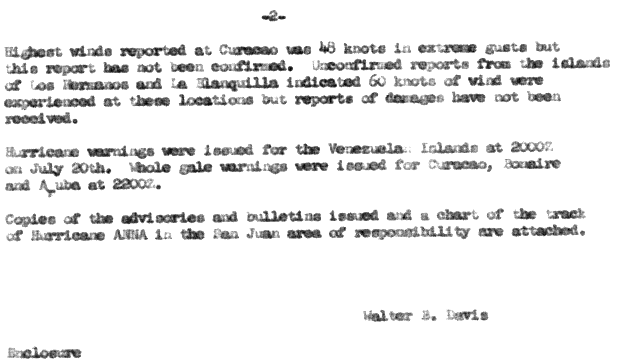
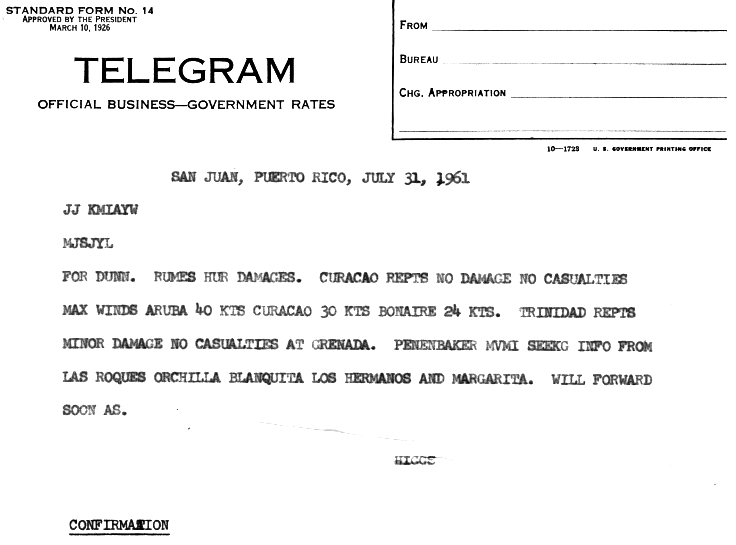
In Grenada, Anna produced winds gusts of 50 mph (80 km/h) and a weather station reported a barometric pressure of 1002 millibars (29.58 inches).[1] Damage from Anna’s impact on Grenada was limited to banana crops, trees and telephone poles.[4] In northern Venezuela and the ABC Islands, the storm produced winds of 50-70 mph (80-113 km/h) in Curacao, Los Hermanos and La Blanquilla.[3] A weather station in Aruba reported winds of 50 mph (80 km/h).[10]
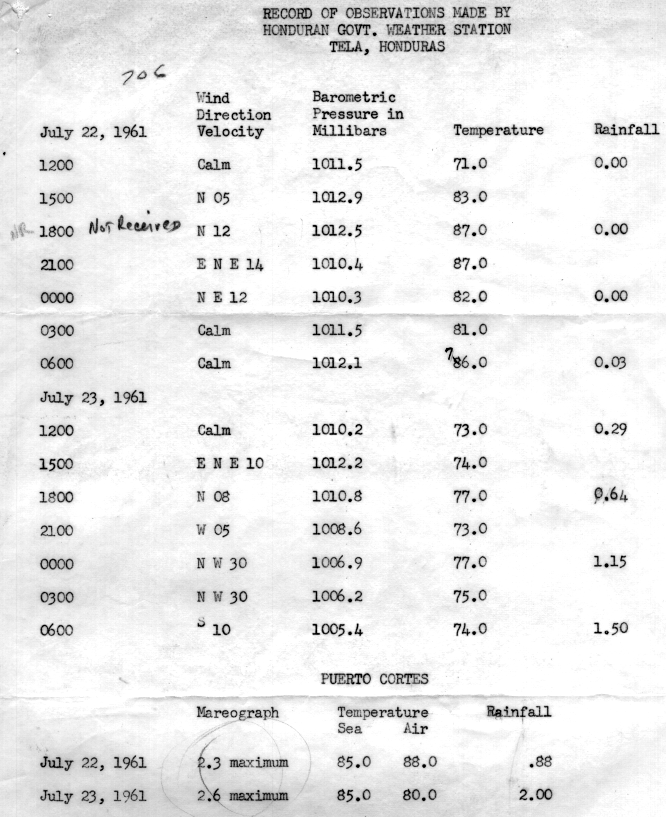
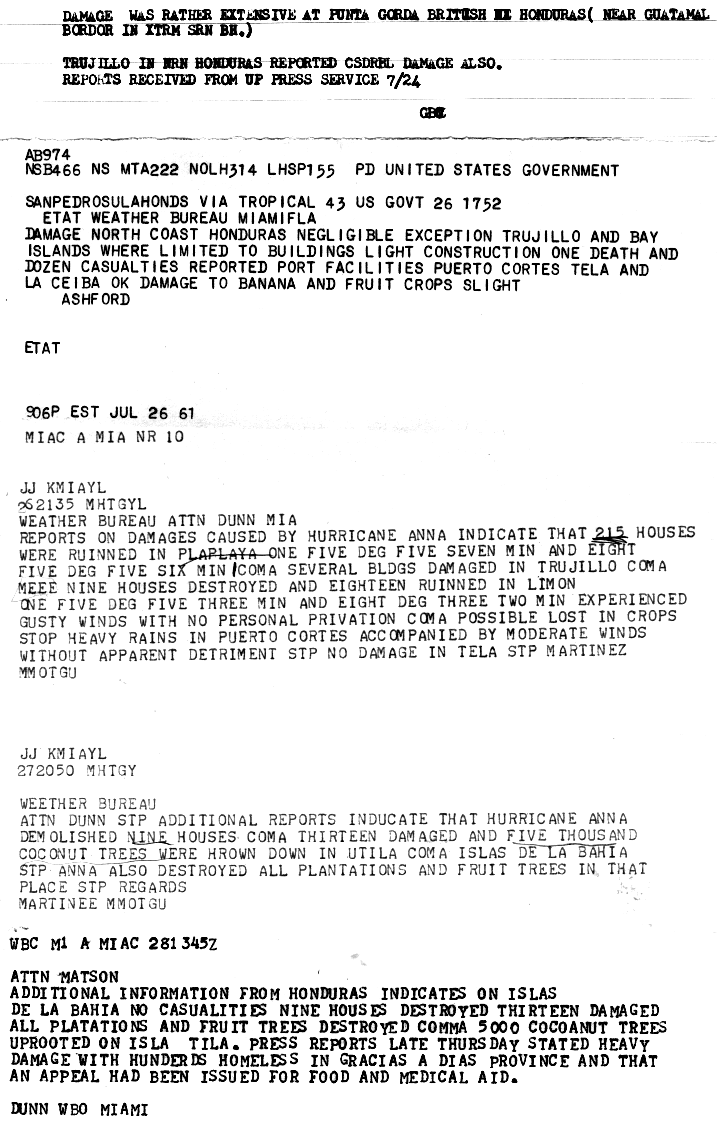
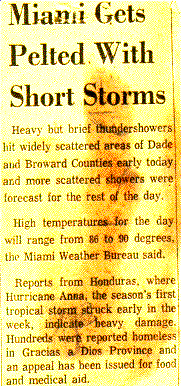
In Honduras, a weather station in Teja reported rainfall of 0.29 - 1.5 inches (7.3 - 25.4 mm) over a two day period. Another station in Puerto Cortés reported 2 inches of rainfall.[11] The hurricane caused moderate damage across northern Honduras. In Plaplaya, the storm damaged 215 homes and toppled 5,000 coconut trees. The storm also ruined banana and fruit harvests and one fatality was reported.[12] Severe damage was also reported in Gracias a Dios.[13] Damage from Anna’s impact on Honduras amounted to $300,000 (1961 USD, $2 million 2007 USD).[1] The Government of Honduras provided food and medical aid after the storm.[13] In Belize, Anna produced waves 7-10 ft (2.1 - 3 m) and gusty winds.[9] Damage in Belize was moderate and no fatalities was reported.[1]
The name Anna was not retired by the National Hurricane Center and was re-used again during the 1969 and 1976. In 1979, spelling of the name was changed to Ana which was used for future Atlantic hurricane season and is on the list of names for the 2009 Atlantic hurricane season.
[edit] See also

[edit] References
- ^ a b c d e f g Gordon E. Dunn and Staff (1962). Atlantic Hurricane Season of 1961. NOAA. Retrieved on 2007-04-27.
- ^ a b c Weather Underground (2007). Weather Underground Archive of Anna. Retrieved on 2007-04-30.
- ^ a b National Hurricane Center (1961). Hurricane Anna 1961 Report. NOAA. Retrieved on 2007-05-01.
- ^ a b The Gleaner (1961). Anna Should Miss Jamacia. Retrieved on 2007-05-01.
- ^ United Press International (1961). Hurricane's Sight Set on North Coast of Nicaragua. The Daily Courier. Retrieved on 2007-05-01.
- ^ Associated Press (1961). Hurricane Roars Across Caribbean. Arizona Daily Sun. Retrieved on 2007-05-01.
- ^ United Press International (1961). Hurricanes Path Leading to Honduras. Sunday Gazette-Mail. Retrieved on 2007-05-03.
- ^ The Gleaner (1961). Anna British Honduras Bound last night. Retrieved on 2007-05-05.
- ^ a b Associated Press (1961). Hurricane Anna hits Honduras. Great Bend Daily Tribune. Retrieved on 2007-05-05.
- ^ Higgs (1961). US Government Report on Anna. United States Government. Retrieved on 2007-11-27.
- ^ National Hurricane Center (1961). Hurricane Anna 1961 Report. NOAA. Retrieved on 2007-12-07.
- ^ Etat/Dunn (1961). Hurricane Anna damage report. NOAA. Retrieved on 2007-12-18.
- ^ a b National Hurricane Center (1961). NHC Newspaper clipping on Anna. NOAA. Retrieved on 2007-12-19.