Talk:FM Towns
From Wikipedia, the free encyclopedia

I thought "FM" stood for "Fujitsu Maikon"? 「マイコン」 (maikon) is an abbreviation of the English word "microcomputer" in Japanese, and was used quite often (they seem to like their 4-syllable abbreviations), much like 「パソコン」 (pasokon; abbrev. of personal computer) is used to refer to PCs. --Zilog Jones 19:42, 16 August 2005 (UTC)
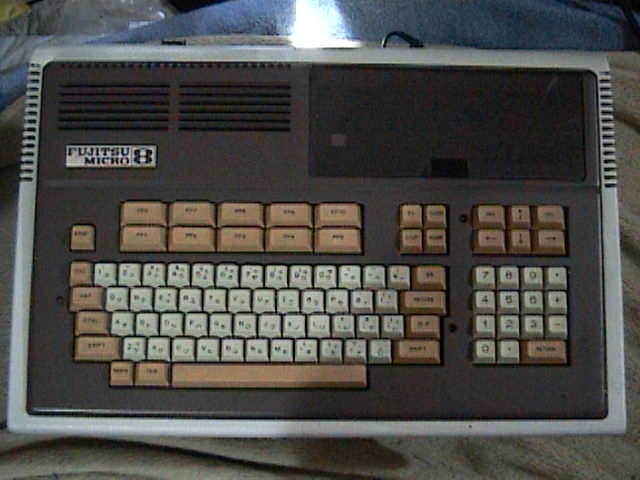
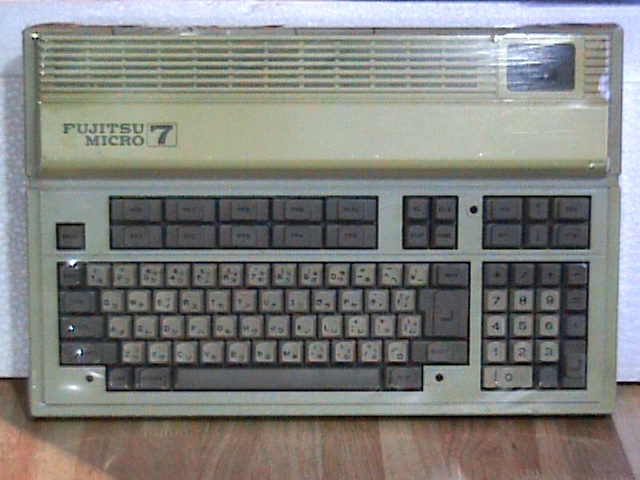
No, FM stands for "Fujitsu Micro" historically. Fujitsu's first personal computer on 1981 was named Fujitsu Micro 8 (FM-8) and its successors all have the FM prefix (FM-7, FM-77, FM-11, FM-R, FM/V etc.)
- http://openlab.jp/kitaro/natsupaso/FUJITSU/FM_8.jpg
- http://openlab.jp/kitaro/natsupaso/FUJITSU/FM-7.jpg
219.113.144.250 21:51, 28 October 2005 (UTC)
Another theory for the dropping of the "e" in "FM Town[e]s": Couldn't it be that the pronounced "e" would have reminded too much of NES (Nintendo Entertainment System)? Just a thought that came in my mind when pronouncing it orally ... -andy 80.129.81.251 16:05, 8 June 2006 (UTC)
I don't understand the comparison with the Macintosh Color Classic. The FM Towns I've seen have a tower case that connects to an external monitor; that fits with the description in the details section. Was there an FM Towns with a built-in display? Apple's first machines with bundled GUI OS and color graphics came out in 1987 (the Apple II/GS and Macintosh II. Not sure which was first.) rakslice 10:03, 3 November 2007 (UTC)
I changed the Emulators name. Its うんづ prononced Untzu —Preceding unsigned comment added by 203.160.113.85 (talk) 03:41, 9 April 2008 (UTC)