David Klöcker Ehrenstrahl
From Wikipedia, the free encyclopedia


David Klöcker Ehrenstrahl (1628, Hamburg – 1698, Stockholm), Swedish nobleman and portrait painter who in 1652, at twenty-four years of age, at the request of Carl Gustaf Wrangel, moved to Skokloster Castle, from his art studies in the Netherlands. Between 1654 and 1661 he studied in Italy and visited the courts of both France and England. On his return he became entitled Court painter. He was raised to the nobility in 1674 and became court indendant in 1690. Mikael Dahl and David von Krafft as well as his daughter Anna Maria (born 1666) can be found among his pupils.
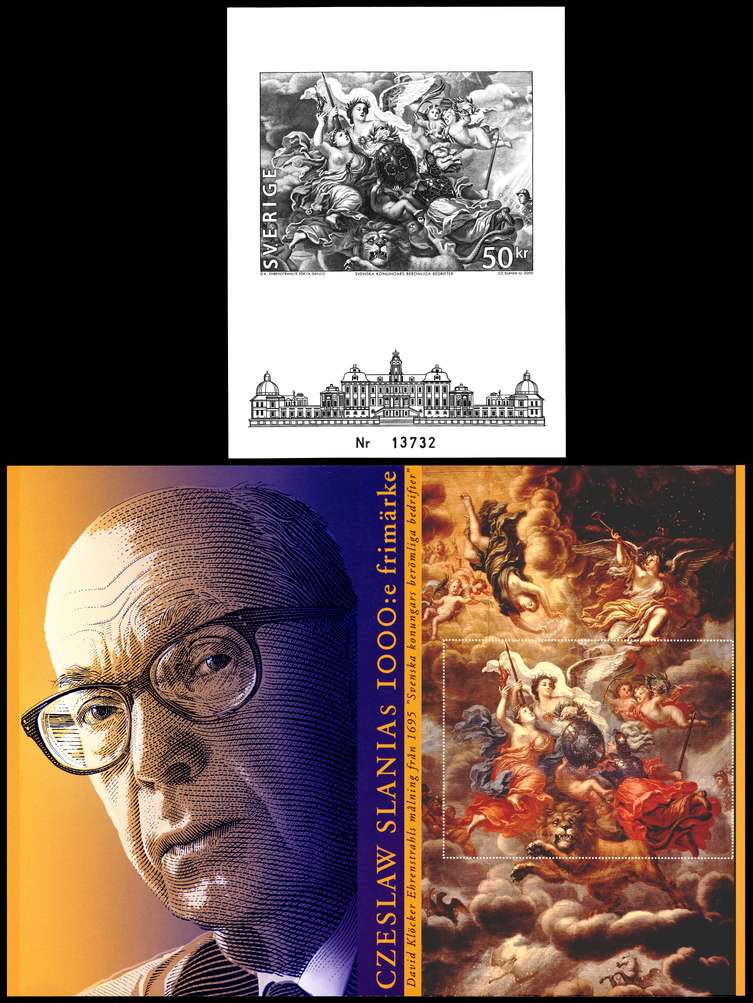
The allegoric great hall ceiling fresco, named The Great Deeds of The Swedish Kings, in the Swedish House of Knights, made between 1670 and 1675, is considered to be his greatest work. A second version was made in Drottningholm Palace, the home of the Swedish Royal Family, in 1695.[1] The Drottningholm fresco, also became the motive of the 1000th and ever largest postage stamp[2] by Czesław Słania, the Polish postage stamp and banknote engraver.
Ehrenstrahl is also known for his proposal, in 1694, that:
- "Art presents riddles that could not be solved by everyone".[3]
[edit] References