Chionactis palarostris
From Wikipedia, the free encyclopedia
| Sonoran Shovel-nosed Snake | ||||||||||||||||||
|---|---|---|---|---|---|---|---|---|---|---|---|---|---|---|---|---|---|---|
| Scientific classification | ||||||||||||||||||
|
||||||||||||||||||
| Binomial name | ||||||||||||||||||
| Chionactis palarostris (Klauber, 1937) |
||||||||||||||||||
| Subspecies | ||||||||||||||||||
|
C. p. organica |
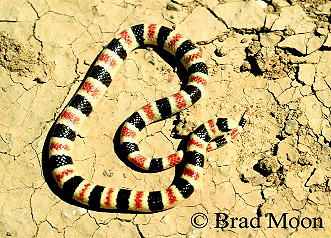
Sonoran Shovelnose Snake (Chionactis palarostris) is a native of the Sonoran Desert. It is found only in Organ Pipe Cactus National Monument of western Pima County, Arizona. It is also called the Organ-Pipe Shovelnose Snake. It is cross-banded with black, yellow (or whitish) and red bands. Consequently, it resembles the Sonoran Coral Snake, but unlike the coral snake, it is not venomous. It is active in the evening and at night, mostly near washes. It mates in the spring and lays s clutch of up to five eggs in summer.
[edit] External links
- Chionactis palarostris at ITIS Report
- A Picture of the Sonoran Shovelnose
- Chionactis palarostris at Discover Life
 |
This snake article is a stub. You can help Wikipedia by expanding it. |