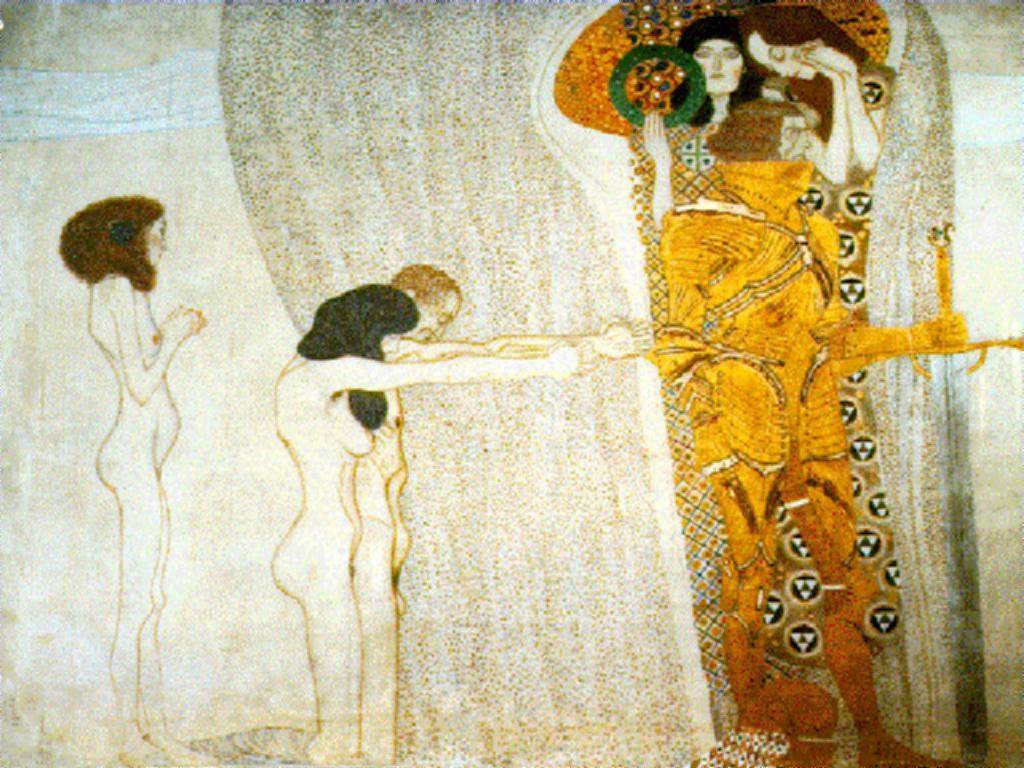
Beethoven Frieze
From Wikipedia, the free encyclopedia


The Beethoven Frieze is one of the majestic paintings of Gustav Klimt.
In 1902, Klimt finished the Beethoven Frieze for the 14th Vienna Secessionist exhibition, which was intended to be a celebration of the composer and featured a monumental, polychrome sculpture by Max Klinger. Meant for the exhibition only, the frieze was painted directly on the walls with light materials. After the exhibition the painting was preserved, although it did not go on display until 1986.
The frieze is so popular and famous, that it was the main motif of one of the most famous collectors' coins: the Austrian 100 euro The Secession Coin, minted in November 10, 2004. The reverse side features a small portion of the frieze. The extract from the painting features three figures: a knight in armor representing “Armored Strength”, one woman in the background symbolizing “Ambition” holding up a wreath of victory and a second woman representing “Sympathy” with lowered head and clasped hands.