User talk:68.60.68.203/Libya AIDS case/Draft
From Wikipedia, the free encyclopedia
 |
This is a workpage, a collection of material and work in progress that may or may not be incorporated into an article. It should not necessarily be considered factual or authoritative. |
[edit] Start Here
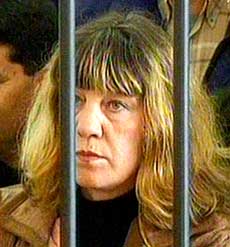
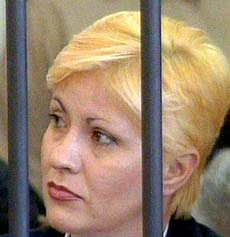
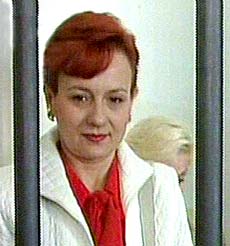
The HIV trial in the country of Libya concerns the trials and appeals of six foreign medical workers convicted of conspiring to deliberately inject 426 children with the HIV virus in 1998, causing an epidemic at El-Fath Children's Hospital in Benghazi. [1] The main defendants are a Palestinian intern and five Bulgarian nurses. [2] They are presently under sentence of death.
The epidemic at El-Fath and the subsequent trials have become highly politicized and controversial. The El-Fath epidemic is the largest incident of hospital-induced (nosocomial) HIV in history. [3] The defendants confessed; but repudiated their confessions. They gave interviews and testified at trial that they were forced to confess by the use of torture. [4] [5] [6] Charges were then filed against 10 Libyan security personnel, some of whom claimed they had been tortured to confess that they had tortured the others. [7] The guards were eventually acquitted. In April of 2001 Libyan leader Muammar Gaddafi made a speech at the African summit on HIV/AIDS . He told the conference that the world AIDS epidemic started when "CIA laboratories lost control over the virus which they were testing on black Haitian prisoners" [8] He called the HIV crisis in Bengahzi "an odious crime" and questioned who was behind it."Some said it was the CIA Others said it was the Mossad Israeli intelligence. They carried out an experiment on these children." He went on to say that the trial would be "an international trial, like the Lockerbie trial." [9] [10]
The scientific community became politically embroiled in the events when the findings a 2003 report, which had been commissioned by the Libyan Jamahiriya, by Luc Montagnier, a co-discoverer of the AIDS virus, and Italian microbiologist Vittorio Colizzi was ultimately rejected by the court in favor of the conclusions of a Libyan expert panel. Montagnier and Colizzi both testified in person at the trial of record for the defense. [11] Their report concluded that the infection at the hospital resulted from poor hygiene and reuse of syringes, and that the infections began before the arrival of the nurses and doctor in 1998. Through hospital records, and the DNA sequences of the virus, they traced it to patient n. 356 who was admitted 28 times between 1994–97 in Ward B, ISO and Ward A, and theorized that this patient was the probable source of the infection. The first cross contamination occured during that patients 1997 admission. The report concludes that the admission records of a total of 21 of the children "definitively prove that the HIV infection in the Al-Fateh Hospital was already active in 1997" and that "Ward B was already heavy contaminated in November 1997." [12] The epidemic snowballed in 1998 to well over 400 children. The scientific journals 'the Lancet' and 'Nature' both advocated heavily for the release of the defendants. Libyan citzens groups and victims associations, in contrast, demanded justice for the victims, sometimes rioting outside the courtroom and expressing outrage at western defense of the "killer nurses". After the latest conviction 114 Nobel Laureates in the sciences, co-signed an open letter to Libyan leader Muammar Gaddafi calling for a fair trial. [13]
Most of the nurses were recruited by Bulgarian state-owned company Expomed and began work at the Libyan hospital, where pay was considerably higher than they could receive at home, beginning work in February of 1998. A crisis errupted in November when Libyan "La" magazine (issue 78) published an expose about AIDS at the hospital. [14] [15] In December the Association of Libyan Writers reported over 60 cases of AIDS so far that year in Libya. "LA" interviewed Sulaiman al-Ghemari, Libyan Minister for Health, who told them that most of the cases are children. Parents believed their children were infected through blood transfusion in Benghazi's main children hospital.[16] "La", magazine was shut down but it was eventually revealed that over 400 children had been infected. A WHO team was sent in December and stayed through January of 1999, and issued a classified report. In February the Bulgarian embassy announced that 23 Bulgarian specialists had been kidnapped. A week later they were informed by Libyan authorities that “precautionary measures” had been taken against Bulgarian doctors and nurses working at the Benghazi Children’s Hospital. There was more scandal in the wake of the arrests when the Bulgarian news journal "24 hours" of February 24th published an investigation of money laundering at Expomed entitled "How we lost USD 5,048, 292 in Lybia" [17] On March 7, 1999 six members of the group subjected to "precautionary measures" were formally arrested on a warrant in connection with the case of infecting children in Benghazi with HIV. [7] The group consists of Ashraf al-Hajuj, a Palestinian intern, and Bulgarian nurses Kristiyana Valtcheva, Nasya Nenova, Valentina Siropulo, Valya Chervenyashka, and Snezhana Dimitrova. They are later to become widely known as "the Benghazi Six" a term first promulgated by advocacy groups, and adopted by some of the western popular press. [18]
On February 7, 2000, the first of several trials began. The charges were intentionally "murdering with a lethal substance (article 371of the Penal Code), randomly killing with the aim of attacking the security of the State (Article 202), and causing an epidemic through spreading harmful virus, leading to the death of persons (Article 305)". In addition, Bulgarians were accused of acting contrary to Libyan customs and traditions, by engaging in non-marital sexual relations and drinking alcohol in public places, distilling alcohol, and illegally transacting in foreign currency. [7] [19] The first case was dismissed, in the second they were sentenced to death, this was appealed, the case was retried, and appealed again. On December 19, 2006, in the third retrial, all six were pronounced guilty , and were again sentenced to death by firing squad. [20] The case will likely be appealed.[21]
[edit] history
[edit] Whois
Initially, 23 foreign medical personnel were arrested, mostly Bulgarian, but 17 were released and have returned to Bulgaria. Additionally, 11 Libyan nationals were arrested and charged with the alleged crimes.Doctor Zdravko Georgiev a Bulgarian went to Libya to see his wife (Valtcheva) ; subsequently he was detained and tried on the charge of illegally transacting in foreign currency. The following Libyans were also arrested and tried on non capitol offences : Atia at-Tahir Ali al-Juma (director of the Benghazi hospital), Halifa Milyad Mohammed al-Sherif (head of hospital ward), Abdul Azis Husein Mohammed Shembesh (head of hospital ward), Abdul Menam Ahmed Mohammed al-Sherif (head of hospital ward), Idris Maatuk Mohammed al-Amari, Salim Ibrahim Suleyman Abe Garara, Mansur al-Mansur Saleh al-Mauhub, Nureddin Abdulhamid Halil Dagman, and Saad Musa Suleyman al-Amruni (assistant secretary of the health care sector in Benghazi).
[edit] Ashraf Ahmad Jum’a al-Hajuj (al-Hadjudj/al-Hazouz)
Photo http://www.novinite.com/view_news.php?id=74323
Palestine: Information with Provenance (PIWP database) [22]
An intern who started working at the hospital two months before news of the epidemic broke out. His family said they fled Libya because they have been portrayed by the Libyan media as "killers of innocent children" and are now in the Netherlands. Ashraf's cousin in Palestine As'ad El-Hajouj told the Turkish Daily News, that Ashraf had lost an eye and that one of his hands had been paralyzed because of torture he endured while in prison. [23] [24]
[edit] Valya Chervenyashka (Valya Georgieva Chervenyashka)
Photo http://www.novinite.com/media/images/2006-12/74273.jpg
She is from Byala Satina. She was recruited by Expomed company.
[edit] Snezhana Dimitrova
Photo http://www.novinite.com/view_news.php?id=74274
Dimitrova did not arrive at the hospital until August 10 1998. She was recruited by Expomed. She is the only one of the condemned to have been picked up for questioning in the roundup of medical workers december 14 of 1999. She was held for two days then, and rearrested with the others on February 10 1999.
[edit] Nasya Nenova
Photo http://www.novinite.com/media/images/2006-12/74271.jpg
Nasya Nenova testified that she confessed and attempted suicide because she was afraid she would be tortured again. She was interrogated alongside Ashraf and told the court they were beaten and that there was no interpretor. She along with Vulcheva are the only nurses who admitted knowing Ashraf by sight beforehand but said she had never spoken with him. She did not confess to having illegal sexual relations with him. She denied having attempted suicide out of guilt for what she had done. In court she stated that "I am not guilty on any of the counts. My conscience is clear" "We had protection from no-one, we had no doctor. We were alone there with those men who did everything they wanted to do". She said she attempted to retract her confession on July 17, 1999 but that a Colonel Juma came and threatened to renew the torture if she persisted.
[edit] Valentina Siropulo
Photo http://www.novinite.com/view_news.php?id=74272
[edit] Kristiyana Vulcheva(Valtcheva)
Photo http://www.novinite.com/media/images/2006-12/74270.jpg
Kristiyana Vulcheva was not recruited by Expomed. She is the wife of Doctor Zdravko Georgiev who charged along with the others but ultimately found not guilty of all charges after having been once convicted of currency violations . She retracted her confession that vials were given to her by a British citizen which were used to infect the children. [25] The prosecution purported she had a luxurious lifestyle. In court she denied knowing any such person as 'John the Englishman' or had been paid "large sums of money" to infect the children. She testified that she had been "subjected to all kinds of torture known since the Middle Ages." The other four testified that they had never seen Vulcheva befor until their blindfolds were taken off after what they called their "kidnapping" by Libyan security, when they were first brought to the police compound in February 1999. Vulcheva was uniquely charged and convicted of illegally distilling alcohol. The defense pointed out that no device used to do this was produced at trial. Although she admitted in court to having seen Ashraf at the Benghazi Children's Hospital she testified that she had never spoken to him or performed any tasks for him. Unlike Ashraf, she never confessed to having sexual relations with him which is required to convict for the crime of adultery under Libyan law.
[edit] ZDRAVKO GEORGIEV
Photo http://www.novinite.com/view_news.php?id=74275
[edit] DEFENCE TEAM
[edit] Libyan defence attorney Othman al-Bizanti
[edit] Dr DANAIL BESHKOV Libyan medical consultant to the defence
[edit] Vladimir Sheitanov
[edit] PLAMEN YALNUZOV
[edit] Security forces arrested
Libyan authorities arrested nine officers and a doctor and charged them with torture of the accused Bulgarian nurses and Palestinian doctor in order to extract confessions.CITE NEEDED
[edit] Libyan Victims
(see List of Libyan children in HIV trial in Libya)
[edit] FIRST TRIAL People's Court of Libya a special status court for crimes against the state
Case 44/1999 of People's Court of Libya
The People’s Court is a special court to which crimes against the state (attempted forcible overthrow of the state or incitement against it) are referred. Both prosecution and defence have the right to appeal against the judgment before the Court of Appeals in Tripoli. The decision of that court, can be challenged before the Supreme Court, whose judgments are final and unappealable.
presiding judge, Ibrahim Abu Shinaf, NOTICE:
Information about the proceedings within the court during the trials is derived from information compiled by the BULGARIAN NEWS AGENCY [26] which was transcribed into english and made available through the Bulgarian Embassy [27] and is fully credited as such
Under Article 4. Exceptions; of Bulgarian copyright law; The following shall not be subject to copyright:
1. normative and individual acts of state governing bodies, and the official translations thereof
4. news, facts, information and data [28]
(February 7, 2000 – February 17, 2002)
Indiscriminate killing of people for the purpose of subversion of the security of the State, conspiracy and collusion, Causing an epidemic by injecting 393 children the AIDS virus, and premeditated murder also engaging in illicit sexual relationships, drinking alcohol in public places, distilling alcohol, and illegally transacting in foreign currency.
[edit] SUMMARY:
THE DEFENDANTS TESTIFY TO TORTURE: THEY DENY THEY ALL KNEW EACH OTHER BEFORE THEIR ARREST: THEY DENY BEING PAID LARGE SUMS OF MONEY TO INFECT THE CHILDREN: LIBYAN DEFENDANTS READ PREPARED STATEMENTS: ATTORNEYS FOR THE BULGARIANS AND THE PALESTINIAN DOCTOR OBJECT TO MINIMAL QUESTIONING OF THE LIBYANS:THE DEFENCE REQUESTS AN MEDICAL EXAMINATION OF THE DEFENDANTS AND THAT EXPERTS MONTAGNIER and PERRIN BE BROUGHT TO TESTIFY
PROSECUTOR CALLS FOR MAXIMUM SENTENCES ON THE FOREIGNERS: SAYS THEY LOST ALL HUMANIY WHEN THEY KILLED THE CHILDREN: DESCRIBES THE EPIDEMIC AS A NATIONAL CATASTROPHE:CLAIMS THAT MONTAGNIER HAD STATED THE CHILDREN WERE SELECTED:DESCRIBES PLOT TO DISRUPT LYBIA BY FOREIGN SECRET SERVICES WHO ARE USED TO KILLING CHILDREN TO ACHIEVE THEIR AIMS.POINTS TO THE FACT THAT THE CHILDREN WERE ALL INFECTED ON THE INTERNAL WARD:CITES RECORDS THAT THE HIV VIRAL COUNT WAS VERY HIGH.POINTS OUT THAT THERE WERE 4 SUBTYPES OF AIDS RATHER THAN THE NORMAL ONE OR TWO
DEFENCE ARGUES THE CHARGES ARE NOT PROVED AND THAT PROSECUTION HAD NOT PRODUCED PHYSICAL EVIDENCE ON SEVERAL COUNTS: AGAIN MOTIONS FOR A MEDICAL EXAMINATION TO DETERMINE WHAT CAUSED SPECIFIC INJURIES TO THE DEFENDANTS: SAYS HE KNOWS AND WILL SUBMIT NAMES OF THE TORTURERS TO THE COURT: ARGUES THAT THE LAW CANNOT CONVICT FOR ADULTERY ON THE TESTIMONY OF ONLY ONE PARTY:ARGUES THAT PROSECUTION CASE RESTS ONLY ON CONFFESIONS WHICH ARE CONTRADICORY:SUMMATES THAT THE INFECTION OCCURED THROUGH NEGLEGENCE AND POOR HYGIENE
COURT DISMISSES THE CASE AND REMANDS IT TO THE PROSECUTION CALLING IT DUBIOUS, CONTROVERSIAL AND FABRICATED
[edit] PROCEEDINGS
The trial began without any notice to the Bulgarian Consulate in Tripoli.
The six Bulgarian medical workers pleaded not guilty to all charges.
[edit] Vulcheva and Nenova testified that they had been tortured by electric shocks, and beaten.
Vulcheva testified that she had been "subjected to all kinds of torture known since the Middle Ages." Vulcheva denied knowing any persons identified as 'John the Englishman' or 'Adel the Egyptian'.
Nenova'describes in detail the torture and the horror it caused her. She testified that she confessed and attempted suicide because she was afraid she would be tortured again. She said that she was able to identify the other nurses because she had been shown their passports. She denied that she tried to kill herself because of her sense of guilt.
Nenova: "I am not guilty on any of the counts. My conscience is clear" "We had protection from no-one, we had no doctor. We were alone there with those men who did everything they wanted to do".
Nenova stated that she repudiated her confession as far back as as July 17, 1999 but that a Colonel Juma came tand threatened to renew the torture if she persisted. She made repeated references to Colonel Juma during her testimony. She testified she and Ashraf were beaten and were without an interpreter during interrogation.
The questioning revealed that Nenova, Chervenyashka, Siropoulo and Dimitrova did not know Vulcheva until 24 hours after what they described as their "kidnapping" from Benghazi, only after, according to Nenova , their blindfolds were taken off.
Of the Bulgarians, only Nenova and Vulcheva admitted that they had seen Ashraf at the Benghazi Children's Hospital where he was an intern. They are emphatic, that they did not communicate with him and did not perform any tasks assigned by him.
All the nurses and Dr Georgiev denied the charge that they had been paid "large sums of money" to infect the children.
Under questioning, the accused Libyan doctors focussed on the medical aspect of the trial. The Libyan defendants read prepared statements and were asked only a few questions. The lawyers of the Palestinian and of the Bulgarians objected.
Lawyer Bizanti requested an international medical expert examination and the admission of witnesses for questioning, including Prof. Luc Montagnier of the Institut Pasteur in Paris, who discovered the AIDS virus, and Prof. Luc Perrin of the Geneva University Hospital.
[edit] Prosecutor call for death sentence: DESCRIBES PLOT TO DISRUPT LYBIA BY FOREIGN SECRET SERVICES
The Libyan prosecutor requested the People's Court in Tripoli to pass maximum sentences on the six Bulgarian health professionals and the Palestinian doctor standing trial.
The prosecutor said
"These people have no moral human feelings once they have killed those children. They have sold themselves to the devil, even though the Jamahiriya has given them the right to work and live without let or hindrance." He described the children's infection as a "national catastrophe."
The prosecutor cited the opinion of local and foreign experts, and alleged that Prof. Luc Montagnier, had said that the children had been selected to be infected with the virus. According to the prosecutor, the children were victimized by foreign secret services which masterminded the infection.
Prosecutor:
"To those services, child killing is nothing new. In this way they want to prevent Libya from playing an important role in the Arab World and to disturb calm in the country. The killing of the children by that virus is a means by which those secret services achieve their ends,"
The Prosecutor points out that all 393 children were infected in the internal ward of the Benghazi Hospital rather than in other wards where the risk is greater.
He cites medical records according to which the HIV concentration in the children's bloodstream was very high, a million per millilitre.
The prosecutor focuses on the fact that four subtypes of the virus were detected rather than the usual one or two.
[edit] defence lawyers argue that physical evidence on all the charges was lacking:
Bulgarians' defence lawyer Vladimir Sheitanov argues that the charges against the Bulgarian nurses in the type and form presented in the indictment were not proved, that the prosecution's theory was highly dubious, that substantial physical evidence was lacking:
The Prosecution failed to produce the blood bottles which allegedly contain contaminated plasma,
the device allegedly used by Kristiyana Vulcheva to distil alcohol,
the syringes which were allegedly used to commit the crime,
the photos allegedly showing sexual relationships between the defendants.
According to lawyer Sheitanov, the Bulgarian medics had neither the time nor the conditions to commit jointly the crime ascribed to them, considering that Nenova, Siropoulo and Chervenyashka started work at the children's hospital on February 17, 1998, Dimitrova on August 10, and Ashraf on August 1, 1998.
[edit] Defence requests medical examination to determine what caused defendants injuries
Sheitanov moved the court to order a medical examination of the defendants to establish:
what caused the scars on the fingers of one of the nurses,
the broken ribs of another
the scars on the buttocks of a third defendant.
He also moved for establishment of the cause of their psychological instability and depressions. The lawyer said that the identity of the torturers is known to the Bulgarian defence and that he would submit their names in writing to the court.
The Libyan lawyer Bizanti accused the People's Prosecution Bureau of failing to investigate the defendants' assertions that they had been tortured in police custody and, worse yet, that after questioning at the prosecution office they had been returned to the custody of their torturers.
Bizanti claimed that the case records contained no evidence that these crimes were committed. The charges rested on self-confessions, extracted under pressure, which were later retracted by the defendants. The confessions of Nenova and Vulcheva, as well as of Ashraf, were ridden with inconsistencies. Bizanti did not find any proof in the case records that his clients had met for the purpose of conspiring.
There was no physical evidence that Vulcheva distilled alcohol.
The allegations that bottles containing alcohol residue had been found in her home were not confirmed by forensic laboratory tests.
The Libyan lawyer says that the rest of the charges, of illicit trade in foreign currency and adultery, are not proven, either.
He reminded the Judges that under the Libyan law, adultery had to be established by the confessions of both parties whereas only Ashraf alleged that he had had a relationship with some of the nurses.
Bizanti drew the conclusion that the infection had occurred through negligence and described the poor hygiene at the Al Fateh Hospital. He quoted a Libyan doctor as saying at the previous court hearing that the hospital should have been closed if all rules of hygiene were to be observed.
Bizanti:
"The condition of the hospital provides a hospitable environment for the spread of the AIDS virus,"
He dwelled on the shortage of dispensable supplies and medical materials, as well as of AIDS diagnostication tests, due to the embargo imposed on Libya. Bizanti quoted the opinion of experts of the World Health Organization (WHO), as well as of a Libyan physician who is in charge of the National AIDS Control Laboratory. The WHO experts assumed that the Benghazi Children's Hospital lacked the appropriate hygienic conditions.
[edit] The Court dismisses the case as "a fabricated reading"
The Court decided that there was not enough evidence to substantiate the accusations that the Bulgarians had been conspiring against the Libyan State, and returned the case back to the prosecution.
"The People's Court has the jurisdiction to pronounce itself on state security-related cases and believes itself incompetent on this matter, the spreading of the HIV virus which caused the death of more than one person is a fact, but the claims that the defendants were conspiring against the Libyan state are dubious and controversial".
The Court dismissed the conspiracy claims of the prosecution as "a fabricated reading" and "conclusions removed from the context" and said that they saw no evidence of a criminal intention in the defendants for action to undermine the state security.
[edit] SECOND TRIAL: Benghazi Appeals Court an ordinary criminal court for felonies
Case 213/2002 - Case 607/2003 Benghazi Appeals Court (July 8, 2003 – 2004)
Tight security measures are in place. Many police officers with submachine guns and pistols guard the venue of the hearing near the Al-Kawafiyah Prison The panel on Case No. 213/2002 is composed of judges from Derma, a town neighboring Benghazi. Several judges from Tripoli and Benghazi refused to take on the case due to public sentiments in the two cities. Relatives of children who have died of AIDS gather in front of the building. Defence lawyer Plamen Yalnuzov requests the defendants be released on the recognizance of the Bulgarian Government as certified in a letter by the Bulgarian Embassy in Tripoli.
The two prosecutors in the case insist that the Bulgarians' remand in custody be continued, and the court grants their request.
Defence requests that a report by prominent AIDS experts Luc Montagnier and Vittorio Colizzi be admitted in evidence. [29]
SUMMARY:
A COMPENSATION CLAIM IS ENTERED AGAINST THE DEFENDANTS BY AN HIV VICTIMS LAWYER: THE COURT DECIDES TO CALL PROFESSORS LUC MONTAGNIER and VITTORIO COLIZZI AS WITNESSES:
LAWYER YALNUZOV MOVES THAT A REPORT SUBMITTED BY ABU ZAYD UMAR DURDA TO THE UN SECURITY COUNCIL BLAMING THE EMBARGO FOR THE POOR STATE OF LIBYAS HEALTH CARE SYSTEM BE ADMITTED IN EVIDENCE: YALNUZOV MOVES THAT THE LAST ISSUE OF THE SUPPRESSED MAGAZINE "LA" (WHO'S INVESTIGATIONS BROKE THE STORY OF THE EPIDEMIC) BE ADMITTED:
PROFESSORS LUC MONTAGNIER and VITTORIO COLIZZI AS WITNESSES FOR THE DEFENCE: THEY TESTIFY THAT THE EPIDEMIC PREDATED THE ARRIVAL OF THE ACCUSED: THEY TESTIFY THAT IT IS IMPOSSIBLE TO DETERMINE THE MODE OF INFECTION: PROFESSOR MONTAGNIER TESTIFIES THAT THE VIRUS IN THE 393 CHILDREN STUDIED IS A RARE TYPE FOUND MOSTLY IN WEST AFRICA BUT ALSO THROUGH OUT THE CONTINENT: THE PROSECUTOR STATES THAT THE CASE DOCUMENTS DO NOT REFLECT THE REAL NUMBER OF CHILDREN WHICH IS 429.PROFESSOR MONTAGNIER TESTIFIES HE IS POSITIVE THE EPIDEMIC STARTED A YEAR BEFORE THE NURSES ARRIVED.
TWO LIBYAN EXPERTS TESTIFY FOR THE PROSECUTION: AWAD ABUDJADJA OF THE LIBYAN NATIONAL COMMITTE ON AIDS AND BUSHA ALLO, HEAD OF THE INFECTIUS DISEASES WARD OF THE Al JAMAHIRIYA HOSPITAL IN TRIPOLI. THEY STRESS THE HIGH VIRAL LOAD IN THE BLOOD OF INFECTED CHILDREN AS INDICATIVE OF A PURPOSFUL ACT
A lawyer of the parents of one of the infected children lodges a compensation claim for 15 million Libyan dinars. The claim is handed over to the lawyers of the defendants.
Several relatives of some of the infected children are admitted in the court room. The six Bulgarian defendants sit behind bars in a partitioned section of the room.
At its second hearing, the Criminal Court in Benghazi decides to call professors Luc Montagnier and Vittorio Colizzi as witnesses in Case No. 213/2002 at the next hearing on September 3.
Yalnuzov moves that a report by Abu Zayd Umar Durda, made in connection with the causes of the AIDS epidemic in Libya and presented to the UN Security Council, be admitted in evidence. The Durda report blames the bad state of the Libyan health care system on the UN embargo imposed against Libya in 1992.
Yalnuzov's moves that the court admit in evidence the last issue of the "La" magazine, which in 1998 conducted an investigation into the causes of the AIDS epidemic at the Al Fatah children's hospital in Benghazi and was suppressed in consequence. [30]
Prof. Luc Montagnier and Prof. Vittorio Colizzi testify in Court as witnesses for the defence. They say that the HIV epidemic in the children's hospital in the Libyan city of Benghazi predated the arrival of the Bulgarian medics to the hospital and it is impossible to establish the manner of infection.
According to Prof. Montagnier, the virus identified in the 393 children in the hospital is of a rare type spread mainly in Western Africa but also found in the rest of the continent. The outbreak was probably started by an infected child admitted for treatment at the hospital. Injection was not the only possible way of infection, and any other manipulation involving penetration of the skin, or even multiple use of the same oxygen mask, could have done that. According to Prof. Montagnier and Prof. Colizzi, it is impossible to establish the manner of infection - intentional, unintentional, or otherwise - or the exact time it happened. They also say that it is impossible to establish whether a child got the infection from a HIV-positive mother, who may or may not have had any symptoms, or whether the child passed on the virus to the healthy mother.
The prosecution says that while the case records speak of 393 infected children, their real number is 426
Prof. Montagnier is positive that the epidemic at the hospital had started about a year before the Bulgarian nurses were hired. He said he was familiar with the case before his first visit to Libya in 1999 as he was in the process of studying the cases of hundreds of HIV-positive children that were being examined or treated in hospitals in Switzerland, France and Italy. At the time he was working on these cases, some of the children did not have the symptoms as the incubation period of the virus is about 10 years.
Answering questions by the judge, the prosecution and the defence, Prof. Montagnier states that it is possible to preserve the virus and then reactivate it if it has been held in plasma. Depending on how it is stored, it can be kept active between two and several days. He testifies that he is not aware of the existence of technical capacity in Libya for monitoring such storage of the virus, at the time of the children's hospital epidemic or now.
According to Prof. Montagnier, the health authorities in Libya and the management of the Benghazi hospital showed serious concern over the infection during his first visit there. He stresses that back then they had no idea of the cause of the spreading epidemic.
It is a mysterious case, says Prof. Montagnier. The Benghazi hospital had two HIV-positive nurses against a total of 50 diagnosed with the virus worldwide. It is known for a fact that some of the infected children had not been treated by the infected nurses, and also that some of the children had got the virus before the Bulgarian nurses came to the hospital.
Answering a question by the Bulgarians' defence, he affirms that the infection could have started outside the hospital ward where the Bulgarians were working.
Two Libyan experts testify for the prosecution, Awad Abudjadja of the Libyan national committee on AIDS and Busha Allo, head of the infectious diseases ward of the Al Jamahiriya hospital in Tripoli.
The two Libyan experts underscorethat the virus load in the blood of the infected children was too high, implying that there has been intention in the infection.
September 8, 2003. In closing argument the prosecutors insist that there is strong evidence of intention in the infection of the children in the Benghazi children's hospital, for which the five Bulgarian nurses and Palestinian doctor are responsible. They request the death penalty.The Nine Libyan doctors who are also charged on this case, face 10 years in prison upon conviction.
The prosecutors move that the case be split so that nine Libyan officers charged with violent treatment of the Bulgarian defendants during a preliminary proceeding, can get a separate trial.
The prosecutors' case for a death penalty is based on the confessions one of the accused Bulgarian nurses, Nassya Nenova, made during the investigation. Nenova admitted to injecting children with contaminated products she had got from the Palestinian doctor, while unaware that they contained HIV, she believed she was testing a new drug. Nenova withdrew her confession before the Libyan People's Court in 2001 and said they were extracted under duress. Libyan law disregards confessions extracted with violence.
The prosecutors also claim that another defendant, nurse Kristiana Vulcheva, acted as a mastermind in the scheme that involved the other five Bulgarians and the Palestinian, and cited transcripts of her bank accounts. They say she had performed the money transfers paying the other defendants for their part in the scheme.
According to the prosecutors, Vulcheva had a luxurious lifestyle and that she speaks Arabic, which they cited as further proof of her guilt. The piece of material evidence which they said calls for the death penalty are 5 containers of plasma protein found to contain 4 varieties of the HIV virus according to a report by Awad Abudadjadja, a coordinator of the Libyan national committee on AIDS, who testified at the September 3 hearing.
The lawyer of the plaintiffs in the civil suit urges the court to disregard a report by HIV experts Luc Montagnier and Vittorio Colizzi on the case, on grounds of being incomplete.
December 8, 2003. The Court orders a new expert study of the case record. The study will be conducted by 12 local doctors, who are expected to be sworn in in court at the December 15 sitting. If they are ready with the expert examination by December 29, the Court will hold a hearing on that date.
Prosecution witnesses tell the Court that the Bulgarians were not tortured. A forensic doctor summoned as a witness argues that the scarring on the Bulgarians' bodies could be the result of injuries, not violence.
The policemen who allegedly tortured the Bulgarians say that they themselves had been tortured to confess that they had extracted confessions by torture.
Five Libyan doctors are sworn in at a hearing of the Benghazi Criminal Court, to make up the expert commission which will examine the case records. The court rules that the commission has until December 29 to issue an opinion
The Criminal Court in Benghazi receives the report from the Libyan medical panel. The panel reportedly concludes that, contrary to the findings Prof. Luc Montagnier and Prof. Vittorio Colizzi, there was no evidence that an in-hospital infection led to the AIDS outbreak at the Benghazi hospital that affected 426 children. The Libyan doctors conclude that deliberate actions were the likelier cause of the mass-scale infection.
The Bulgarians' lawyers submit written opinions by two US scientists answering 31 questions regarding the medical evidence and documents in the case. Their conclusions point to a hospital infection as the cause of the epidemic and to the lack of intentional actions and even involvement in causing it.
At the 14th hearing of the case, the Libyan virologist Salim Al-Agiri tells the court that the infection at the Benghazi children's hospital was due to lack of prevention and poor control. The virologist is summoned as a witness for the Bulgarians' defence. Despite the persistent questions, he refuses to make any comment on the Libyan medical panel concluding that HIV outbreak was most likely due to intentional action by the Bulgarians.
At the 15th hearing of the case, the Court hears the final statements of the parties.
May 6, 2004.
The Criminal Court in Benghazi sentences to death by a firing squad the five Bulgarian nurses and the Palestinian doctor, after finding them guilty for the intentional infection 426 Libyan children with AIDS. Dr Zdravko Georgiev is found guilty of illegal transactions in foreign currency and sentenced to four years in prison and a fine of 600 dinars. As he has been in custody for over five years, he is released for time served.
The Bulgarians' defence lawyers say that the sentences will be appealed before the Supreme Court.
[edit] Trial ofSecurity Forces for torture
WEAK more meat generaly
The confessions that the prosecution obtained from three of the defendants, Kristiyana Valtcheva, Valentina Siropulo and the doctor Ashraf al-Hajuj, have been alleged to have been "obtained only after an interrogation process in which they were stripped, beaten, attacked by dogs, electrocuted [sic] and, in at least one case, sexually assaulted. [31] Two of the nurses say that they were raped while imprisoned. Al-Hajuj sustained damage to his hands that would prevent him ever working as a doctor again after his release.not verified
May, 2005 Human Rights Watch interview Jadida prison
“I confessed during torture with electricity. They put small wires on my toes and on my thumbs. Sometimes they put one on my thumb and another on either my tongue, neck or ear,” Valentina Siropulo, one of the Bulgarian defendants, told Human Rights Watch. “They had two kinds of machines, one with a crank and one with buttons.”
Another Bulgarian defendant, Kristiana Valceva, said interrogators used a small machine with cables and a handle that produced electricity.
“During the shocks and torture they asked me where the AIDS came from and what is your role,” she told Human Rights Watch. She said that Libyan interrogators subjected her to electric shocks on her breasts and genitals.
“My confession was all in Arabic without translation,” she said. “We were ready to sign anything just to stop the torture.”
he Palestinian doctor, Ashraf Ahmad Jum'a, told human rights watch “We had barbaric, sadistic torture for a crime we didn’t do,” “They used electric shocks, drugs, beatings, police dogs, sleep prevention.” The interview conducted in the presence of a prison guard. “The confession was like multiple choice, and when I gave a wrong answer they shocked me,” [32]
Lawyers for the accused medical personnel have asked for 5 million Libyan dinars (approx. 3.7M USD/3.1M EUR) as compensation. Much of the evidence is based on medical reports prepared by authorities from Bulgaria relating to marks and scars on the defendants. All of the accused Libyans deny the charges, and none of them were jailed. After several procedural delays, their trial began in late May 2005. on June 7, 2005, the ten defendants were acquitted.[31]
[edit] LIBYAN VICTIMS CIVIL SUIT
The civil lawsuit was initiated by the relatives of a young HIV victim — the family says that their child was infected by the Bulgarians, and demands to receive compensation of almost 12 million US dollars.
The civil lawsuit against the six medics was postponed until December 27, 2005, which had been expected to be after the conclusion of their last appeal trial.[33]
As of October 1, 2005, Libya has repeatedly stated that Bulgaria must negotiate with the victims' families, and Bulgaria and Western nations have repeatedly refused because to do so would admit guilt. Proposed deals to offer humanitarian assistance not admitting guilt have been rebuffed.
A hearing was postponed on October 2, and another was scheduled for December 27—however, on December 17, the new hearing was further postponed until February 25, 2006.[34][35]
SPARCE AND OUT OF DATE
[edit] Appeals
[edit] Case of the Supreme Court in Tripoli
The Libyan Supreme Court heard the appeal of the cases beginning on March 29, 2005. On March 30, prosecutors WE'RE SMARTIES urged the court to revoke the death sentences and remand the case to the lower courts for retrial. Under Libyan law, the court cannot accept any new evidence, although the Bulgarian party argued that there had been wrongly interpreted evidence during the court sessions so far. The judgment was to have been handed down on May 31, 2005, but was postponed (with no reason given) until November 15, 2005—during the six month delay, the medics were to be allowed an extra room and daily walks. On that date, the judgment was again deferred (ostensibly to give the defense more time to prepare) until January 31, 2006. Then in late December the hearing was unexpectedly moved up to December 25 (Christmas Day) when the Supreme Court revoked the death sentences and ordered a new trial. In April 2006, the Bulgarian foreign ministry announced that the new trial in Tripoli would begin on May 11, 2006. [36]
MERGE REMOVE REDUNDANCYS
The Libyan Supreme Court, having heard the appeal by the medics against their conviction, was originally due to deliver its judgment on May 31, 2005, but first postponed it to November 15 and then again until January 31, 2006.[37] However, in late December, it was announced that the judgment would be delivered on December 25 (Christmas Day).[38] (The nurses were first sentenced to death on May 6, 2004, when Bulgaria was celebrating major Christian festivities of St George's Day.[39]) The Supreme Court duly quashed the death sentence imposed on the Benghazi Six and ordered a re-trial.[40] Second sentencing MERGE
ALL THIS OUTRAGE AND SHOCK DOESNT BELONG HERE SECTION SERVES NO PURPOSE
On December 19, 2006, the six medics were sentenced to death.[41] EU Justice Commissioner Franco Frattini quickly expressed his shock at the verdict and called for the decision to be reviewed, as was done by the Bulgarian government and international organizations, including Amnesty International, the World Medical Association and the International Council of Nurses.[42]
[edit] POLITICAL RESPONSE
[edit] PUBLIC
[edit] editorial/press
[edit] pro victim
[edit] pro nurse
[edit] advocacy groups
[edit] pro victims
[edit] pro nurses
[edit] OFFICIAL
ORGANIZE INTO PUBLIC AND OFFICIAL
OFFICIAL TO THEIR OWN GHETTO
SCIENTISTS HAVE THEIR OWN GHETTO NOT HERE
PUBLIC SUB INTO ORGANIZED AND POPULAR
CATEGORICAL BY NATIONALITY
EVOLUTION OF THE CRISIS KEEP REASONABLY CHRONOLOGICAL WITHIN SECTIONS
4OO KIDS TO DIE HAS ZERO MORON FACTOR AT PLAY
SO PUBLIC DEMONSTRATIONS LYBIA
FAMILY GROUPS LYBIA
PUBLIC DEMONSTRATIONS BULGARIA THE VIGIL THING
Politics: 23 December 2006, Saturday.
Belgium's Senate adopted Saturday a declaration, calling on the Government to condemn the death sentences of the five Bulgarian nurses, issued by a Libyan court.
The Senate is calling on the Government to decisively condemn the verdict and the unjust conditions of the trial, and to undertake all possible measures to get the support of the European partners for the release of the medics.
The international community and medical authorities disputed the convictions and argued that the HIV infections were caused by pre-existing poor hygiene at the children's hospital, that the infections began with a single child admitted prior to the Bulgarians' arrival in Libya, and that the Benghazi Six were
LOSE THIS
scapegoats being cynically used by Libya as a bargaining chip.[43] United States Senator Richard Lugar, chairman of the Senate Foreign Relations Committee, vowed to work for the release of the accused.[44] On September 19, Russian Foreign Minister Sergey Lavrov vowed to work for the release of the medics on his trip to Libya in November.[45] U.S. President George W. Bush has said "I want them free." One of Gaddafi's sons has admitted at least some Libyan responsibility. On December 24, 2005, it was announced that Libya, Bulgaria, the EU, and the US had agreed on a fund which may help to resolve the matter.[46][47]
In response to the risk of a new death penalty verdict in the current trial, international opinion has again began to mobilize. In October 2006, several scientific organizations responded with appeals, and The New York Times[48] and the journal Nature[49] published strong editorials calling for a fair trial.
Quid pro quoMERGE
On April 27, 2001, addressing a conference in the Nigerian capital Abuja, the Libyan leader Muammar Qaddafi delivered a speech in which, without making a specific mention of the Bulgarian health professionals, accused the CIA and Mossad of conspiring to infect Libyan children with AIDS. "This is something terrible, a catastrophe, an odious crime. We have found a doctor and a group of nurses who possessed the HIV virus and who were asked to experiment effect of viruses of this type, AIDS, on the children in question," Colonel Qaddafi said in Abuja. "Who charged them with this odious task? Some said it was the CIA. Others said it was Mossad... The court trial is going on, it will become an international trial, like the Lockerbie trial,"
Although he concurred with the guilty verdict, Gaddafi proposed releasing the six medics if, quid pro quo:
- the convicted Pan Am Flight 103 bomber Megrahi, serving a life sentence in a Scottish jail, were to be released; and,
- US$2.7 billion compensation were paid to Libya for the care of the HIV-infected patients (the exact sum offered by Libya in compensation for the 270 lives lost in the 1988 Lockerbie bombing).[50]
Bulgaria refused to pay any compensation on the grounds that it would be admitting the guilt of the medics. And on June 7, 2005, the European Union engaged in negotiations to provide assistance to Libya, but not directly linked to the case of the six medics.[51] On August 18, 2005, Libya recommended that Bulgaria should negotiate on the amount of the payment.[52] The next week, the Council of Europe Parliamentary Assembly (PACE) delegate visited Libya and saw the medics.[53] On August 31, Bulgarian Foreign Minister Ivaylo Kalfin stated that Bulgaria would send humanitarian aid while not acknowledging the guilt of the medics.[54][55] On September 8, it was announced that Libya had prepared a list of 40 items (non-monetary) that should be sent as aid and that Bulgaria could supply 24 of them.[56]
POSSIBLE NEW SECTION PURE JUNK AS IS On April 12, 2005, reports surfaced that Libya was considering a trade embargo with Bulgaria for what the Libyan government termed Bulgaria's failure to prevent the HIV outbreak. Although the case has resulted in tense diplomatic negotiations in the past, this move is considered an unexpected escalation by Libya. The reports were later denied by Libya.
Libya has a motivation to resolve the case amicably with Europe in that it desires to join the EU's "Barcelona" trade partnership (see Barcelona Conference). Executing the medics under the current perceptions would almost certainly have ruined any chances of Libya's joining in the foreseeable future. PSUEDO TALKING HEAD BABBLE ALL WORTHLESS
Relief (and protests) over first reprieve AND REACTION - MERGE On December 25, 2005, Libya's supreme court overturned death sentences against the Benghazi Six, who had always denied intentionally infecting 426 children with HIV-contaminated blood.
Bulgarian president Georgi Parvanov said the court ruling "confirmed our hope that justice in this case will prevail". President Parvanov added: "The unfair death sentences were reversed. …We hope that the swiftness and the effectiveness demonstrated by the Libyan court in the past days will help solve the case as soon as possible."
US State Department spokesman, Justin Higgins, described the decision as a "positive development since it removes the risk of the death penalty being carried out. As we have made clear before, we believe a way should be found to allow the medics to return to their home".
The Council of Europe welcomed the decision and said it hoped the new trial will "comply with the internationally recognised standards of fairness and due process".
However, parents and relatives of the 426 HIV-infected children — 51 of whom are said to have died of AIDS — stood outside the supreme court protesting against the reprieve, and calling for the death penalties to be carried out. But Libyan prime minister, Shukri Ghanem, insisted that the fate of the Benghazi Six was entirely a juridical matter. In a statement broadcast on the Qatar TV channel Al Jazeera, Mr Ghanem said that all efforts should now be focused on the infected children, "who are subject to a death sentence each day".[57] The families of the infected children also demanded compensation for the actions taken by the convicted medics: figures of up to $10million per family have been mentioned — just the level of compensation offered by Libya for the families of the 270 victims of the Lockerbie disaster.[58]
On May 3, 2006, the Bulgarian independent daily newspaper Novinar published a set of 12 cartoons mocking Gaddafi, Libyan justice and the Bulgarian government's 'quiet diplomacy' vis-à-vis the HIV trial. Publication of the cartoons caused outrage in Tripoli and the Libyan ambassador in Sofia delivered a protest note to the Bulgarian Foreign Ministry. In response, the Bulgarian Deputy Foreign Minister, Feim Chaushev, and President Parvanov apologized and distanced themselves from Novinar's cartoons.
[edit] Scientific Controversy
[edit] UP TOP UNDER CONTROVERSY SUBSECTION PUT HARDCORE BELOW TO FINISH OUT ARTICLE
THE NEW GENOTYPE BUSINESS
THE RECOMBINANT BUSINESS
THE "MISTRANSLATION" BUSINESS
QUOTES OF MAJOR PLAYERS, SCIENTIFIC
REF VARIOUS OUTRAGED SCI PUBS
[edit] The WHO Report of Dr. P.N. Shrestha (1999)
NOTE MORE CITATIONS WOULD BE IN ORDER BACKGRAOUND AND AUTHORITY FOR VISIT
A report that described the visit performed by the WHO team (Dr. P.N. Shrestha, Dr. A. Eleftherious and Dr. V. Giacomet) to Tripoli, Sirte and Benghazi the 28 December 1998 – 11 January 1999 while the Bulgarians were still on staff.
The report is appearantly classified. SITE HERE
"This Report strongly suggests that the nosocomial HIV infections at the Al-Fateh Hospital were caused by multiple sources of infections. Moreover, the WHO team notes the lack of required supplies and equipment such as sharp container, sterilizer, incinerator, protective gloves, etc. […] The WHO has noted several similarities with previously documented outbreaks in children such as in Elista, USSR in 1988 and in Romania in 1990. In particular, the practice of using in dwelling intravenous catheters for injections in hospitalized children and sharing the same syringes without appropriate sterilization, would appear to be possible causes of the outbreak in Benghazi."
[edit] Final Report of Prof. Luc Montagnier and Prof. Vittorio Colizzi
Prof. Luc Montagnier (Paris, France) and Prof. Vittorio Colizzi (Rome, Italy) were appointed as international scientific consultants by the Secretary of the Libyan Arab Jamahiriya
All foreign European Hospitals that received the Libyan children were asked for full co-operation
UNESCO organised a site visit for Prof. Colizzi at the Benghazi Hospital to have access to all the files regarding the infected subjects available at the Hospital and to collect all the available samples.
Sequencing of HIV and HCV isolates from other samples for children and adults infected at the Benghazi Hospital and from an other local communities were done at independent laboratories. He was to make a Scientific Report about all data collected and suitable considerations on the infection.
Working from Libyan documents at Al-Fatih hospital, the patients were divided into 7 categories based on case history. They reported that the first infection (patient zero) "was already present in the Benghazi Hospital in April 1997" and found that "According to the Al-Fateh digital List in the year 1997, at least 7 children were already found infected. At least 14 children admitted and discharged from the Hospital in January and February 1998 (before the Bulgarian staff under Court took in the positions in the Hospital) were found to be seropositive when the analyses were performed in late 1998."
Reviewing the history of the 7 patients who were infected by 1997 and were not admitted after 1998 (Category A, n. 308, 312, 340, 350, 356, 373, 385) the team theorized that patient n. 356 who was admitted 28 times between 1994–97 in Ward B, ISO and Ward A was the probable source of the infection. The comment is that Ward B was already heavy contaminated in November 1997
Three Children (Category B) were admitted and found seropositive after the 9 February 1999, date of departure of the Bulgarian staff. N. 349, 376, 384. The comment is that the infection was still active also in the absence of the Bulgarian staff.
For infections included in Categories A-B-C-D there is no evidence that correlate infections with the presence of the Bulgarian staff in the Al-Fateh Hospital (arrival: first week of March 1998; till 9 February 1999): total numbers are 32. But, more importantly, Categories A and C definitively prove that the HIV infection in the Al-Fateh Hospital was already active in 1997. The identity in the cluster of DNA sequences of the HIV in this nosocomial infections, published by the Swiss and by the Italian groups, strongly indicate that the infection already existed in 1997 and was capable to spread in 1998 and in 1999.
The report concluded with the statement:
- The HIV nosocomial infection of children which occurred at the Al-Fateh Hospital of Benghazi in 1997-1998-99 has presumably originated from the use of injection material contaminated by blood of one child infected through unidentified horizontal or vertical (more probably) transmission. This putative zero patient was present already in the Hospital before April 1997 (first sequenced child), and the horizontal contamination of some children was already operating in 1997, in the year 1998, and still in March 1999 (last sequenced child). All samples sequenced from these children (1997-1998-1999) belong to a similar viral subtype, strongly indicating a common origin.
- The HIV strain responsible for this nosocomial infection belongs to the subtype A/G, a recombinant form of virus frequent in Central and West Africa. The transmissibility virulence and pathogenicity of this particular A/G HIV-1 strain has been shown to be very high, as also suggested by the putative retroinfection from some infected children to mothers by breast feeding.
- The high number of cases (around 450), and the period of time of the nosocomial infection (over three years) can be explained by both the high specific infectivity of this strain and certain incorrect practices used by the medical and nursing staff at that time. This assumption is also supported by the high percentage of infected nurses in the Al-Fateh Hospital (two nurses as opposed to a total number of 50 cases of infection in hospital workers all over the world after 20 years of HIV circulation). Alteration of the specific guidelines established to avoid nosocomial infections (not only for HIV but also for HCV), a large introduction of invasive procedures, the shortage of disposable materials leading to the re-use of injection material, are all possible reasons which may explain this massive nosocomial infection.
- No evidence has been found for a deliberated injection of HIV contaminated material (bioterrorism). Epidemiological stratification, according to admission time, of the data on seropositivity and results of molecular analysis are strongly against this possibility.
The prosecution refuted the Montagnier/Colizzi report with a response from a five member panel of Libyan experts. This panel discounted the Montagnier/Colizzi because there was no proof that there had ever been syringe reuse in any Libyan hospitals. Additionally the Libyan panel stated that indwelling intravenous catheters were not available in the hospital and were never imported. The Libyan panel also concluded that if such improper practices were being had been taking place, there would have been widespread and serious outbreaks over a much longer period of time in contrast to the current instance.
Colizzi then submitted a letter to the President of the Court of Justice contending that he and Montagnier found the report of prosecutors panel unscientific and pointed out that all the data that the Libyans referred to as "inconsistent" was actually the data collected from the Libyan side. He concluded by stating that
Our impression is that the goal of this home-made report was to displace the responsibilities of nosocomial HIV infection from the health care people of the Hospital to the foreign Bulgarian personnel. Of course the latter personnel may share part of this responsibility, in using or accepting incorrect practices, but it does not mean a deliberate action of poisoning children.
[edit] Final report by the [Libyan] National Experts Committee
http://www.nature.com/nature/journal/v443/n7114/extref/national_experts.pdf
Summary of results:
- The HIV outbreak at the Al-Fateh Children Hospital was only observed in certain treatment units. Such units, that registered concentrated infections, should have been the least susceptible as compared to other units with higher risk of outbreak.
- A distinctive point in the epidemiological study of this outbreak, is that the outbreak was localized to this particular hospital and not observed in any of the other hospitals in the city of Benghazi.
- Indwelling Catheters were never imported by the hospital's administration and were not used by the medical staff in any medical treatments. Furthermore there is no evidence for the reuse of syringes or any disposable sharp objects at the said hospital. This refutes what was stated in Montagnier and Colizzi Report.
- The gene analysis of the virus causing the disease. established the virus as unique and was not previously registered at the Gene Bank.
- The incidence of large number of infected children is a strange accident and is difficult to explain as a medical accident that is a result of the misuse or lack of medical instruments.
- The scientific reports submitted by foreign experts which support the assumption of a nosocomial infection, lack epidemiological evidence and scientific proof.
- Laboratory analysis of the plasma vials proved that they were contaminated because of the presince of antibodies to the HIV antigens.
- The mortality rate (10.6%) of the infected children (to date) is high and indicates strong infections. The laboratory results of the infected children conducted following their arrival in Switzerland for treatment indicated high viremia. This type of infection does not correlate to nosocomial infections or non-deliberate negligence.
- The direct cause of mortality among the infected children was HIV (AIDS) and accompanying opportunistic infections.
CONCLUSION
Upon examining the scientific attached papers. medical reports and defense memoranda: with respect to the scientific view and according to known scientific practices, the National Experts Committee deems the outbreak of AIDS in the Al-Fateh Childrens Hospital as not having occurred as a result of a nosocomial infection and having not resulted because of the misuse and/or the reuse of medical instruments. Furthermore, the data available to us did not contradict the possibility of a deliberate transmission of HIV to the infected children.
Dr. Amina Saleh Abusidra
Dr. Othman Al-Shibani Al-Zentani
Dr. Mohamed Dhao Ighniah
Dr. Ibrahim Abdusalam Abeid
Dr. Osama Awadh Al-Zwai
Sunday December 28,2003
[edit] Nature study
IMO THIS REPORT - PUBLICITY STUNT- ADDS NOTHING EXPOSITORY-COMING AFTER "FREE BENGHAZI 6" On December 7, 2006, the influential science journal Nature published a new study which examined the mutation history of the HIV found in blood samples from some of the children, and found that the strain had been present in Libya before the Benghazi Six arrived, based on the rate of genetic mutation in viruses. This added support to the earlier work of Prof. Luc Montagnier and Prof. Vittorio Colizzi. [60] [61] [62]
The news broke on December 6, and was quickly published across the globe. As of December 19, the Libyan government had not yet responded, but the head of the Association of the HIV infected children in the country claimed that the study had no scientific value. [63] [64]
[edit] Timeline of Key Events
http://www.bta.bg/site/libya/en/02chronology.htm
http://www.novinite.com/view_news.php?id=74269
http://assembly.coe.int/Main.asp?link=/Documents/WorkingDocs/Doc05/EDOC10677.htm
http://www.opendemocracy.net/globalization-vision_reflections/libya_bulgaria_4200.jsp
http://www.medicalnewstoday.com/medicalnews.php?newsid=46715
[edit] References
{{citation style}}
- ^ "Doctors face murder charges in Libya" (2001 February 3). BMJ 322 (260): 7281.
- ^ Human Rights Watch (May 9, 2005). "Photos of the Bulgarian health workers". Press release.
- ^ Perrin et al (10 July 2001). "Nosocomial Outbreak of Multiple Bloodborne Viral Infections". The Journal of Infectious Diseases 184: 369-372.
- ^ "Pending sentences of 7 defendants in an unfair trial in Libya", BHC reports, Bulgarian Helsinki Committee, 12 September 2001.
- ^ "Libya: Foreign Health Workers Describe Torture", Human Rights News, Human Rights Watch, November 15, 2005.
- ^ "Bulgarian engineer says he saw nurses in Libyan AIDS trial tortured", Agence France-Presse, May 17, 2006.
- ^ a b c The trial in Libya CHRONOLOGY OF EVENTS December 14, 1998 through December 8, 2004 english version. BULGARIAN NEWS AGENCY (18-Apr-2005).
- ^ Nkrumah (3 - 9 May 2001). "Wolves in sheep's clothing-World Bank and the IMF announce a war chest to combat AIDS" (html). Issue No.532.
- ^ David Holley, Times Staff Writer (May 9, 2001). "Libya Conspiracy Theory Puts 6 Lives in Limbo" (html). . Los Angeles Times
- ^ Annie Rusinova (May 3, 2001). "Gaddafi steps in" (html). . TheSofiaEcho
- ^ "Libyan government lets AIDS experts comment on hospital deaths" (2003 August 16) 327: 7411. BMJ Publishing Group Ltd..
- ^ Luc Montagnier, Vittorio Colizzi (Paris, 7 April 2003). "Final Report of Prof. Luc Montagnier and Prof. Vittorio Colizzito Libyan Arab Jamahiriya on the Nosocomial HIV infection at the Al-Fateh Hospital, Benghazi, Libya" (pdf). Retrieved on Dec 25 2006.
- ^ Richard J. Roberts1 and 113 fellow Nobel Laureates (9 November 2006). "An open letter to Colonel Muammar al-Gaddafi". Nature 444 (146).
- ^ author, unknown. "Banned "La" magazine Aids expose'" (Reprint), former "La" magazine Benghazi, Libya, November 1998 Issue 78. Retrieved on 2006-12-23.
- ^ "Bulgarian Nurses Face Death Penalty in Libya", SPIEGEL Magazine English Site, November 9, 2005.
- ^ LA" interview Sulaiman al-Ghemari, Libyan Minister for Health,most cases among children. LibyanewsandViews (31 December, 1998).
- ^ scandal with the eight Bulgarian medical staff uncovered USD 5,048,292 spent by state-owned company "Expomed". BULGARIAN PRESS ON CORRUPTION WEEKLY REVIEW. online.bg (February 20-26 1999).
- ^ "Free the Benghazi six" (2006 Nov 25). Lancet 368 (9550): 1844.
- ^ Libyan justice: medicine on death row. opendemocracy.net (19-12-2006).
- ^ "Libya to execute HIV medics", CNN.com, 2006-12-19. Retrieved on 2006-12-19.
- ^ "Libyan court to rule on HIV case", Al Jazeera, 2006-12-19. Retrieved on 2006-12-19.
- ^ "Ashraf Ahmad Jum’a al-Hajuj (al-Hadjudj/al-Hazouz)".. Palestine: Information with Provenance (PIWP database).
- ^ "Appeal from a bereaved Palestinian family", Turkish Daily News, December 23, 2006. (english)
- ^ A. Clare Brandabur (May 2004). "Palestinian under death sentence in Libya: Dr. Ashraf Ahmad El-Hajouj". (Web link).
- ^ SMITH, CRAIG S.; Matthew Brunwasser. "Libya Sentences 6 to Die in H.I.V. Case", New York Times, December 20, 2006.
- ^ The trial in Libya CHRONOLOGY OF EVENTS December 14, 1998 through December 8, 2004 english version. BULGARIAN NEWS AGENCY (18-Apr-2005).
- ^ The trial in Libya CHRONOLOGY OF EVENTS December 14, 1998 through December 8, 2004 english version. Bulgarian Embassy.
- ^ "Law on Copyright and Neighboring rights(Bulgaria)" (pdf) (29.06.1993). STATE GAZETTE NO. 56. Bulgaria.
- ^ Luc Montagnier, Vittorio Colizzi (Paris, 7 April 2003). "Final Report of Prof. Luc Montagnier and Prof. Vittorio Colizzito Libyan Arab Jamahiriya on the Nosocomial HIV infection at the Al-Fateh Hospital, Benghazi, Libya" (pdf). Retrieved on Dec 25 2006.
- ^ author, unknown. "Banned "La" magazine Aids expose'" (Reprint), former "La" magazine Benghazi, Libya, November 1998 Issue 78. Retrieved on 2006-12-23.
- ^ a b Sample, Ian. "Nightmare in Benghazi", The Guardian, October 31, 2006. (english)
- ^ Foreign Health Workers Describe Torture. Human Rights News. Human Rights Watch.
- ^ http://www.novinite.com/view_news.php?id=53178
- ^ http://www.focus-fen.net/index.php?r=1&catid=146&ch=0&newsid=78811
- ^ http://www.novinite.com/view_news.php?id=56679
- ^ "May retrial for Libya HIV medics", news.bbc.co.uk, 22 April 2006.
- ^ http://www.alertnet.org/thenews/newsdesk/L15241313.htm
- ^ http://www.kaisernetwork.org/daily_reports/rep_index.cfm?DR_ID=34406
- ^ http://www.novinite.com/newsletter/print.php?id=56771
- ^ http://www.libyaonline.com/home/detail.php?news=202
- ^ http://news.bbc.co.uk/2/hi/europe/6192599.stm
- ^ http://news.bbc.co.uk/2/hi/in_depth/6192883.stm
- ^ The Guardian.
- ^ novinite.
- ^ novinite.
- ^ Reuters.
- ^ Yahoo!
- ^ NY Times.
- ^ Nature.
- ^ http://www.novinite.com/view_news.php?id=57381
- ^ http://www.novinite.com/view_news.php?id=57040
- ^ http://abcnews.go.com/Health/wireStory?id=1048104&CMP=OTC-RSSFeeds0312
- ^ http://www.novinite.com/newsletter/print.php?id=51534
- ^ http://www.focus-fen.net/index.php?catid=72&ch=0&newsid=71374
- ^ http://www.speroforum.com/site/article.asp?idCategory=33&idsub=124&id=1823
- ^ http://www.focus-fen.net/index.php?focus=hot&hotid=758
- ^ http://www.focus-fen.net/index.php?catid=146&ch=0&newsid=79635
- ^ http://news.bbc.co.uk/1/hi/world/africa/6196913.stm
- ^ Trial of the Health Workers in Libya (english) (Oct. 30, 2006).
- ^ "Molecular epidemiology: HIV-1 and HCV sequences from Libyan outbreak" (2006-12-06). Nature Nature advance online publication. nature.com. doi:.
- ^ Butler, Declan (7 December 2006). "Citation is missing a . Either specify one, or click here and a bot will complete the citation details for you. [1]". Nature 444, 658-659 (7 December 2006) 444: 658-659. nature online. doi:.
- ^ "The last-ditch bid to save the Tripoli Six", The Herald, 2006-12-07. Retrieved on 2006-12-19.
- ^ "Libya Denies Newest Evidence for Bulgarian Nurses Innocence", Sofia News Agency,Bulgaria, 8 December 2006.
- ^ "Libya Denies Newest Evidence for Bulgarian Nurses'Innocence" (paid subscriber), Novinite.com, 2006-12-08. Retrieved on 2006-12-19.
[edit] External links
- Petition in Support of The Bulgarian Nurses, Latest News on the trial
- NY Times article with evidence, December 20, 2006
- Medics sentenced to death in Libya (Nature News), 19 December 2006
- Nature Special Report: 'A Shocking Lack of Evidence'
- Al Jazeera story December 19, 2006
- Guardian update December 17, 2006
- Reuters alert December 16, 2006
- Chronology up to December 6, 2006, by Reuters
- The Trial in Libya - extensive chronology up to December, 2004
- Medical Workers' Trial is Test Case for Libya's Progress - December 13, 2006
- Form to send an email to Libyan officials
- The HIV Libya case resource page, October 2006 by Declan Butler, senior reporter at Nature
- Updates on the HIV trial in Libya, by Declan Butler, senior reporter at Nature
- Nature special focus on Libya case
- Documentary by Mickey Grant about the Bulgarian Nurses in Libya
- Der Spiegel newsarticle of 9 November 2005
- Quiet diplomacy is not enough, an article by the British Medical Journal.
- (French) Letter from Luc Montagnier to Muammar al-Qaddafi after the death sentence
- (French) Interview with the professor Luc Montagnier
- (French) European parliament report on human rights in Libya (PDF format, 32 KB)
- Amnesty International report on human rights in Libya
- Physicians for Human Rights campaign - lobbying on behalf of the accused
- The Bulgarian Medics Solidarity Project - activist group in Britain lobbying to free the accused
- Libya lifts 'HIV medics' sentence
- Relief over Libya medics reprieve
- New trial for Libyan HIV medics
- Pictures and profiles of the defendants
- Sending Christmas cards to the nurses
Category:HIV/AIDS Category:Libyan law Category:History of Libya Category:Foreign relations of Libya Category:Foreign relations of Bulgaria Category:History of Bulgaria Category:Human rights abuses Category:Pan Am Flight 103
bg:Процесът срещу българските медици и палестинския лекар в Либия de:HIV-Prozess in Libyen fr:Procès VIH en Libye fi:Libyan_HIV-oikeudenkäynti hr:Suđenje medicinskim djelatnicima u Libiji
[edit] Expomed
BULGARIA-PRESS
Sofia, February 24 (BTA) -
INCIDENT WITH BULGARIAN MEDICS IN LIBYA
The issue about the eight Bulgarian physicians arrested in connection with cases of HIV infections at the Benghazi hospital should be resolved at diplomatic level, says Dr Hristo Dimov, Executive Director of the Expomed state-owned company, in an interview for "24 Chassa" upon his return from Libya Monday.
Some 19 health workers were arrested in Libya two weeks ago.
The released 11 people are already at work and are in good health, says Dimov. Noone wished to return before the expiry of his contract. Under a governmental agreement Expomed gets 25 per cent of the first pay of each medic for whom it has arranged to work abroad. "Pari" also runs an interview with Dimov.
"24 Chassa" quotes Stoyan Garov, former executive director of Expomed, who denies Dimov's allegations that 500,000 US dollars were missing from the company's safe in Tripoli. Due to the scandal the Libyan authorities deny visas to Bulgarian doctors, says Garov quoted by "Novinar".
"24 Chassa" writes that Expomed sustained losses of at least 5,048,292 US dollars owing to the Libyan incident.
Auditor Emil Dimitrov, whose name became known in connection with the audit of the General Customs Directorate, says before a "24 Chassa" reporter that he was stopped from conducting a check on the Libyan case.
http://www.online.bg/coalition2000/eng/preview/Summary-W2.html
Most attention was allotted to the scandal with the eight Bulgarian medical staff and the uncovered USD 5,048,292 mln gone spent by the state-owned company "Expomed".
"24 Hours" of February 24-th published a journalist investigation "How we let go of USD 5,048, 292 in Lybia". The Auditor General Emil Dimitrov comes in saying: "They brushed me off the audit I had undertaken... After I had stood in somebody's way with the audit at the Customs, and Muravey Radev decided I was not the right person to do the audit in Lybia. Things are very serious and let's lope it is not late yet to clean up the mess."
An "Expomed" source states for "24 Hours" that the audit has ascertained that money has been spent on MPs' traveling around, on furnishing a dentist's office for the Government, on sponsoring the government hospital and the Ministry of Interior. According to the source a "strong hand" had stopped the audit at "Expomed".
USD 1,451 million of the amount was written-off as receivables in compliance with a Resolution of the Board of Directors of March 1997. Another USD 3,597 million were transferred as charges for "the Great Lybian River" and as a commission received by a private Lybian citizen against the promise to assist the company in its obtaining of whatever Lybia owed it. The company was run by Dr Stoyan Garov at the time.
There were several schemes for the money to be moved. One of them was other Bulgarian organizations' needs to be covered in Lybia on the "Expomed" 's funds available there, and later on those companies were supposed to pay back owed amounts in Sofia. Thus the embargo imposed by Lybia would have been evaded. Another scheme would imply a confidant well connected in terms of safely crossing the border to take a briefcase full of money as far as Tunis. Secret channels were set up reaching out to certain European banks. The services were used most frequently of Vienna's Central Wechsel und Creditbank. In 1995 SFr 378,529,102 go there.
Things getting ever worse for "Expomed", a new scheme is invented to tap what was left of the dollars. "Expomed" and "Unifarm" conclude a contract under which "Expomed" transfers USD 200,000 and BGL 70 million to purchase substances and produce drugs. "Expomed" also grants an automobile, computer and photocopier equipment amounting to some BGL 10 million. The money diminishing part of the former managers of "Expomed" become "Unifarm" 's employees.
Tripoli's office of "Kintex" gets involved in the "Expomed" tapping scandal, too. A cash order of LD 120,000 extends a credit to the Tripoli's "Kintex" office.
Former Director of "Expomed" Dr Stoyan Garov gives a statement before the daily of February 25-th of this year that it was not about USD 5 million, but USD 12.6 million. The money had been written off by "Medexim" 's management in 1990 because the Bulgarian side did not have documents for them and the Lybian side was not willing to admit its liabilities. Against a charge of USD 700,000 a top-ranking Lybian officer helped some USD 7 million to be returned to Bulgaria. Newspaper's own source the Lybian is currently living in Sofia having bought for himself a house and office in "Lozenetz" with the legal assistance of the former Prime-Minister Dimitar Popov.
[edit] International Reactions
The trials have been condemned by The European Union, it's individual member nations, the United States and Russia. Medical experts and scientists also disputed the convictions.
The trial received almost no attention outside Libya and Bulgaria until an account by ERIC FAVEREAU was published in the French paper Libération on June 2 2000 entitled "Libye : Six Bulgares accusés d’être à l’origine de 393 cas de sida Assassins d’enfants ou boucs émissaires de la Libye ? " (Libya: six Bulgarians accused of causing 392 Aids cases - Child killers or Libya's Scapegoats?). [1] [2] [3] Libya had requested help and France Italy and Switzerland had received some of the sick children, 80 were sent to France in May 1999. The Swiss paper Neue Zuercher Zeitung followed with the article “Bulgarians as Scapegoats” July 11, 2000 and the Washington Times picked up the story. [1] In April 2001 the trial gained brief attention after Muammar Gaddafi gave his speech at the African summit on HIV/AIDS implicating the CIA. [4] [5] The US sponsored Radio Free Europe countered with a conspiracy theory of its own, employing former KGB agent Viktor Suvorov who claimed that the theory about CIA creating HIV and letting it loose in Africa had been invented by the KGB and was still promoted by Russian secret services. [1]
United States Senator Richard Lugar, chairman of the Senate Foreign Relations Committee, vowed to work for the release of the accused.[6] On September 19, Russian Foreign Minister Sergey Lavrov vowed to work for the release of the medics on his trip to Libya in November.[7] U.S. President George W. Bush has said "I want them free." One of Gaddafi's sons has admitted at least some Libyan responsibility. On December 24, 2005, it was announced that Libya, Bulgaria, the EU, and the US had agreed on a fund which may help to resolve the matter.[8][9]
In response to the risk of a new death penalty verdict in the current trial, international opinion has again began to mobilize. In October 2006, several scientific organizations responded with appeals, and The New York Times[10] and the journal Nature[11] published strong editorials calling for a fair trial.
[edit] Quid pro quo
Although he concurred with the guilty verdict, Gaddafi proposed releasing the six medics, if quid pro quo:
- the convicted Pan Am Flight 103 bomber Megrahi, serving a life sentence in a Scottish jail, were to be released; and
- US$2.7 billion compensation were paid to Libya for the care of the HIV-infected patients (the exact sum offered by Libya in compensation for the 270 lives lost in the 1988 Lockerbie bombing).[12]
Bulgaria refused to pay any compensation on the grounds that it would be admitting the guilt of the medics. On June 7, 2005, the European Union engaged in negotiations to provide assistance to Libya, but not directly linked to the case of the six medics.[13] On August 18, 2005, Libya recommended that Bulgaria should negotiate on the amount of the payment.[14] The next week, the Council of Europe Parliamentary Assembly (PACE) delegate visited Libya and saw the medics.[15] On August 31, Bulgarian Foreign Minister Ivaylo Kalfin stated that Bulgaria would send humanitarian aid while not acknowledging the guilt of the medics.[16][17] On September 8, it was announced that Libya had prepared a list of 40 items (non-monetary) that should be sent as aid and that Bulgaria could supply 24 of them.[18]
[edit] Relief (and protests) over first reprieve
On December 25, 2005, Libya's supreme court overturned death sentences against the Benghazi Six, who had always denied intentionally infecting 426 children with HIV-contaminated blood.
Bulgarian president Georgi Parvanov said the court ruling "confirmed our hope that justice in this case will prevail." President Parvanov added: "The unfair death sentences were reversed. …We hope that the swiftness and the effectiveness demonstrated by the Libyan court in the past days will help solve the case as soon as possible."
US State Department spokesman, Justin Higgins, described the decision as a "positive development since it removes the risk of the death penalty being carried out. As we have made clear before, we believe a way should be found to allow the medics to return to their home".
The Council of Europe welcomed the decision and said it hoped the new trial will "comply with the internationally recognised standards of fairness and due process".
However, parents and relatives of the 426 HIV-infected children — 51 of whom are said to have died of AIDS — stood outside the supreme court protesting against the reprieve, and calling for the death penalties to be carried out. But Libyan prime minister, Shukri Ghanem, insisted that the fate of the Benghazi Six was entirely a juridical matter. In a statement broadcast on the Qatar TV channel Al Jazeera, Mr Ghanem said that all efforts should now be focused on the infected children, "who are subject to a death sentence each day."[19] The families of the infected children also demanded compensation for the actions taken by the convicted medics: figures of up to $10million per family have been mentioned — just the level of compensation offered by Libya for the families of the 270 victims of the Lockerbie disaster.[20]
On May 3, 2006, the Bulgarian independent daily newspaper Novinar published a set of 12 cartoons mocking Gaddafi, Libyan justice and the Bulgarian government's 'quiet diplomacy' vis-à-vis the HIV trial. Publication of the cartoons caused outrage in Tripoli and the Libyan ambassador in Sofia delivered a protest note to the Bulgarian Foreign Ministry. In response, the Bulgarian Deputy Foreign Minister, Feim Chaushev, and President Parvanov apologized and distanced themselves from Novinar's cartoons.
[edit] Libyan reaction of December 28, 2006
The Libyan foreign ministry said international response to the convictions and death sentences was disrespectful to the Libyan people. The foreign ministry also said (as reported by the Washington Post) "The political stance expressed by the Bulgarian government, the EU countries and others is a clear bias to[wards] certain values that are likely to trigger wars, conflicts and cause enmity between religions and civilizations."
The African Union has stated that the "politicisation" of the case is concerning, arguing that "people should stop interfering with the judiciary...court decision must be respected by all." The Libyan media quoted the union as urging "the world to have faith in the Libyan judicial system, which it described as competent and respectful."[21] According to Sofia News Agency, The Arab League also "asked all countries not to politicize the issue, as the accused have still one more chance for appealing their sentence. The League also underlined the need to be compassionate to the HIV-infected Libyan children in order to curb the consequences of this painful human catastrophe". [22]
[edit] Recent Bulgarian Reaction
After the December 12th 2006 death sentences were announced, three Bulgarian media organized a campaign called Не сте сами (Ne ste sami - You are not alone in Bulgarian) to support the medics. Its stated aim is to cause a huge reaction around the world and to keep public attention on the problem until it is solved. It included issuing thousands of ribbons carrying the You are not alone logo in Bulgarian and English, as well as bumper stickers. Every supporter is encouraged to produce flags, badges, etc to support the campaign. Some of the Bulgarian airlines showed their support to the campaign by putting the ribbon on their planes. [23] Currently the campaign has the support of all Bulgarian communities, including all religious institutions, media and institutions. On February 9th 2007 (8 years after the initial arrest) more than 25000 people rallied to show their support in Bulgaria's capital. Thousands more were supporting in concurrent rallies in many Bulgarian cities and towns.[24]
These are a few of the organizations that support the campaign:
- "Не сте сами/You are not alone" campaign site - www.nestesami.bg
- petition to free the medical staff
- Petition in Support of The Bulgarian Nurses, Latest News on the trial
- Form to send an email to Libyan officials
- The HIV Libya case resource page, October 2006 by Declan Butler, senior reporter at Nature
- Physicians for Human Rights campaign - lobbying on behalf of the accused
- - Novinar Daily's initiative to nominate the nurses for the 2007 European Parliament elections
While Libya's official political reaction to international pressure is negative, the country still hasn't addressed directly the concerns expressed by these non-governmental activities.
[edit] Breaking News
[edit] Death sentence halted?
According to the Bulgarian 24 Часа newspaper (24 Hours)[25], in a full story to be published January 29, 2007 in the same newspaper, the death sentence could be halted, and "a satisfactory solution could be found", according to Gaddafi's elder son, Saif al-Islam al-Qaddafi. This was also stated by the AFP Press Agency on January 27, and by Switzerland's Le Temps the same day[26].